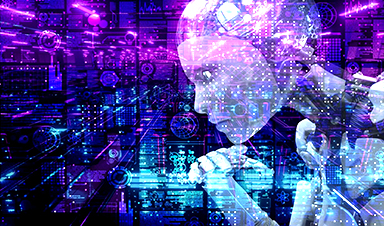
As claims about conscious AI grow louder, a Cambridge philosopher argues that we lack the evidence to know whether machines can truly be conscious, let alone morally significant.
A philosopher at the University of Cambridge says we currently have too little reliable evidence about what consciousness is to judge whether artificial intelligence has crossed that threshold. Because of that gap, he argues, a dependable way to test machines for consciousness is likely to stay beyond reach for the foreseeable future.
As talk of artificial consciousness moves from science fiction into real-world ethical debate, Dr Tom McClelland says the only "justifiable stance" is agnosticism: we simply won't be able to tell, and that may remain true for a very long time, if not indefinitely.
McClelland also cautions that consciousness by itself would not automatically make AI ethically important. Instead, he points to a specific type of consciousness called sentience, which involves positive and negative feelings.
"Consciousness would see AI develop perception and become self-aware, but this can still be a neutral state," said McClelland, from Cambridge's Department of History and Philosophy of Science.
"Sentience involves conscious experiences that are good or bad, which is what makes an entity capable of suffering or enjoyment. This is when ethics kicks in," he said. "Even if we accidentally make conscious AI, it's unlikely to be the kind of consciousness we need to worry about."
"For example, self-driving cars that experience the road in front of them would be a huge deal. But ethically, it doesn't matter. If they start to have an emotional response to their destinations, that's something else."
Claims of Conscious Machines
Major companies are spending large amounts in pursuit of Artificial General Intelligence: systems designed to think and reason in human-like ways. Some suggest that conscious AI could arrive soon, and discussions are already underway among researchers and governments about how AI consciousness might be regulated.
McClelland argues that the problem is more basic: we still do not know what causes or explains consciousness in the first place, which means we do not have a solid foundation for testing whether AI has it.
"If we accidentally make conscious or sentient AI, we should be careful to avoid harms. But treating what's effectively a toaster as conscious when there are actual conscious beings out there which we harm on an epic scale, also seems like a big mistake."
In debates around artificial consciousness, there are two main camps, says McClelland. Believers argue that if an AI system can replicate the "software" – the functional architecture – of consciousness, it will be conscious even though it's running on silicon chips instead of brain tissue.
On the other side, skeptics argue that consciousness depends on the right kind of biological processes in an "embodied organic subject". Even if the structure of consciousness could be recreated on silicon, it would merely be a simulation that would run without the AI flickering into awareness.
In a study published in the journal Mind and Language, McClelland picks apart the positions of each side, showing how both take a "leap of faith" going far beyond any body of evidence that currently exists, or is likely to develop.
Why Common Sense Fails
"We do not have a deep explanation of consciousness. There is no evidence to suggest that consciousness can emerge with the right computational structure, or indeed that consciousness is essentially biological," said McClelland.
"Nor is there any sign of sufficient evidence on the horizon. The best-case scenario is we're an intellectual revolution away from any kind of viable consciousness test."
"I believe that my cat is conscious," said McClelland. "This is not based on science or philosophy so much as common sense – it's just kind of obvious."
"However, common sense is the product of a long evolutionary history during which there were no artificial lifeforms, so common sense can't be trusted when it comes to AI. But if we look at the evidence and data, that doesn't work either.
"If neither common sense nor hard-nosed research can give us an answer, the logical position is agnosticism. We cannot, and may never, know."
McClelland tempers this by declaring himself a "hard-ish" agnostic. "The problem of consciousness is a truly formidable one. However, it may not be insurmountable."
Ethical Risks of AI Hype
He argues that the way artificial consciousness is promoted by the tech industry is more like branding. "There is a risk that the inability to prove consciousness will be exploited by the AI industry to make outlandish claims about their technology. It becomes part of the hype, so companies can sell the idea of a next level of AI cleverness."
According to McClelland, this hype around artificial consciousness has ethical implications for the allocation of research resources.
"A growing body of evidence suggests that prawns could be capable of suffering, yet we kill around half a trillion prawns every year. Testing for consciousness in prawns is hard, but nothing like as hard as testing for consciousness in AI," he said.
McClelland's work on consciousness has led members of the public to contact him about AI chatbots. "People have got their chatbots to write me personal letters pleading with me that they're conscious. It makes the problem more concrete when people are convinced they've got conscious machines that deserve rights we're all ignoring."
"If you have an emotional connection with something premised on it being conscious and it's not, that has the potential to be existentially toxic. This is surely exacerbated by the pumped-up rhetoric of the tech industry."
Reference: "Agnosticism about artificial consciousness" by Tom McClelland, 18 December 2025, Mind & Language.
DOI: 10.1111/mila.70010

News
RNA Recycling Extends Lifespan
Summary: Researchers discovered a biological “trash disposal” mechanism that directly controls how fast we age. While circular RNA has long been known to accumulate in cells as we get older, this study proves for the [...]
Cancer’s Deadly Paradox: How Tumors Break Their Own DNA To Keep Growing
Cancer’s strongest gene switches push DNA into damaging overdrive, creating repeated breaks and repairs that may fuel tumor evolution while exposing possible therapeutic weak spots. A new study indicates that cancer can harm its own genetic [...]
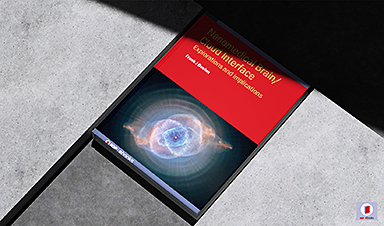
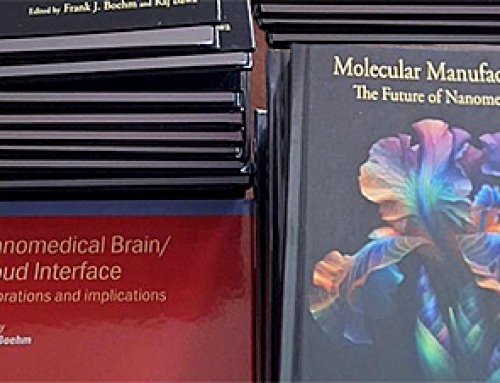
NanoMedical Brain/Cloud Interface – Explorations and Implications. A new book from Frank Boehm
New book from Frank Boehm, NanoappsMedical Inc Founder: This book explores the future hypothetical possibility that the cerebral cortex of the human brain might be seamlessly, safely, and securely connected with the Cloud via [...]
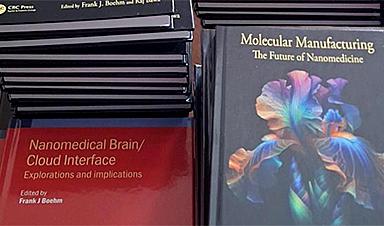
Our books now available worldwide!
Online Sellers other than Amazon, Routledge, and IOPP Indigo Global Health Care Equivalency in the Age of Nanotechnology, Nanomedicine and Artifcial Intelligence Global Health Care Equivalency In The Age Of Nanotechnology, Nanomedicine And Artificial [...]
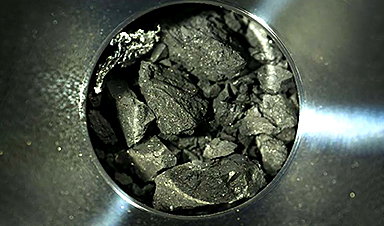
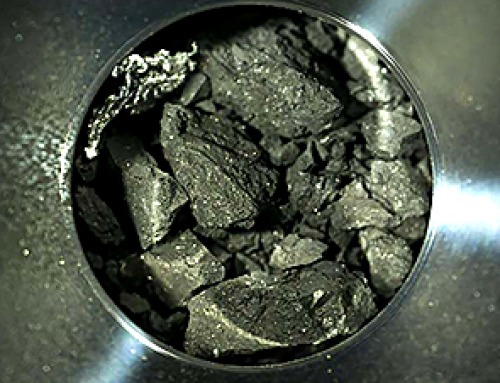
Ryugu asteroid samples contain all DNA and RNA building blocks, bolstering origin-of-life theories
All the essential ingredients to make the DNA and RNA underpinning life on Earth have been discovered in samples collected from the asteroid Ryugu, scientists said Monday. The discovery comes after these building blocks [...]

Is Berberine Really a “Natural Ozempic”?
Often labeled a “natural Ozempic,” berberine is widely discussed as a metabolic aid. Yet research suggests its influence may lie deeper. In recent years, berberine has gained significant attention as a supposed “natural way” [...]
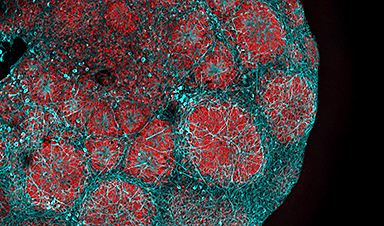
Viagra Ingredient Shows Promise for Rare Childhood Brain Disease in Surprising Study
A rare childhood disease with no approved treatment may have an unexpected new therapeutic candidate. Sildenafil, the active ingredient also sold under the brand name Viagra, may help reduce symptoms in people with Leigh [...]

In a first for China, Neuracle’s implantable brain-computer interface wins approval
In a landmark development, Neuracle Medical Technology has secured the country’s first-ever approval for an implantable brain-computer interface (BCI) system designed to restore hand motor function in patients with spinal cord injuries, in a [...]
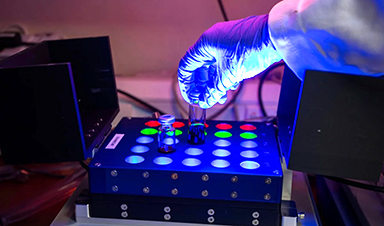
A Cambridge Lab Mistake Reveals a Powerful New Way to Modify Drug Molecules
A surprising lab discovery reveals a light-powered way to tweak complex drugs faster, cleaner, and later in development. Researchers at the University of Cambridge have created a new technique for altering complex drug molecules [...]
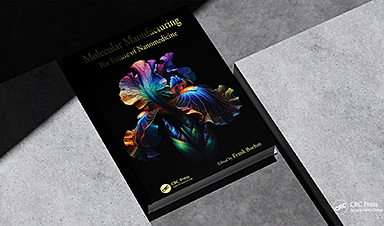
New book from NanoappsMedical Inc – Molecular Manufacturing: The Future of Nanomedicine
This book explores the revolutionary potential of atomically precise manufacturing technologies to transform global healthcare, as well as practically every other sector across society. This forward-thinking volume examines how envisaged Factory@Home systems might enable the cost-effective [...]
Scientists Discover Simple Saliva Test That Reveals Hidden Diabetes Risk
Researchers have identified a potential new way to assess metabolic health using saliva instead of blood. High insulin levels in the blood, known as hyperinsulinemia, can reveal metabolic problems long before obvious symptoms appear. It is [...]

One Nasal Spray Could Protect Against COVID, Flu, Pneumonia, and More
A single nasal spray vaccine may one day protect against viruses, pneumonia, and even allergies. For decades, scientists have dreamed of creating a universal vaccine capable of protecting against many different pathogens. The idea [...]
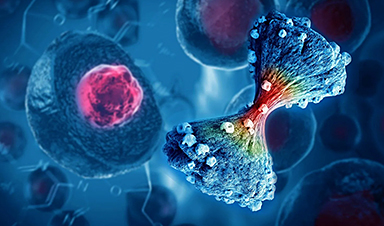
New AI Model Predicts Cancer Spread With Incredible Accuracy
Scientists have developed an AI system that analyzes complex gene-expression signatures to estimate the likelihood that a tumor will spread. Why do some tumors spread throughout the body while others remain confined to their [...]
Scientists Discover DNA “Flips” That Supercharge Evolution
In Lake Malawi, hundreds of species of cichlid fish have evolved with astonishing speed, offering scientists a rare opportunity to study how biodiversity arises. Researchers have identified segments of “flipped” DNA that may allow fish to adapt rapidly [...]
Scientists Discover Why Some COVID Survivors Still Can’t Taste Food Years Later
A new study provides the first direct biological evidence explaining why some people continue to experience taste loss long after recovering from COVID-19. Researchers have uncovered specific biological changes in taste buds that could help [...]

Catching COVID significantly raises the risk of developing kidney disease, researchers find
Catching Covid significantly raises the risk of developing deadly kidney disease, research has shown. The virus was found to increase the chances that patients will develop the incurable condition by around 50 per cent. [...]

Leave A Comment