Airports across Asia have been put on high alert after India confirmed two cases of the deadly Nipah virus in the state of West Bengal over the past month.
Thailand, Nepal and Vietnam are among the countries screening airport arrivals over fears of an wider outbreak of the virus, which can spread from animals to humans and has a high fatality rate.
The Indian health ministry has confirmed two cases in the state of West Bengal since December but said there had been a “timely containment” of the virus.
The government did not give details on the infected patients but said almost 200 close contacts had been tested and no further outbreaks had been detected.
What is the Nipah virus and why is it so deadly?
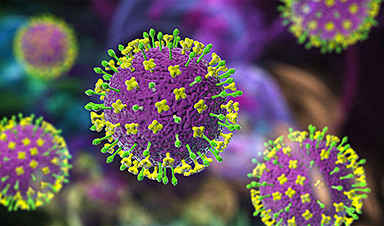
Nipah virus is primarily transmitted to humans from animals such as pigs and fruit bats, either by direct contact or through their secretions.
It can incubate in the body for a period of four to 14 days. The initial symptoms of the virus are often high fever, nausea, vomiting and respiratory problems, which can then develop into pneumonia. In severe cases it causes a dangerous swelling of the brain that can lead to neurological symptoms such as drowsiness and seizures.
While human to human transmission is low, it is seen by the World Health Organization as a high risk for epidemics because there is no vaccine. It has a high fatality rate of 40% to 75%, far deadlier than Covid-19.
When were previous outbreaks?
The disease was first identified in 1998 among pig farmers in Malaysia, when it killed more than 100 people. It was named after the village where it was discovered.
Since then, outbreaks have been detected almost every year across Asia in countries including India, the Philippines, Singapore and Malaysia. It has routinely emerged in Bangladesh and the first case in India was in 2001 in West Bengal, which borders Bangladesh.
It has been linked to the harvesting of raw date sap in Bangladesh, as fruit bats often live in date palms.
In 2018, at least 17 people died from Nipah virus in the Indian state of Kerala, and two more died in 2023.
How are the authorities handling the latest outbreak?
The Indian health authorities said: “Enhanced surveillance, laboratory testing, and field investigations were undertaken … which ensured timely containment of the cases.”
So far, no more than two cases have been detected since December. “The situation is under constant monitoring and all necessary public health measures are in place,” the Indian health ministry said.
However, other countries have stepped up precautionary screening measures at airports and borders. Thailand, Vietnam and Indonesia have introduced additional screening, including temperature checks and health declarations of passengers arriving from India. Myanmar advised against nonessential travel to West Bengal and China has strengthened disease prevention measures in its border areas.
India said reports of a surge in cases were “speculative and incorrect”.

News

Cutting Two Amino Acids Slowed Prostate Cancer in Mice
A newly identified link between amino acid metabolism and cholesterol production may help prostate tumors adapt to hormone therapy. Prostate cancer can find ways around treatments designed to deprive tumors of the hormones they [...]

Largest-Ever Physics Survey Raises New Doubts About Our Model of the Universe
Physicists around the world remain deeply divided on key mysteries of the universe, from dark matter to quantum gravity. The standard cosmological model failed to gain majority support, and no leading theory dominated the [...]

Scientists Just Overturned a 100-Year-Old Belief About Bacteria in the Lungs
New findings raise questions about the role of microbes living in the lungs. More than 35 trillion bacteria live throughout the human body, forming microbiomes in the gut, mouth, lungs, skin, and urogenital tract. [...]

GHCE Concept
From the preface of the book Global Health Care Equivalency in the Age of Nanotechnology, Nanomedicine and Artificial Intelligence, Edited by Frank Boehm: Since the publication of my first book (Nanomedical Device and Systems [...]

Novartis, Ionis drug failure spurs questions
Pelacarsen didn’t protect heart health despite lowering levels of a protein particle, “Lp(a),” in a large clinical trial — a result with important implications for cardiovascular drug research. Dive Brief: An RNA drug from [...]
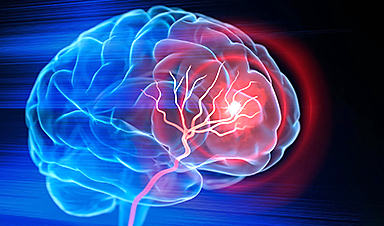
New injectable treatment helps the brain rebuild after stroke
Biomedical engineers at Duke University have created an injectable biomaterial that may help the brain recover from damage left behind by an ischemic stroke. In experiments with mice, the material transformed the cavity created [...]

Scientists Discover a Hidden “Immune Organ” Inside the Skull
Researchers discovered lymph node-like immune hubs inside skull bone marrow that appear to act as rapid-response centers for the brain. For decades, the brain was thought to operate largely apart from the immune system. [...]
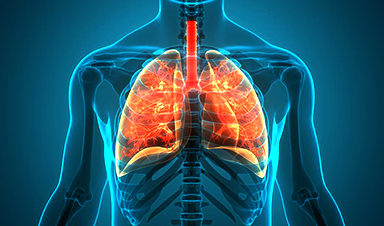
Engineered tRNAs and lipid nanoparticles target nonsense mutation cystic fibrosis
Researchers have developed a potential new approach for treating a form of cystic fibrosis caused by so-called nonsense mutations, combining chemically modified transfer RNAs with lipid nanoparticles designed to deliver the therapy directly to [...]
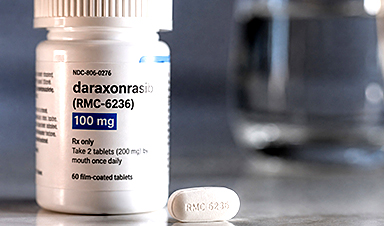
New pancreatic cancer drug carries a $39,800 monthly list price
A groundbreaking treatment for one of the most common forms of pancreatic cancer has been approved in pill form by the FDA. Revolution Medicines’ oral tablet daraxonrasib, branded as Rasonque, reduced the risk of [...]

Researchers Have Discovered a New Way To Reduce Chronic Nerve Pain
A cancer-linked protein called BRAF may help drive chronic nerve pain, and existing cancer drugs targeting it reduced pain sensitivity in preclinical models. Chronic nerve pain can persist long after an injury and often [...]

Our books now available worldwide!
Online Sellers other than Amazon, Routledge, and IOPP Indigo Global Health Care Equivalency in the Age of Nanotechnology, Nanomedicine and Artifcial Intelligence Global Health Care Equivalency In The Age Of Nanotechnology, Nanomedicine And Artificial [...]

Quantum-Enabled Regenerative Health: Reimagining Wellness, Precision Health and Longevity Medicine
Introduction Healthcare is approaching a frontier where the quantum portfolio could influence not only how disease is diagnosed and treated, but how health itself is measured, modeled, predicted and preserved. Quantum computing, quantum simulation, [...]

FDA Clears First-of-Its-Kind Nonmedication Treatment for PTSD
The FDA has cleared a system that uses brain activity data to personalize magnetic stimulation for PTSD, adding a new nonmedication treatment option. Every day in the United States, approximately 17.5 veterans die by suicide, [...]

FDA approves breakthrough drug to treat advanced pancreatic cancer
The Food and Drug Administration (FDA) approved on Wednesday a drug that could extend the survival of those with metastatic pancreatic cancer. The drug, called daraxonrasib, will be sold under the brand name Rasonque [...]

AI Decodes a Hidden DNA Signal Linked to Disease-Causing Mutations
Machine learning identifies the likely “initiator” and enables new predictions about DNA mutations that can cause disease. Every human cell depends on tens of thousands of genes being switched on at the right time [...]

Pope Leo Urges Global Response to Congo’s Deadliest Ebola Outbreak
Pope Leo called for international action to address the Ebola outbreak in the Democratic Republic of Congo. The epidemic has claimed over 2,500 lives and is the nation's largest recorded outbreak. The Pope emphasized [...]