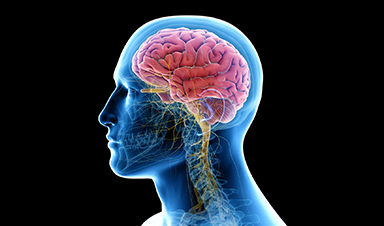
A newly identified lymphatic drainage pathway along the middle meningeal artery reveals how the human brain clears waste.
How does the brain clear away waste? This task is handled by the brain's lymphatic drainage system, and attempts to understand how it operates have driven major advances in brain imaging.
A new study published in iScience by researchers at the Medical University of South Carolina reports the first human evidence of a previously unrecognized center of lymphatic drainage in the brain, the middle meningeal artery (MMA).
Using a NASA collaboration that gave them access to real-time MRI tools originally designed to study how spaceflight alters fluid movement in the brain, the MUSC team, led by Onder Albayram, Ph.D., followed the movement of cerebrospinal and interstitial fluids along the MMA in five healthy volunteers over six hours. Their observations showed that cerebrospinal fluid moved slowly and passively, a pattern consistent with lymphatic drainage rather than blood circulation, which would be faster and more pulsatile.
"We saw a flow pattern that didn't behave like blood moving through an artery; it was slower, more like drainage, showing that this vessel is part of the brain's cleanup system," said Albayram, an associate professor in the Department of Pathology and Laboratory Medicine at MUSC.
Rethinking the brain's immune isolation
The central nervous system, which includes the brain and spinal cord, is wrapped in a multi-layer protective covering called the meninges. For more than ten years, Albayram has studied meningeal lymphatic vessels, which he believes play a critical role in transporting waste out of the brain and into the body's peripheral lymphatic system, where it can be removed.
Until roughly a decade ago, scientists largely believed that the meninges acted as a barrier separating the brain from the immune system, particularly the lymphatic network. Albayram's research has helped overturn this view by demonstrating that lymphatic vessels are embedded within these membranes and connected to the rest of the body. Gaining a clearer picture of how fluids move between the brain and the periphery is key to expanding strategies for preventing and treating neurological and psychiatric disorders.
Imaging flow from vessels to cells
Albayram was among the first to visualize meningeal lymphatic vessels in humans, as reported in a 2022 article in Nature Communications. The study in iScience captures the flow of fluids within the meningeal lymphatic architecture deep within the human brain in real time and validates these findings through advanced imaging of postmortem human tissue.
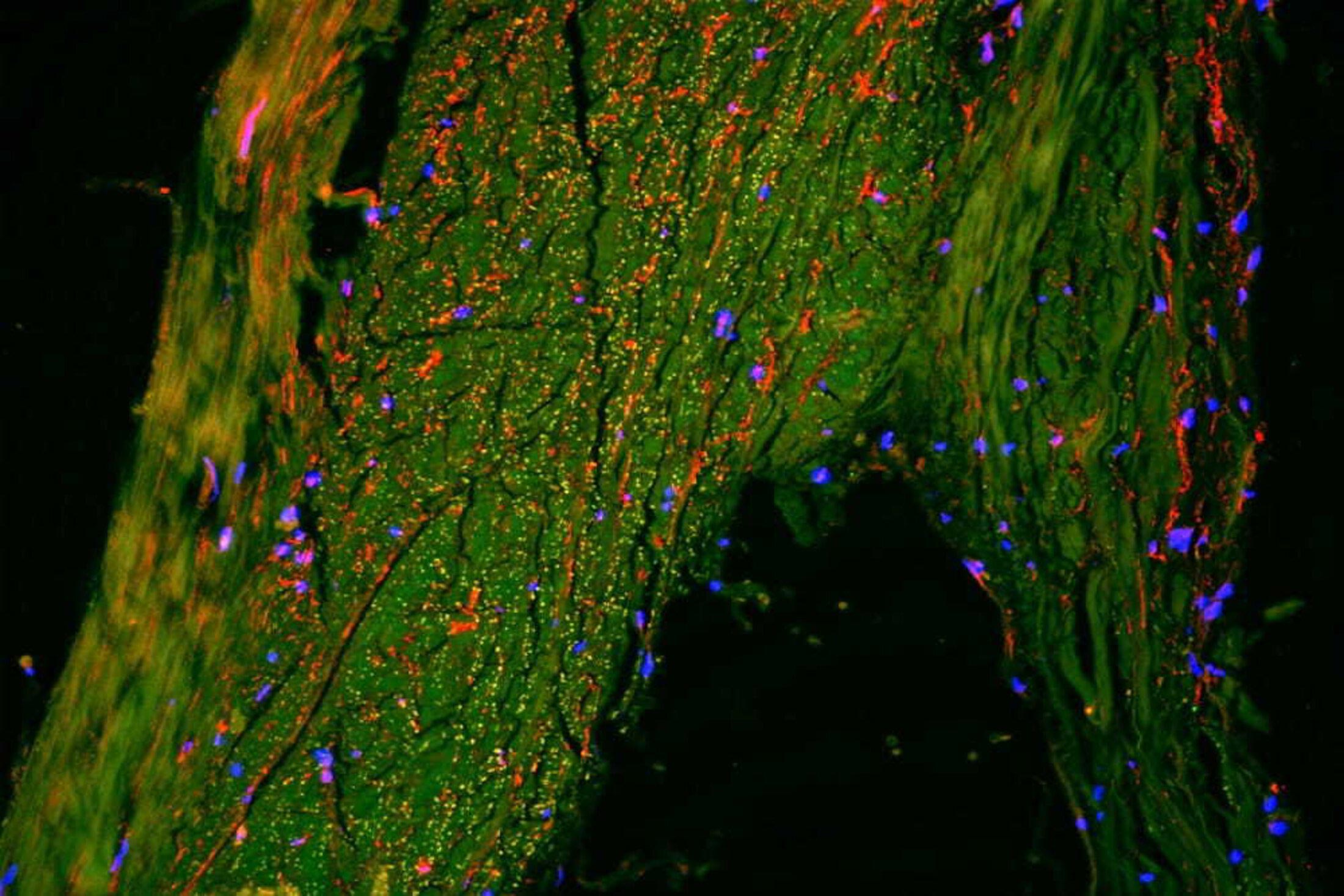
To confirm what they saw on MRI, Albayram's team examined human brain tissue under extremely high-resolution imaging. Working with scientists at Cornell University, the team used an advanced technique that allows researchers to see many different cell types at once. This detailed mapping showed that the area around the MMA is lined with cells typically found in the body's lymphatic vessels, the channels responsible for clearing waste.
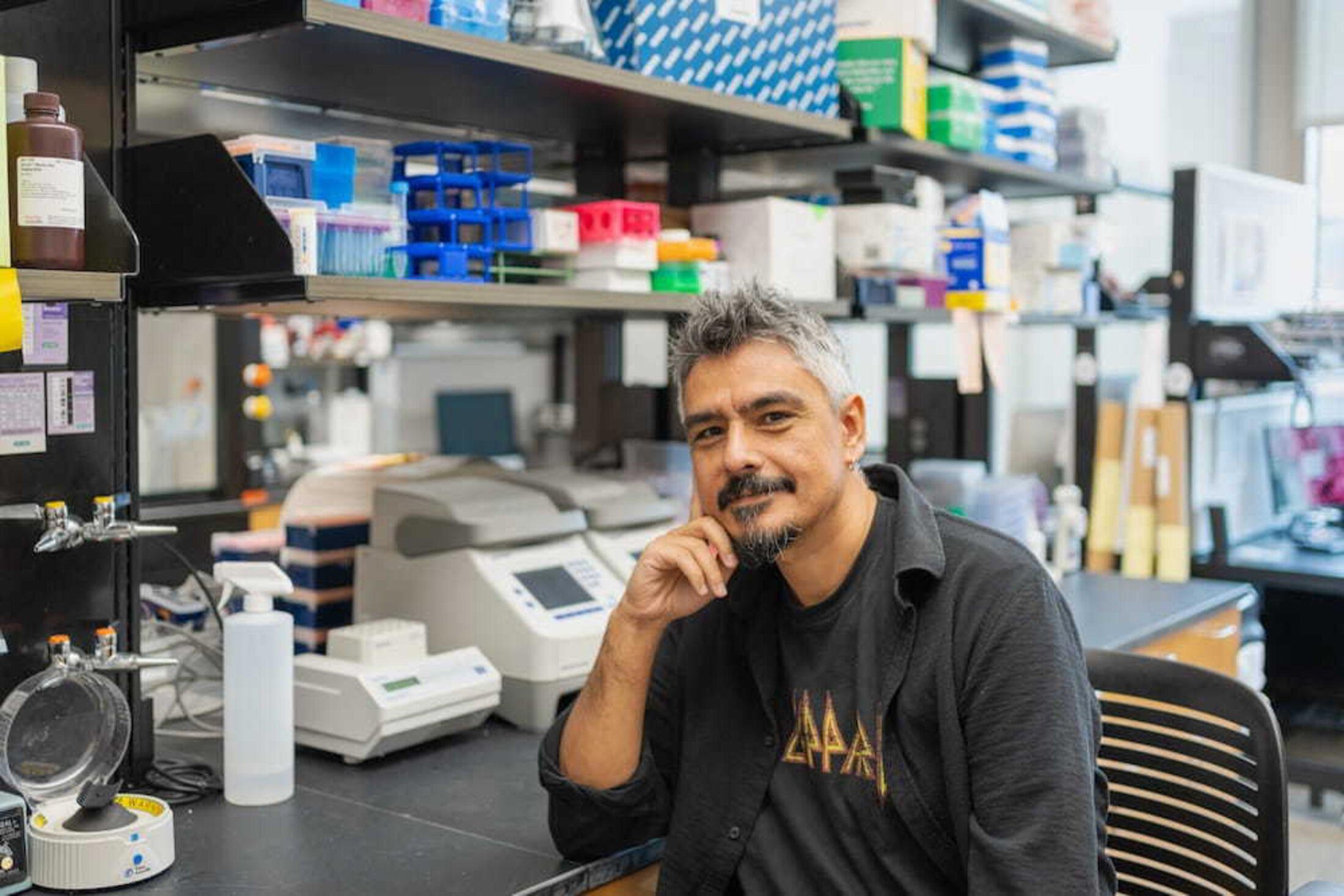
These results confirmed that the slow-moving fluid seen on MRI was indeed flowing through true lymphatic vessels, not blood vessels – linking the brain images directly to cellular evidence.
Why healthy brains matter first
Core to Albayram's work is a focus on making observations in humans first, before expanding out into experimental models, such as mice, rather than the other way around. One key element of this study is that it was conducted in healthy people. Having a clear understanding of how these structures function under normal conditions is essential for recognizing what changes when things go wrong – for example, after a traumatic brain injury or during neurodegenerative conditions.
The implications of this discovery extend to aging, neuroinflammation, brain injury, Alzheimer's disease, and even psychiatric disorders. Albayram is already pursuing research based on key observations of the lymphatic drainage architecture in patients with neurodegenerative diseases, with the goal of developing better ways to diagnose these complex diseases earlier, prevent them, and design new treatments.
"A major challenge in brain research is that we still don't fully understand how a healthy brain functions and ages," said Albayram. "Once we understand what 'normal' looks like, we can recognize early signs of disease and design better treatments."
References:
"Meningeal lymphatic architecture and drainage dynamics surrounding the human middle meningeal artery" by Mehmet Albayram, Sutton B. Richmond, Kaan Yagmurlu, Ibrahim S. Tuna, Eda Karakaya, Hiranmayi Ravichandran, Fatih Tufan, Emal Lesha, Melike Mut, Filiz Bunyak, Yashar.S. Kalani, Adviye Ergul, Rachael D. Seidler and Onder Albayram, 21 November 2025, iScience.
DOI: 10.1016/j.isci.2025.113693
"Non-invasive MR imaging of human brain lymphatic networks with connections to cervical lymph nodes" by Mehmet Sait Albayram, Garrett Smith, Fatih Tufan, Ibrahim Sacit Tuna, Mehmet Bostancıklıoğlu, Michael Zile and Onder Albayram, 11 January 2022, Nature Communications.
DOI: 10.1038/s41467-021-27887-0

News

Scientists Develop a Clever New Way To Kill Cancer Cells From the Inside
Scientists have developed an experimental strategy that exploits a chemical byproduct of cancer cells to produce anticancer drugs directly inside them. Scientists in Japan have developed an experimental method that uses a chemical produced [...]

Our books are available worldwide!
Online Sellers other than Amazon, Routledge, and IOPP Indigo Global Health Care Equivalency in the Age of Nanotechnology, Nanomedicine and Artifcial Intelligence Global Health Care Equivalency In The Age Of Nanotechnology, Nanomedicine And Artificial [...]

After only a short training, people in a coma managed to send targeted signals
Researchers have succeeded in communicating with brain-injured patients who are unconscious. They see enormous potential in this for future treatments. Patients who lie motionless in bed after a severe brain injury and do not [...]
MIT Scientists Reprogram Immune Cells Inside the Body To Destroy Cancer
Natural killer cells reprogrammed inside mice eliminated lymphoma tumors and helped damaged livers heal, though whether this approach could help people with cancer or autoimmune disease remains unknown. To make a cancer treatment from [...]

Melanoma mRNA Vaccine Shows Promise in Preventing Disease Recurrence
Key takeaways: Phase 3 trial finds personalized intismeran plus pembrolizumab may better prevent high-risk melanoma recurrence after surgery The trial enrolled 1,137 patients and builds on phase 2 results showing about half the recurrence [...]

Scientists Discover a Powerful New Weapon Against a Dangerous Gut Infection
The promise of an experimental treatment for C. difficile gut infections lies partly in the bacteria it leaves alive, according to early laboratory and mouse research. Broad-spectrum antibiotics can disrupt the gut’s microbial community, [...]
Your Bones May Hold a Hidden Clue to Blood Cancer Survival
For people with blood cancers called myelodysplastic syndromes, osteoporosis may hold an overlooked clue to survival, a three-year observational study suggests. In blood cancers that develop in the bone marrow, an important clue to [...]

Researchers Discover What Reading for Pleasure May Be Doing to Your Brain
Reading for pleasure may offer surprising benefits for the brain, with research linking the habit to better mental health, stronger cognitive abilities, and a lower risk of dementia. Reading for pleasure may do far [...]
Scientists Discover a Hidden Trigger That Keeps Inflammation Alive
Inflammation persists after proteins detach from immune receptors, revealing a potential target for autoimmune treatments. Since a Nobel Prize-winning discovery in the 1990s identified molecules called Toll-like Receptors as the guardians of the human [...]
A Virus Gives Itself Away the Moment It Attacks
Researchers have found the trigger behind a powerful bacterial defense against viruses. Viruses that prey on bacteria could become an increasingly important tool for treating bacterial infections, particularly as antibiotic resistance makes some infections [...]

Scientists Discover Aspirin May Slash Dementia Risk by 70% – but Only for Certain People
Aspirin was linked to a sharply lower dementia risk in some older adults, and their genes may hold the clue. A Monash University analysis found that older adults with a particular genetic profile had [...]
Inflammation May Awaken Dormant Cancer Cells Years After Treatment
The body’s response to inflammation may disturb cancer cells that have been lying silent for years, giving them an opportunity to grow again. Researchers at the Francis Crick Institute have found that gut inflammation [...]

Where do nanoparticles go once they enter the body?
New international best practice guidance, co-written at ANSTO, sets out how to measure where nanoparticles like titanium dioxide end up in the body and how long they remain. The guidance has been shared by [...]
Long-Acting HIV Shots Could Solve a Major Treatment Challenge for Young People
A major African trial suggests that changing how HIV treatment is delivered could significantly improve viral suppression in adolescents. Young people with HIV were more likely to keep the virus suppressed when they received [...]

WHO Factsheets – The top 10 causes of death
In 2023, the 10 leading causes of death accounted for 33 million deaths, or 54% of the total 61 million deaths worldwide. The top global causes of death, in order of total number of lives lost, [...]
Aging Cells May Be Hiding From the Immune System – Scientists Think They Know How
Your immune system is supposed to clear out damaged cells. Researchers may have found how some of them hide and linger as the body ages. Researchers led by Cedars-Sinai Health Sciences University have identified [...]