Scientists can now design bacteria-killing viruses from DNA, opening a faster path to fighting superbugs.
Bacteriophages have been used as treatments for bacterial infections for more than a century. Interest in these viruses is rising again as antibiotic-resistant infections become an increasing threat to public health. Even so, progress in the field has been slow. Most research has relied on naturally occurring phages because traditional engineering methods are time consuming and difficult, limiting the development of customized therapeutic viruses.
A Fully Synthetic Phage Engineering Breakthrough
In a new PNAS study, scientists from New England Biolabs (NEB) and Yale University describe the first fully synthetic system for engineering bacteriophages that target Pseudomonas aeruginosa, an antibiotic-resistant bacterium that poses a serious global health concern. The work is powered by NEB's High-Complexity Golden Gate Assembly (HC-GGA) platform, which allows phages to be designed and built using DNA sequence information rather than physical virus samples.
Using this approach, the researchers constructed a P. aeruginosa phage from 28 synthetic DNA fragments. They then altered the virus by introducing point mutations along with DNA insertions and deletions. These changes allowed the team to modify which bacteria the phage could infect by swapping tail fiber genes and to add fluorescent reporters that made infections visible as they happened.
"Even in the best of cases, bacteriophage engineering has been extremely labor-intensive. Researchers spent entire careers developing processes to engineer specific model bacteriophages in host bacteria," reflects Andy Sikkema, the paper's co-first author and Research Scientist at NEB. "This synthetic method offers technological leaps in simplicity, safety, and speed, paving the way for biological discoveries and therapeutic development."
Building Phages From Digital DNA
NEB's Golden Gate Assembly platform makes it possible to assemble a complete phage genome outside the cell using synthetic DNA, with all planned genetic changes included from the start. Once assembled, the genome is introduced into a safe laboratory strain where it becomes an active bacteriophage.
This process removes many long-standing barriers in phage research. Scientists no longer need to maintain collections of fragile phage isolates or rely on specialized host bacteria, which is especially challenging for phages that infect dangerous human pathogens. The method also avoids the repeated screening and step-by-step genetic editing required by approaches that modify phages inside living cells.
Why Golden Gate Assembly Matters
Compared with DNA assembly techniques that use fewer but longer fragments, Golden Gate Assembly works with shorter DNA segments. These shorter pieces are easier to prepare, less harmful to host cells, and less likely to contain errors. The method is also more tolerant of repeated sequences and extreme GC content, features that are common in many phage genomes.
By simplifying the engineering process and expanding what can be built, the Golden Gate method greatly broadens the possibilities for scientists working to develop bacteriophages as tools to combat antibiotic resistance.
Collaboration Drives New Applications
The development of this rapid synthetic phage engineering approach required close collaboration between NEB scientists and bacteriophage researchers at Yale University. NEB researchers had already created the foundational tools needed to make Golden Gate Assembly reliable for large DNA targets made from many fragments. Yale researchers recognized the potential of these tools and initiated a partnership to explore more ambitious uses.
The method was first refined using a well-studied model virus, Escherichia coli phage T7. Since then, collaborative teams have expanded the approach to include non model bacteriophages that target highly antibiotic-resistant bacteria.
A related study using the Golden Gate method to build high GC content Mycobacterium phages was published in PNAS in November 2025 in collaboration with the Hatfull Lab at the University of Pittsburgh and Ansa Biotechnologies. In another project, researchers from Cornell University worked with NEB to develop synthetically engineered T7 bacteriophages that function as biosensors capable of detecting E. coli in drinking water, described in a December 2025 ACS study.
"My lab builds 'weird hammers' and then looks for the right nails," said Greg Lohman, Senior Principal Investigator at NEB and co-author on the study. "In this case, the phage therapy community told us, 'That's exactly the hammer we've been waiting for.'"
Reference: "A fully synthetic Golden Gate assembly system for engineering a Pseudomonas aeruginosa phiKMV-like phage" by Andrew P. Sikkema, Kaitlyn E. Kortright, Hemaa Selvakumar, Jyot Antani, Benjamin K. Chan, Matthew Davidson, Max Hopkins, Benjamin Newman, Vladimir Potapov, Cecilia A. Silva-Valenzuela, S. Kasra Tabatabaei, Robert McBride, Paul E. Turner and Gregory J. S. Lohman, 23 January 2026, Proceedings of the National Academy of Sciences.
DOI: 10.1073/pnas.2525963123

News
Scientists Have Uncovered Previously Hidden Microbial Activity on Human Skin
The most abundant microbes on your skin may not be the ones doing most of the work. Human skin supports vast communities of bacteria, fungi, and viruses that can influence its protective barrier, immune [...]
Brazilian Tree Compounds Fight COVID-19 on Multiple Fronts
Scientists found compounds in a Brazilian tree that hit SARS-CoV-2 on multiple fronts, revealing a promising new lead in the search for COVID-19 treatments. Researchers have found that galloylquinic acids extracted from the leaves [...]
Cutting Two Amino Acids Slowed Prostate Cancer in Mice
A newly identified link between amino acid metabolism and cholesterol production may help prostate tumors adapt to hormone therapy. Prostate cancer can find ways around treatments designed to deprive tumors of the hormones they [...]

Largest-Ever Physics Survey Raises New Doubts About Our Model of the Universe
Physicists around the world remain deeply divided on key mysteries of the universe, from dark matter to quantum gravity. The standard cosmological model failed to gain majority support, and no leading theory dominated the [...]

Scientists Just Overturned a 100-Year-Old Belief About Bacteria in the Lungs
New findings raise questions about the role of microbes living in the lungs. More than 35 trillion bacteria live throughout the human body, forming microbiomes in the gut, mouth, lungs, skin, and urogenital tract. [...]

GHCE Concept
From the preface of the book Global Health Care Equivalency in the Age of Nanotechnology, Nanomedicine and Artificial Intelligence, Edited by Frank Boehm: Since the publication of my first book (Nanomedical Device and Systems [...]

Novartis, Ionis drug failure spurs questions
Pelacarsen didn’t protect heart health despite lowering levels of a protein particle, “Lp(a),” in a large clinical trial — a result with important implications for cardiovascular drug research. Dive Brief: An RNA drug from [...]

New injectable treatment helps the brain rebuild after stroke
Biomedical engineers at Duke University have created an injectable biomaterial that may help the brain recover from damage left behind by an ischemic stroke. In experiments with mice, the material transformed the cavity created [...]

Scientists Discover a Hidden “Immune Organ” Inside the Skull
Researchers discovered lymph node-like immune hubs inside skull bone marrow that appear to act as rapid-response centers for the brain. For decades, the brain was thought to operate largely apart from the immune system. [...]

Engineered tRNAs and lipid nanoparticles target nonsense mutation cystic fibrosis
Researchers have developed a potential new approach for treating a form of cystic fibrosis caused by so-called nonsense mutations, combining chemically modified transfer RNAs with lipid nanoparticles designed to deliver the therapy directly to [...]
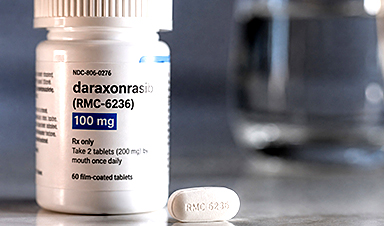
New pancreatic cancer drug carries a $39,800 monthly list price
A groundbreaking treatment for one of the most common forms of pancreatic cancer has been approved in pill form by the FDA. Revolution Medicines’ oral tablet daraxonrasib, branded as Rasonque, reduced the risk of [...]

Researchers Have Discovered a New Way To Reduce Chronic Nerve Pain
A cancer-linked protein called BRAF may help drive chronic nerve pain, and existing cancer drugs targeting it reduced pain sensitivity in preclinical models. Chronic nerve pain can persist long after an injury and often [...]

Our books now available worldwide!
Online Sellers other than Amazon, Routledge, and IOPP Indigo Global Health Care Equivalency in the Age of Nanotechnology, Nanomedicine and Artifcial Intelligence Global Health Care Equivalency In The Age Of Nanotechnology, Nanomedicine And Artificial [...]

Quantum-Enabled Regenerative Health: Reimagining Wellness, Precision Health and Longevity Medicine
Introduction Healthcare is approaching a frontier where the quantum portfolio could influence not only how disease is diagnosed and treated, but how health itself is measured, modeled, predicted and preserved. Quantum computing, quantum simulation, [...]

FDA Clears First-of-Its-Kind Nonmedication Treatment for PTSD
The FDA has cleared a system that uses brain activity data to personalize magnetic stimulation for PTSD, adding a new nonmedication treatment option. Every day in the United States, approximately 17.5 veterans die by suicide, [...]
FDA approves breakthrough drug to treat advanced pancreatic cancer
The Food and Drug Administration (FDA) approved on Wednesday a drug that could extend the survival of those with metastatic pancreatic cancer. The drug, called daraxonrasib, will be sold under the brand name Rasonque [...]