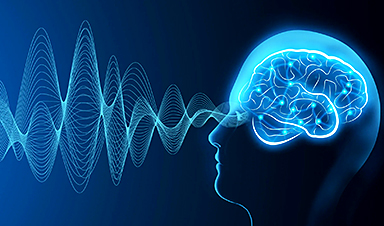
People with spinal cord injuries often lose the ability to move their arms or legs. In many cases, the nerves in the limbs remain healthy, and the brain continues to function normally. The loss of movement happens because damage to the spinal cord blocks signals traveling between the brain and the body.
This disconnect has led researchers to search for ways to restore communication without repairing the spinal cord itself.
Testing EEG as a Noninvasive Solution
In a study published in APL Bioengineering by AIP Publishing, scientists from universities in Italy and Switzerland explored whether electroencephalography (EEG) could help bridge this gap. Their research focused on determining whether EEG could capture brain signals linked to movement and potentially reconnect them with the body.
When a person attempts to move a paralyzed limb, the brain still produces electrical activity associated with that action. If these signals can be detected and interpreted, they could be sent to a spinal cord stimulator that activates the nerves responsible for movement in that limb.
Moving Beyond Brain Implants
Most earlier studies relied on surgically implanted electrodes to record movement signals directly from the brain. Although these systems have shown encouraging results, the research team wanted to investigate whether EEG could offer a safer option.
EEG systems are worn as caps covered with electrodes that record brain activity from the scalp. While the setup may appear complex, the researchers say it avoids the risks involved with placing devices inside the brain or spinal cord.
“It can cause infections; it’s another surgical procedure,” said author Laura Toni. “We were wondering whether that could be avoided.”
Challenges in Reading Movement Signals
Using EEG to decode movement attempts pushes the limits of current technology. Because EEG electrodes sit on the surface of the head, they struggle to capture signals that originate deeper within the brain.
This limitation is less problematic for movements involving the arms and hands. Signals controlling the legs and feet are harder to detect because they come from areas located closer to the center of the brain.
“The brain controls lower limb movements mainly in the central area, while upper limb movements are more on the outside,” said Toni. “It’s easier to have a spatial mapping of what you’re trying to decode compared to the lower limbs.”
Machine Learning Helps Interpret Brain Activity
To better analyze the EEG data, the researchers used a machine learning algorithm designed to work with small and complex datasets. During testing, patients wore EEG caps while attempting a series of simple movements. The team recorded the resulting brain activity and trained the algorithm to sort the signals into different categories.
The system successfully distinguished between moments when patients tried to move and when they remained still. However, it had difficulty telling different movement attempts apart.
What Future Research Could Achieve
The researchers believe their method can be improved with further development. They plan to refine the algorithm so it can recognize specific actions such as standing, walking, or climbing. The team also hopes to explore how these decoded signals could be used to activate implanted stimulators in patients recovering from spinal cord injuries.
If successful, this approach could move noninvasive brain scanning closer to helping people regain meaningful movement after paralysis.

News

After only a short training, people in a coma managed to send targeted signals
Researchers have succeeded in communicating with brain-injured patients who are unconscious. They see enormous potential in this for future treatments. Patients who lie motionless in bed after a severe brain injury and do not [...]
MIT Scientists Reprogram Immune Cells Inside the Body To Destroy Cancer
Natural killer cells reprogrammed inside mice eliminated lymphoma tumors and helped damaged livers heal, though whether this approach could help people with cancer or autoimmune disease remains unknown. To make a cancer treatment from [...]

Melanoma mRNA Vaccine Shows Promise in Preventing Disease Recurrence
Key takeaways: Phase 3 trial finds personalized intismeran plus pembrolizumab may better prevent high-risk melanoma recurrence after surgery The trial enrolled 1,137 patients and builds on phase 2 results showing about half the recurrence [...]

Scientists Discover a Powerful New Weapon Against a Dangerous Gut Infection
The promise of an experimental treatment for C. difficile gut infections lies partly in the bacteria it leaves alive, according to early laboratory and mouse research. Broad-spectrum antibiotics can disrupt the gut’s microbial community, [...]
Your Bones May Hold a Hidden Clue to Blood Cancer Survival
For people with blood cancers called myelodysplastic syndromes, osteoporosis may hold an overlooked clue to survival, a three-year observational study suggests. In blood cancers that develop in the bone marrow, an important clue to [...]

Researchers Discover What Reading for Pleasure May Be Doing to Your Brain
Reading for pleasure may offer surprising benefits for the brain, with research linking the habit to better mental health, stronger cognitive abilities, and a lower risk of dementia. Reading for pleasure may do far [...]
Scientists Discover a Hidden Trigger That Keeps Inflammation Alive
Inflammation persists after proteins detach from immune receptors, revealing a potential target for autoimmune treatments. Since a Nobel Prize-winning discovery in the 1990s identified molecules called Toll-like Receptors as the guardians of the human [...]
A Virus Gives Itself Away the Moment It Attacks
Researchers have found the trigger behind a powerful bacterial defense against viruses. Viruses that prey on bacteria could become an increasingly important tool for treating bacterial infections, particularly as antibiotic resistance makes some infections [...]

Scientists Discover Aspirin May Slash Dementia Risk by 70% – but Only for Certain People
Aspirin was linked to a sharply lower dementia risk in some older adults, and their genes may hold the clue. A Monash University analysis found that older adults with a particular genetic profile had [...]
Inflammation May Awaken Dormant Cancer Cells Years After Treatment
The body’s response to inflammation may disturb cancer cells that have been lying silent for years, giving them an opportunity to grow again. Researchers at the Francis Crick Institute have found that gut inflammation [...]
Where do nanoparticles go once they enter the body?
New international best practice guidance, co-written at ANSTO, sets out how to measure where nanoparticles like titanium dioxide end up in the body and how long they remain. The guidance has been shared by [...]

Long-Acting HIV Shots Could Solve a Major Treatment Challenge for Young People
A major African trial suggests that changing how HIV treatment is delivered could significantly improve viral suppression in adolescents. Young people with HIV were more likely to keep the virus suppressed when they received [...]

WHO Factsheets – The top 10 causes of death
In 2023, the 10 leading causes of death accounted for 33 million deaths, or 54% of the total 61 million deaths worldwide. The top global causes of death, in order of total number of lives lost, [...]
Aging Cells May Be Hiding From the Immune System – Scientists Think They Know How
Your immune system is supposed to clear out damaged cells. Researchers may have found how some of them hide and linger as the body ages. Researchers led by Cedars-Sinai Health Sciences University have identified [...]

Your Voice May Reveal How Fast Your Brain Is Aging
Researchers have developed a machine-learning “speech clock” that estimates age from subtle patterns in how people speak and what they say. It is possible that people’s voices may contain certain signals of aging that [...]

Optogenetics Pioneers Win 2026 Nobel Prize in Physiology or Medicine
The 2026 Nobel Prize in Physiology or Medicine has been awarded to Peter Hegemann, Georg Nagel, and Karl Deisseroth for the development of optogenetics, a revolutionary technology that uses light to control individual neurons [...]