When you don't sleep enough, your brain may clean itself at the exact moment you need it to think.
Most people recognize the sensation. After a night of inadequate sleep, staying focused becomes harder than usual. Thinking feels slower, attention wanders, and simple tasks take more effort than they should.
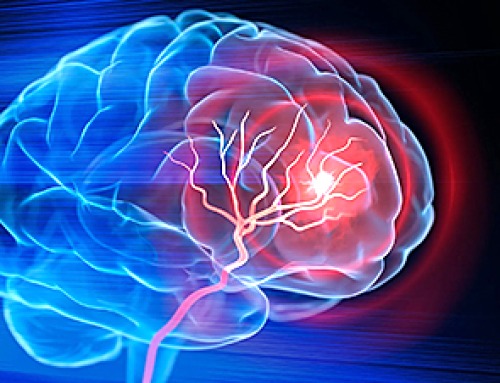
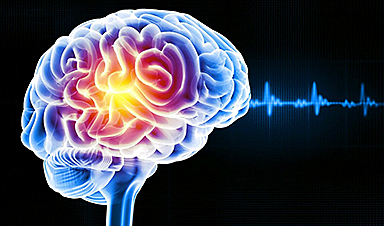
Researchers at MIT have now uncovered what is happening inside the brain during these brief breakdowns in attention. Their study shows that when focus slips, cerebrospinal fluid (CSF) briefly moves out of the brain. This process normally occurs during sleep and plays an important role in clearing away waste that builds up during the day. Scientists believe this cleaning action is essential for keeping the brain healthy and functioning properly.
When someone does not get enough sleep, the body appears to trigger this fluid movement while the person is awake. While this may help compensate for lost rest, it comes with a clear downside. Attention drops sharply during these moments.
"If you don't sleep, the CSF waves start to intrude into wakefulness where normally you wouldn't see them. However, they come with an attentional tradeoff, where attention fails during the moments that you have this wave of fluid flow," says Laura Lewis, the Athinoula A. Martinos Associate Professor of Electrical Engineering and Computer Science, a member of MIT's Institute for Medical Engineering and Science and the Research Laboratory of Electronics, and an associate member of the Picower Institute for Learning and Memory.
Lewis is the senior author of the study, which was published recently in Nature Neuroscience. MIT postdoctoral associate Zinong Yang is the lead author.
How Sleep Helps Clean the Brain
Sleep is a basic biological need, yet scientists are still working to fully understand why it is so critical. What is well established is that sleep supports alertness and mental performance. When sleep is cut short, attention and other cognitive abilities suffer.
One key role of sleep involves cerebrospinal fluid, which surrounds and protects the brain. During sleep, CSF helps remove waste that accumulates during waking hours. In a 2019 study, Lewis and her colleagues showed that this fluid moves in a regular rhythm during sleep and that the movement is closely tied to changes in brain wave activity.
That earlier research raised an important question about what happens to this system when sleep is disrupted. To investigate, the team recruited 26 volunteers who were tested twice — once following a night of sleep deprivation in the lab, and once when they were well-rested.
Tracking Brain Activity and Attention
The morning after each session, participants completed a standard task commonly used to measure the effects of sleep loss. While they worked through the task, researchers monitored multiple signals from both the brain and the body.
Each participant wore an electroencephalogram (EEG) cap to track brain waves while lying inside a functional magnetic resonance imaging (fMRI) scanner. The researchers used a specialized form of fMRI that could measure not only blood oxygen levels in the brain but also the movement of CSF in and out of it. Heart rate, breathing rate, and pupil size were also recorded.
Participants completed two attention tests during the scan, one based on vision and the other on sound. In the visual test, they watched a fixed cross on a screen that occasionally changed into a square and pressed a button when they noticed the change. In the auditory test, the visual cue was replaced with a sound.
As expected, participants who were sleep-deprived performed significantly worse than when they were well-rested. Their responses were slower, and in some cases they failed to detect the signal altogether.
Brain Fluid Surges During Attention Lapses
When attention briefly failed, the researchers observed several physical changes occurring at the same time. Most notably, CSF flowed out of the brain during these lapses and returned once attention recovered.
"The results are suggesting that at the moment that attention fails, this fluid is actually being expelled outward away from the brain. And when attention recovers, it's drawn back in," Lewis says.
The researchers believe this pattern reflects the brain attempting to make up for missed sleep. By activating a process normally reserved for rest, the brain may be trying to restore itself even though this comes at the expense of focus.
"One way to think about those events is because your brain is so in need of sleep, it tries its best to enter into a sleep-like state to restore some cognitive functions," Yang says. "Your brain's fluid system is trying to restore function by pushing the brain to iterate between high-attention and high-flow states."
A Shared System Linking Brain and Body
The study also revealed that attention lapses were accompanied by changes throughout the body. During these moments, breathing and heart rate slowed, and pupils became smaller. Pupil constriction began roughly 12 seconds before CSF moved out of the brain and reversed after attention returned.
"What's interesting is it seems like this isn't just a phenomenon in the brain, it's also a body-wide event. It suggests that there's a tight coordination of these systems, where when your attention fails, you might feel it perceptually and psychologically, but it's also reflecting an event that's happening throughout the brain and body," Lewis says.
This close timing suggests that a single control system may regulate both attention and basic bodily processes such as fluid flow, heart rate, and arousal.
"These results suggest to us that there's a unified circuit that's governing both what we think of as very high-level functions of the brain — our attention, our ability to perceive and respond to the world — and then also really basic fundamental physiological processes like fluid dynamics of the brain, brain-wide blood flow, and blood vessel constriction," Lewis says.
Although the study did not identify the exact circuit responsible, the researchers point to the noradrenergic system as a likely candidate. This system, which relies on the neurotransmitter norepinephrine to regulate both mental and physical functions, is known to fluctuate during normal sleep.
Reference: "Attentional failures after sleep deprivation are locked to joint neurovascular, pupil and cerebrospinal fluid flow dynamics" by Zinong Yang, Stephanie D. Williams, Ewa Beldzik, Stephanie Anakwe, Emilia Schimmelpfennig and Laura D. Lewis, 29 October 2025, Nature Neuroscience.
DOI: 10.1038/s41593-025-02098-8
The research was supported by the National Institutes of Health, a National Defense Science and Engineering Graduate Research Fellowship, a NAWA Fellowship, a McKnight Scholar Award, a Sloan Fellowship, a Pew Biomedical Scholar Award, a One Mind Rising Star Award, and the Simons Collaboration on Plasticity in the Aging Brain.

News

Scientists Have Uncovered Previously Hidden Microbial Activity on Human Skin
The most abundant microbes on your skin may not be the ones doing most of the work. Human skin supports vast communities of bacteria, fungi, and viruses that can influence its protective barrier, immune [...]
Brazilian Tree Compounds Fight COVID-19 on Multiple Fronts
Scientists found compounds in a Brazilian tree that hit SARS-CoV-2 on multiple fronts, revealing a promising new lead in the search for COVID-19 treatments. Researchers have found that galloylquinic acids extracted from the leaves [...]
Cutting Two Amino Acids Slowed Prostate Cancer in Mice
A newly identified link between amino acid metabolism and cholesterol production may help prostate tumors adapt to hormone therapy. Prostate cancer can find ways around treatments designed to deprive tumors of the hormones they [...]
Largest-Ever Physics Survey Raises New Doubts About Our Model of the Universe
Physicists around the world remain deeply divided on key mysteries of the universe, from dark matter to quantum gravity. The standard cosmological model failed to gain majority support, and no leading theory dominated the [...]

Scientists Just Overturned a 100-Year-Old Belief About Bacteria in the Lungs
New findings raise questions about the role of microbes living in the lungs. More than 35 trillion bacteria live throughout the human body, forming microbiomes in the gut, mouth, lungs, skin, and urogenital tract. [...]

GHCE Concept
From the preface of the book Global Health Care Equivalency in the Age of Nanotechnology, Nanomedicine and Artificial Intelligence, Edited by Frank Boehm: Since the publication of my first book (Nanomedical Device and Systems [...]

Novartis, Ionis drug failure spurs questions
Pelacarsen didn’t protect heart health despite lowering levels of a protein particle, “Lp(a),” in a large clinical trial — a result with important implications for cardiovascular drug research. Dive Brief: An RNA drug from [...]
New injectable treatment helps the brain rebuild after stroke
Biomedical engineers at Duke University have created an injectable biomaterial that may help the brain recover from damage left behind by an ischemic stroke. In experiments with mice, the material transformed the cavity created [...]
Scientists Discover a Hidden “Immune Organ” Inside the Skull
Researchers discovered lymph node-like immune hubs inside skull bone marrow that appear to act as rapid-response centers for the brain. For decades, the brain was thought to operate largely apart from the immune system. [...]
Engineered tRNAs and lipid nanoparticles target nonsense mutation cystic fibrosis
Researchers have developed a potential new approach for treating a form of cystic fibrosis caused by so-called nonsense mutations, combining chemically modified transfer RNAs with lipid nanoparticles designed to deliver the therapy directly to [...]
New pancreatic cancer drug carries a $39,800 monthly list price
A groundbreaking treatment for one of the most common forms of pancreatic cancer has been approved in pill form by the FDA. Revolution Medicines’ oral tablet daraxonrasib, branded as Rasonque, reduced the risk of [...]
Researchers Have Discovered a New Way To Reduce Chronic Nerve Pain
A cancer-linked protein called BRAF may help drive chronic nerve pain, and existing cancer drugs targeting it reduced pain sensitivity in preclinical models. Chronic nerve pain can persist long after an injury and often [...]

Our books now available worldwide!
Online Sellers other than Amazon, Routledge, and IOPP Indigo Global Health Care Equivalency in the Age of Nanotechnology, Nanomedicine and Artifcial Intelligence Global Health Care Equivalency In The Age Of Nanotechnology, Nanomedicine And Artificial [...]

Quantum-Enabled Regenerative Health: Reimagining Wellness, Precision Health and Longevity Medicine
Introduction Healthcare is approaching a frontier where the quantum portfolio could influence not only how disease is diagnosed and treated, but how health itself is measured, modeled, predicted and preserved. Quantum computing, quantum simulation, [...]

FDA Clears First-of-Its-Kind Nonmedication Treatment for PTSD
The FDA has cleared a system that uses brain activity data to personalize magnetic stimulation for PTSD, adding a new nonmedication treatment option. Every day in the United States, approximately 17.5 veterans die by suicide, [...]

FDA approves breakthrough drug to treat advanced pancreatic cancer
The Food and Drug Administration (FDA) approved on Wednesday a drug that could extend the survival of those with metastatic pancreatic cancer. The drug, called daraxonrasib, will be sold under the brand name Rasonque [...]