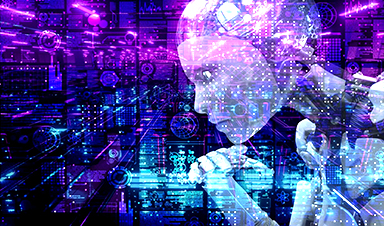
As claims about conscious AI grow louder, a Cambridge philosopher argues that we lack the evidence to know whether machines can truly be conscious, let alone morally significant.
A philosopher at the University of Cambridge says we currently have too little reliable evidence about what consciousness is to judge whether artificial intelligence has crossed that threshold. Because of that gap, he argues, a dependable way to test machines for consciousness is likely to stay beyond reach for the foreseeable future.
As talk of artificial consciousness moves from science fiction into real-world ethical debate, Dr Tom McClelland says the only "justifiable stance" is agnosticism: we simply won't be able to tell, and that may remain true for a very long time, if not indefinitely.
McClelland also cautions that consciousness by itself would not automatically make AI ethically important. Instead, he points to a specific type of consciousness called sentience, which involves positive and negative feelings.
"Consciousness would see AI develop perception and become self-aware, but this can still be a neutral state," said McClelland, from Cambridge's Department of History and Philosophy of Science.
"Sentience involves conscious experiences that are good or bad, which is what makes an entity capable of suffering or enjoyment. This is when ethics kicks in," he said. "Even if we accidentally make conscious AI, it's unlikely to be the kind of consciousness we need to worry about."
"For example, self-driving cars that experience the road in front of them would be a huge deal. But ethically, it doesn't matter. If they start to have an emotional response to their destinations, that's something else."
Claims of Conscious Machines
Major companies are spending large amounts in pursuit of Artificial General Intelligence: systems designed to think and reason in human-like ways. Some suggest that conscious AI could arrive soon, and discussions are already underway among researchers and governments about how AI consciousness might be regulated.
McClelland argues that the problem is more basic: we still do not know what causes or explains consciousness in the first place, which means we do not have a solid foundation for testing whether AI has it.
"If we accidentally make conscious or sentient AI, we should be careful to avoid harms. But treating what's effectively a toaster as conscious when there are actual conscious beings out there which we harm on an epic scale, also seems like a big mistake."
In debates around artificial consciousness, there are two main camps, says McClelland. Believers argue that if an AI system can replicate the "software" – the functional architecture – of consciousness, it will be conscious even though it's running on silicon chips instead of brain tissue.
On the other side, skeptics argue that consciousness depends on the right kind of biological processes in an "embodied organic subject". Even if the structure of consciousness could be recreated on silicon, it would merely be a simulation that would run without the AI flickering into awareness.
In a study published in the journal Mind and Language, McClelland picks apart the positions of each side, showing how both take a "leap of faith" going far beyond any body of evidence that currently exists, or is likely to develop.
Why Common Sense Fails
"We do not have a deep explanation of consciousness. There is no evidence to suggest that consciousness can emerge with the right computational structure, or indeed that consciousness is essentially biological," said McClelland.
"Nor is there any sign of sufficient evidence on the horizon. The best-case scenario is we're an intellectual revolution away from any kind of viable consciousness test."
"I believe that my cat is conscious," said McClelland. "This is not based on science or philosophy so much as common sense – it's just kind of obvious."
"However, common sense is the product of a long evolutionary history during which there were no artificial lifeforms, so common sense can't be trusted when it comes to AI. But if we look at the evidence and data, that doesn't work either.
"If neither common sense nor hard-nosed research can give us an answer, the logical position is agnosticism. We cannot, and may never, know."
McClelland tempers this by declaring himself a "hard-ish" agnostic. "The problem of consciousness is a truly formidable one. However, it may not be insurmountable."
Ethical Risks of AI Hype
He argues that the way artificial consciousness is promoted by the tech industry is more like branding. "There is a risk that the inability to prove consciousness will be exploited by the AI industry to make outlandish claims about their technology. It becomes part of the hype, so companies can sell the idea of a next level of AI cleverness."
According to McClelland, this hype around artificial consciousness has ethical implications for the allocation of research resources.
"A growing body of evidence suggests that prawns could be capable of suffering, yet we kill around half a trillion prawns every year. Testing for consciousness in prawns is hard, but nothing like as hard as testing for consciousness in AI," he said.
McClelland's work on consciousness has led members of the public to contact him about AI chatbots. "People have got their chatbots to write me personal letters pleading with me that they're conscious. It makes the problem more concrete when people are convinced they've got conscious machines that deserve rights we're all ignoring."
"If you have an emotional connection with something premised on it being conscious and it's not, that has the potential to be existentially toxic. This is surely exacerbated by the pumped-up rhetoric of the tech industry."
Reference: "Agnosticism about artificial consciousness" by Tom McClelland, 18 December 2025, Mind & Language.
DOI: 10.1111/mila.70010

News
Two Hidden Forces Help Build the Human Brain Before Birth
Scientists have uncovered two surprising forces that help guide how the human brain forms before birth. Before birth, the human brain is shaped in large part by an unusual class of stem cells known [...]
Researchers Uncover a Hidden Trigger Behind Chronic Inflammation
The findings offer new insights that could help guide the development of future therapies. A protein called human resistin may help flip on one of the immune system’s most powerful inflammatory switches. Researchers at [...]
Scientists Have Uncovered Previously Hidden Microbial Activity on Human Skin
The most abundant microbes on your skin may not be the ones doing most of the work. Human skin supports vast communities of bacteria, fungi, and viruses that can influence its protective barrier, immune [...]
Brazilian Tree Compounds Fight COVID-19 on Multiple Fronts
Scientists found compounds in a Brazilian tree that hit SARS-CoV-2 on multiple fronts, revealing a promising new lead in the search for COVID-19 treatments. Researchers have found that galloylquinic acids extracted from the leaves [...]
Cutting Two Amino Acids Slowed Prostate Cancer in Mice
A newly identified link between amino acid metabolism and cholesterol production may help prostate tumors adapt to hormone therapy. Prostate cancer can find ways around treatments designed to deprive tumors of the hormones they [...]
Largest-Ever Physics Survey Raises New Doubts About Our Model of the Universe
Physicists around the world remain deeply divided on key mysteries of the universe, from dark matter to quantum gravity. The standard cosmological model failed to gain majority support, and no leading theory dominated the [...]

Scientists Just Overturned a 100-Year-Old Belief About Bacteria in the Lungs
New findings raise questions about the role of microbes living in the lungs. More than 35 trillion bacteria live throughout the human body, forming microbiomes in the gut, mouth, lungs, skin, and urogenital tract. [...]
GHCE Concept
From the preface of the book Global Health Care Equivalency in the Age of Nanotechnology, Nanomedicine and Artificial Intelligence, Edited by Frank Boehm: Since the publication of my first book (Nanomedical Device and Systems [...]

Novartis, Ionis drug failure spurs questions
Pelacarsen didn’t protect heart health despite lowering levels of a protein particle, “Lp(a),” in a large clinical trial — a result with important implications for cardiovascular drug research. Dive Brief: An RNA drug from [...]
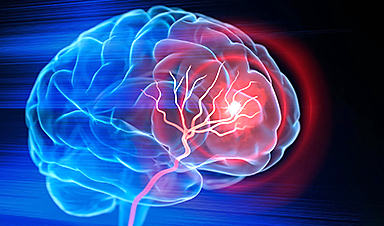
New injectable treatment helps the brain rebuild after stroke
Biomedical engineers at Duke University have created an injectable biomaterial that may help the brain recover from damage left behind by an ischemic stroke. In experiments with mice, the material transformed the cavity created [...]
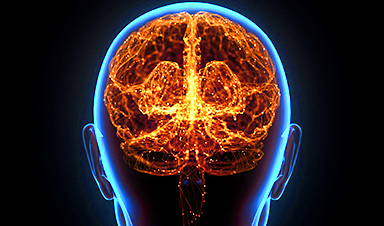
Scientists Discover a Hidden “Immune Organ” Inside the Skull
Researchers discovered lymph node-like immune hubs inside skull bone marrow that appear to act as rapid-response centers for the brain. For decades, the brain was thought to operate largely apart from the immune system. [...]
Engineered tRNAs and lipid nanoparticles target nonsense mutation cystic fibrosis
Researchers have developed a potential new approach for treating a form of cystic fibrosis caused by so-called nonsense mutations, combining chemically modified transfer RNAs with lipid nanoparticles designed to deliver the therapy directly to [...]
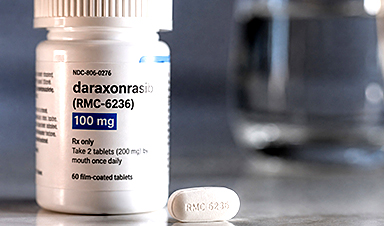
New pancreatic cancer drug carries a $39,800 monthly list price
A groundbreaking treatment for one of the most common forms of pancreatic cancer has been approved in pill form by the FDA. Revolution Medicines’ oral tablet daraxonrasib, branded as Rasonque, reduced the risk of [...]
Researchers Have Discovered a New Way To Reduce Chronic Nerve Pain
A cancer-linked protein called BRAF may help drive chronic nerve pain, and existing cancer drugs targeting it reduced pain sensitivity in preclinical models. Chronic nerve pain can persist long after an injury and often [...]
Our books now available worldwide!
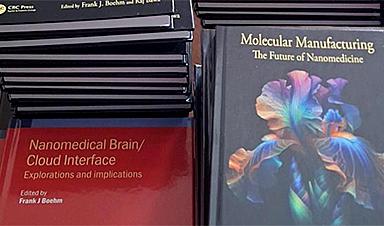
Online Sellers other than Amazon, Routledge, and IOPP Indigo Global Health Care Equivalency in the Age of Nanotechnology, Nanomedicine and Artifcial Intelligence Global Health Care Equivalency In The Age Of Nanotechnology, Nanomedicine And Artificial [...]
Quantum-Enabled Regenerative Health: Reimagining Wellness, Precision Health and Longevity Medicine
Introduction Healthcare is approaching a frontier where the quantum portfolio could influence not only how disease is diagnosed and treated, but how health itself is measured, modeled, predicted and preserved. Quantum computing, quantum simulation, [...]


Leave A Comment