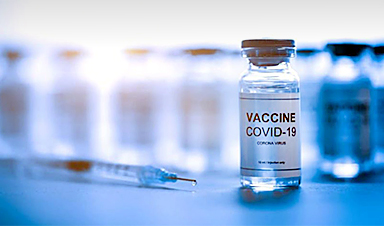
Within weeks, scientists at the Walter Reed Army Institute of Research expect to announce that they have developed a vaccine that is effective against COVID-19 and all its variants, even Omicron, as well as previous SARS-origin viruses that have killed millions of people worldwide.
The achievement is the result of almost two years of work on the virus. The Army lab received its first DNA sequencing of the COVID-19 virus in early 2020. Very early on, Walter Reed’s infectious diseases branch decided to focus on making a vaccine that would work against not just the existing strain but all of its potential variants as well.
Walter Reed’s Spike Ferritin Nanoparticle COVID-19 vaccine, or SpFN, completed animal trials earlier this year with positive results. Phase 1 of human trials, wrapped up this month, again with positive results that are undergoing final review, Dr. Kayvon Modjarrad, director of Walter Reed’s infectious diseases branch, said in an exclusive interview with Defense One on Tuesday. The new vaccine will still need to undergo phase 2 and phase 3 trials.
“We’re testing our vaccine against all the different variants, including Omicron,” Modjarrad said.
On Wednesday, Walter Reed officials said in a statement that its vaccine “was not tested on the Omicron variant,“ but later clarified in an email to Defense One that while the recently discovered variant was not part of the animal studies, it is being tested in the lab against clinical human trial samples. These “neutralization assays” test whether antibodies can inhibit the growth of a virus.
“We want to wait for those clinical data to be able to kind of make the full public announcements, but so far everything has been moving along exactly as we had hoped,” Modjarrad said.
“It’s very exciting to get to this point for our entire team and I think for the entire Army as well,” Modjarrad said.
Increasing vaccination rates and the rapid spread of the Delta and Omicron variants made that difficult.
“With Omicron, there’s no way really to escape this virus. You’re not going to be able to avoid it. So I think pretty soon either the whole world will be vaccinated or have been infected,” Modjarrad said.
The next step is seeing how the new pan-coronavirus vaccine interacts with people who were previously vaccinated or previously sick. Walter Reed is working with a yet-to-be-named industry partner for that wider rollout.
“We need to evaluate it in the real-world setting and try to understand how does the vaccine perform in much larger numbers of individuals who have already been vaccinated with something else initially…or already been sick,” Modjarrad said.
He said nearly all of Walter Reed’s 2,500 staff have had some role in the vaccine’s nearly-two-year development.
“We decided to take a look at the long game rather than just only focusing on the original emergence of SARS, and instead understand that viruses mutate, there will be variants that emerge, future viruses that may emerge in terms of new species. Our platform and approach will equip people to be prepared for that.”

News

Regenerative Healthcare by Design: Engineering Health-Centric Buildings and Urban Ecosystems
Introduction The next evolution of healthcare will not be confined to hospitals, clinics, or episodic interventions—it will be embedded into the infrastructure of everyday life. Regenerative health ecosystems require a systemic re-architecture of how [...]

Scientists Warn: Humanity Has Pushed the Planet Past Its Limits
Human population and consumption have surpassed Earth’s limits, increasing risks to climate and global stability. The Earth is already operating beyond its capacity to sustainably support the global population, according to new research highlighting [...]
Breakthrough Study Reveals Why Damaged Nerves Struggle To Heal
A newly identified molecular mechanism reveals how neurons weigh survival against repair after injury. Scientists at the Icahn School of Medicine at Mount Sinai have identified a molecular switch in neurons that limits the regrowth of [...]

Popular Vitamin B3 Supplements May Help Cancer Cells Survive, Scientists Warn
A new study raises important questions about widely used NAD+ supplements, suggesting that compounds often taken to boost energy and support healthy aging may have unintended consequences in cancer treatment. Millions of Americans take [...]
Scientists Discover Cancer Tumors Are “Addicted” to This Common Antioxidant
Cancer cells may be exploiting a common antioxidant as fuel, revealing a potential weakness that future therapies could target. Cancer cells may be tapping into an unexpected energy source: an antioxidant long associated with [...]
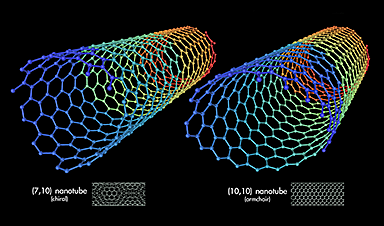
Nanotube injector transfers cytoplasmic contents and organelles between living cells safely
Cells are not isolated units; they continuously exchange proteins, genetic material, and even entire organelles with their neighbors. Intercellular transfer influences how tissues develop, respond to stress, and repair damage. In certain cancers, for [...]

CEO of America’s largest public hospital system is ready to replace radiologists with AI
The chief executive of America’s largest public hospital system says he is prepared to start replacing radiologists with artificial intelligence in some circumstances, once the regulatory landscape catches up. Mitchell H. Katz, MD, president [...]

Our books now available worldwide!
Online Sellers other than Amazon, Routledge, and IOPP Indigo Global Health Care Equivalency in the Age of Nanotechnology, Nanomedicine and Artifcial Intelligence Global Health Care Equivalency In The Age Of Nanotechnology, Nanomedicine And Artificial [...]

Study finds higher heart disease risk in long COVID patients
People with long COVID are at increased risk of developing cardiovascular disease, according to a new study from Karolinska Institutet published in eClinicalMedicine. The results show that the risk of conditions such as cardiac arrhythmias [...]
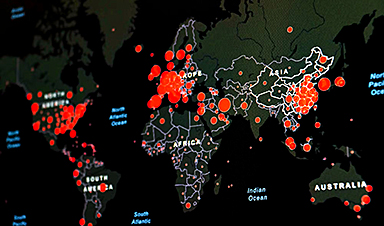
The Corona variant Cicada is here – we know that
Online and on social media, reports are piling up about a new Sars-Cov-2 variant that is currently on the rise: BA.3.2, also known as Cicada. That's what it's all about: The Omicron variant BA.3.2, [...]

A Simple Blood Test Could Predict Dementia Risk 25 Years Early
A single blood marker may quietly signal dementia risk decades in advance. Scientists at the University of California, San Diego, have identified a blood signal that could forecast dementia risk decades before symptoms begin. Their [...]

Sperm Get Lost in Space and Scientists Finally Know Why
Having a baby in space may be far more complicated than expected, as new research shows sperm struggle to find their way in microgravity. Starting a family beyond Earth could be more complicated than [...]
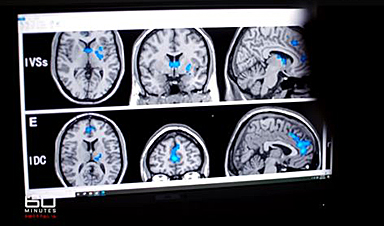
Digital Dementia – Brain fog and disassociation from being chronically online
New medical evidence, featured on 60 Minutes Australia, indicates excessive screen time is causing "digital dementia" in young Australians, with brain scans showing physical shrinkage and damage. Experts warn that high device usage (6-8 hours [...]
A new, highly mutated COVID variant called ‘Cicada’ is spreading in the US.
BA.3.2, a heavily mutated new COVID-19 variant which may be better able to escape immunity from vaccines or prior infection, is now spreading in the United States. Although COVID cases are currently low nationally, [...]
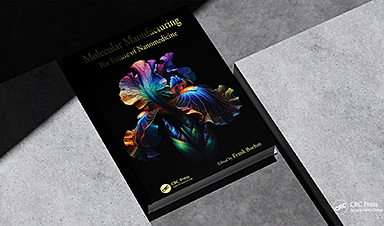
Molecular Manufacturing: The Future of Nanomedicine – New book from NanoappsMedical Inc.
This book explores the revolutionary potential of atomically precise manufacturing technologies to transform global healthcare, as well as practically every other sector across society. This forward-thinking volume examines how envisaged Factory@Home systems might enable the cost-effective [...]

Ancient bacteria strain discovered in ice cave is resistant to some modern antibiotics
In the depths of Scarisoara cave in Romania sits one of the world’s biggest underground glaciers, a monumental slab of ice the size of roughly 40 Olympic swimming pools that began to form around [...]