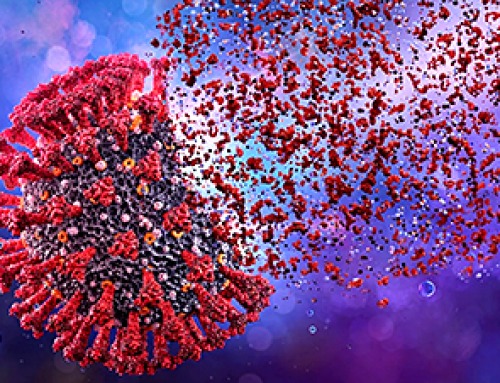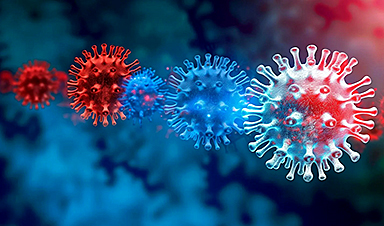
BA.3.2, a heavily mutated new COVID-19 variant which may be better able to escape immunity from vaccines or prior infection, is now spreading in the United States.
Although COVID cases are currently low nationally, the BA.3.2 strain is gaining traction across the globe. BA.3.2, aka "cicada," emerged over a year ago and slowly simmered until last fall, when it started ramping up in several countries, including the U.S.
As of February, BA.3.2 has been detected in at least 25 states, the U.S. Centers for Disease Control and Prevention said.
Perhaps more concerning is the variant's slew of genetic changes in its spike protein, which set it apart from other variants circulating, Andrew Pekosz, Ph.D., a virologist at the Johns Hopkins Bloomberg School of Public Health, tells TODAY.com.
"It has a lot of mutations that may cause it to look different to your immune system," Pekosz says.
These have the potential to reduce protection from a prior COVID infection or vaccination, according to a new study published in the CDC's latest Morbidity and Mortality Weekly Report.
As a result, the "hyper-mutated" strain is being closely tracked by public health officials. In December 2025, the World Health Organization classified BA.3.2 as a "variant under monitoring."
BA.3.2 was nicknamed "cicada" by T. Ryan Gregory, Ph.D., a professor of evolutionary biology at the University of Guelph who's coined other variant names like "stratus" and "pirola."
Like its namesake insect, BA.3.2 also spent its first years "underground" before re-emerging as a potential major variant, Gregory tells TODAY.com.
Here's what to know about BA.3.2, where it's spreading, potential symptoms and the effectiveness of vaccines against it.
What Is the New COVID Variant, BA.3.2?
BA.3.2 was first identified in November 2024 in South Africa. It's a descendent of BA.3, an omicron subvariant that emerged in 2022 and briefly circulated with BA.1 and BA.2, the CDC said.
Its ancestor BA.3 fizzled out, but never disappeared, says Pekosz. Two years and dozens of mutations later, BA.3.2 emerged.
Since 2024, BA.3.2 has moved slowly and quietly, overshadowed by dominant variants like Nimbus and XFG — which all descend from BA.2. Last September, BA.3.2 started taking off.
"It was under the radar, replicating, until it started to spread more from person to person," says Pekosz.
BA.3.2 has 75 mutations in its spike protein — that's a lot, says Pekosz — which set it apart from JN.1 and LP.8.1, the strains targeted by current COVID-19 vaccines.
According to the CDC, BA.3.2 represents a new lineage that's "genetically distinct" from the family of variants we've seen in recent years. "We think it might be able to evade a lot of the immunity already in the population," says Pekosz.
In laboratory studies, BA.3.2 effectively escaped COVID-19 antibodies due to its spike protein changes, the CDC said.
"What's interesting, however, is some of these mutations may actually make the virus bind less well to our cells. So yes, our immune system may not recognize it, but it also doesn't recognize us as well," Dr. Dana Mazo, an infectious diseases physician at NYU Langone Health, tells TODAY.com.
Why is BA.3.2 resurfacing now? That's unclear, Mazo says.
Does the New COVID Variant Cause More Severe Illness?
Is BA.3.2 making people sicker?
"There's no evidence that BA.3.2 is causing more severe disease or hospitalizations in countries where it's more widespread," Dr. Adolfo García-Sastre, director of the global health and emerging pathogens institute at Mt. Sinai, tells TODAY.com.
Pekosz adds: "It looks scary on paper, but it hasn't really made a big impact in terms of disease in most places yet."
Where Is BA.3.2 Spreading?
As of Feb. 11, 2026, BA.3.2 has spread to at least 23 countries, per data from the CDC and the Global Initiative on Sharing All Influenza Data (GISAID) database. It's driving about 30% of cases in Denmark, Germany and the Netherlands, per the CDC.
BA.3.2 was first detected in the U.S. in June 2025 in a traveler returning from the Netherlands at the San Francisco International Airport, the CDC said. Since then, it's been detected in international travelers, COVID patients and wastewater samples.
BA.3.2 is spreading in at least 25 states, per the CDC:
- California
- Connecticut
- Florida
- Hawaii
- Idaho
- Louisiana
- Maine
- Maryland
- Massachusetts
- Michigan
- Missouri
- Nevada
- New Hampshire
- New Jersey
- New York
- Ohio
- Pennsylvania
- Rhode Island
- South Carolina
- Texas
- Utah
- Vermont
- Virginia
- Wyoming
Currently, BA.3.2 is not fueling enough cases to be added to the CDC's variant proportion tracker.
However, the latest data from WastewaterSCAN, a Stanford University-run program that tracks diseases, show BA.3.2 has been detected in 3.7% of sewage samples nationwide, a spokesperson tells TODAY.com.
"There are still a lot of unknown questions about how prevalent it is in the U.S., because surveillance has been reduced a lot," García-Sastre says.
Will BA.3.2 Cause a Surge in the U.S.?
Although BA.3.2 detections are going up, it's still circulating at a relatively low level in many countries, including the U.S. "It's increasing, but it hasn't really caused a huge surge of infections anywhere," Pekosz adds.
Cicada hasn't overtaken the current dominant variants, XFG (stratus), NB.1.8.1 (nimbus) and their descendants, Gregory adds.
"BA.3.2 has not shown a sustained growth advantage over other any other co-circulating variant," the WHO said.
"If it had really special advantages, we'd probably have seen it take off and dominate globally relatively quickly. We didn't see that, but it's not going away, so it's something to keep an eye on," says Pekosz.
Even if BA.3.2 can evade existing immunity, there will likely still be some "cross-reactivity," so it won't be a complete stranger to our immune systems, the experts say.
COVID-19 can be unpredictable, so only time will tell. "It may evolve to be bit better at spreading or causing disease, but we just don't know," says Pekosz.
However, it's unlikely that BA.3.2 will cause a wave as large or severe as the ones seen very early in the pandemic, he adds.
Symptoms of the New COVID Variant BA.3.2
The symptoms of BA.3.2 are similar to those caused by other recent variants, the experts note.
According to the CDC, common COVID-19 symptoms in 2026 include:
- Cough
- Fever or chills
- Sore throat
- Congestion
- Shortness of breath
- Loss of smell or taste
- Fatigue
- Headache
- Gastrointestinal symptoms
Symptoms can vary depending on the person, but usually go away on their own with supportive care.
"The new variant is still sensitive to COVID antiviral drugs that we have been developing, so at least those will work," says García-Sastre.
Do Vaccines Protect Against the New COVID Variant?
BA.3.2 has drawn attention partly because the changes in its spike protein have may affect how well the vaccine protects against infection, highlighting the need for possible reformulation, the experts note.
The 2025-2026 COVID vaccines, which target the JN.1 lineage, are effective at protecting against severe disease from current strains.
In lab studies, these vaccines were less effective against BA.3.2, but more research is needed, the CDC said.
"It's not completely clear how effective the current vaccine will be, but it likely still has some effectiveness," García-Sastre says.
According to the WHO, current COVID vaccines "are expected to continue providing protection against severe disease."
Vaccines are typically reformulated in the summer and can protect against multiple strains. "One beauty of this vaccine is that we can update it every year," says Mazo.
In the meantime, you can still protect yourself and others by testing if you have symptoms, staying home when sick and wearing a mask in high-risk (crowded, indoor) settings.
If you haven't been vaccinated or infected with COVID in the last six to 12 months, it may be worth talking to your doctor about whether a booster is right for you, says García-Sastre.
Vaccination is particularly important for people at higher risk of severe disease from COVID-19, which include adults over 65 and individuals with weakened immune systems or underlying conditions.
"Vaccination is still going to help limit cases," says Pekosz.

News – Curated by Amanda Scott, Alias Group Creative
Follow her on Bluesky
Cancer’s Hidden Antioxidant Shield Helps It Escape the Immune System
Blocking an antioxidant protein that tumors use to suppress immune attacks improved cancer immunotherapy responses in mice. Cancer cells can release antioxidants that interfere with the immune cells trying to kill them. Researchers have [...]

Scientists Find a Berry Compound That Helps Muscle Cells Burn Fat
Pterostilbene, a compound found naturally in some foods, affects how skeletal muscles process fats by stabilizing a protein called PPARδ and increasing its signaling activity. Pterostilbene, a natural compound found in blueberries, grapes, and [...]

Two Hidden Forces Help Build the Human Brain Before Birth
Scientists have uncovered two surprising forces that help guide how the human brain forms before birth. Before birth, the human brain is shaped in large part by an unusual class of stem cells known [...]

Researchers Uncover a Hidden Trigger Behind Chronic Inflammation
The findings offer new insights that could help guide the development of future therapies. A protein called human resistin may help flip on one of the immune system’s most powerful inflammatory switches. Researchers at [...]

Scientists Have Uncovered Previously Hidden Microbial Activity on Human Skin
The most abundant microbes on your skin may not be the ones doing most of the work. Human skin supports vast communities of bacteria, fungi, and viruses that can influence its protective barrier, immune [...]
Brazilian Tree Compounds Fight COVID-19 on Multiple Fronts
Scientists found compounds in a Brazilian tree that hit SARS-CoV-2 on multiple fronts, revealing a promising new lead in the search for COVID-19 treatments. Researchers have found that galloylquinic acids extracted from the leaves [...]

Cutting Two Amino Acids Slowed Prostate Cancer in Mice
A newly identified link between amino acid metabolism and cholesterol production may help prostate tumors adapt to hormone therapy. Prostate cancer can find ways around treatments designed to deprive tumors of the hormones they [...]

Largest-Ever Physics Survey Raises New Doubts About Our Model of the Universe
Physicists around the world remain deeply divided on key mysteries of the universe, from dark matter to quantum gravity. The standard cosmological model failed to gain majority support, and no leading theory dominated the [...]

Scientists Just Overturned a 100-Year-Old Belief About Bacteria in the Lungs
New findings raise questions about the role of microbes living in the lungs. More than 35 trillion bacteria live throughout the human body, forming microbiomes in the gut, mouth, lungs, skin, and urogenital tract. [...]

GHCE Concept
From the preface of the book Global Health Care Equivalency in the Age of Nanotechnology, Nanomedicine and Artificial Intelligence, Edited by Frank Boehm: Since the publication of my first book (Nanomedical Device and Systems [...]

Novartis, Ionis drug failure spurs questions
Pelacarsen didn’t protect heart health despite lowering levels of a protein particle, “Lp(a),” in a large clinical trial — a result with important implications for cardiovascular drug research. Dive Brief: An RNA drug from [...]

New injectable treatment helps the brain rebuild after stroke
Biomedical engineers at Duke University have created an injectable biomaterial that may help the brain recover from damage left behind by an ischemic stroke. In experiments with mice, the material transformed the cavity created [...]

Scientists Discover a Hidden “Immune Organ” Inside the Skull
Researchers discovered lymph node-like immune hubs inside skull bone marrow that appear to act as rapid-response centers for the brain. For decades, the brain was thought to operate largely apart from the immune system. [...]
Engineered tRNAs and lipid nanoparticles target nonsense mutation cystic fibrosis
Researchers have developed a potential new approach for treating a form of cystic fibrosis caused by so-called nonsense mutations, combining chemically modified transfer RNAs with lipid nanoparticles designed to deliver the therapy directly to [...]
New pancreatic cancer drug carries a $39,800 monthly list price
A groundbreaking treatment for one of the most common forms of pancreatic cancer has been approved in pill form by the FDA. Revolution Medicines’ oral tablet daraxonrasib, branded as Rasonque, reduced the risk of [...]

Researchers Have Discovered a New Way To Reduce Chronic Nerve Pain
A cancer-linked protein called BRAF may help drive chronic nerve pain, and existing cancer drugs targeting it reduced pain sensitivity in preclinical models. Chronic nerve pain can persist long after an injury and often [...]