In the depths of Scarisoara cave in Romania sits one of the world's biggest underground glaciers, a monumental slab of ice the size of roughly 40 Olympic swimming pools that began to form around 13,000 years ago.
Scientists studying ancient microbes once entombed in the cave's ice say a bacterial strain they thawed and analyzed is resistant to 10 modern antibiotics used to treat diseases such as urinary tract infections and tuberculosis.
While there's no evidence the bacteria are harmful to humans, awakening microbes that have lain dormant for thousands of years may sound like the plot of a sci-fi novel or movie. The new research, however, demonstrates how resistance has, in certain cases, evolved naturally in the environment, long before modern antibiotics were ever developed or prescribed by doctors.
"Ancient bacteria can resist modern antibiotics because antibiotic resistance is an ancient evolutionary characteristic that was shaped over millions of years by competition between microbes," said Cristina Purcarea, a senior scientist at the department of microbiology at the Institute of Biology Bucharest of the Romanian Academy, and senior author of the study that published this week in the scientific journal Frontiers in Microbiology.
As they mix with one another over the course of millions of years, bacteria can share useful traits by exchanging small pieces of DNA, even between unrelated bacterial species, in an evolutionary arms race. This survival strategy has, coincidentally, resulted in some strains of bacteria being unaffected by certain antibiotics, drugs that trace their origins to natural compounds. This phenomenon is more common among microbial strains that live in extreme environments, the study noted.
"Modern antibiotics may speed up the spread of resistance, based on molecular mechanisms that existed in nature long before humans developed these drugs," Purcarea added.
The scientists said the insights they have gained from the work may help in the fight against modern superbugs that can't be treated by commonly used antibiotics
Core of ice
The newly identified strain of bacteria that Purcarea and her colleagues studied, known as Psychrobacter SC65A.3, thrives in cold environments and could not infect humans, she said.
"This strain is a psychrophile, meaning it's a lover of the cold, not a lover of human bodies. Most Psychrobacter species are typically found in ice or refrigerated settings," including foods, she said.
The sample in the study came from a 25-meter (82-foot) cylindrical core of ice the team drilled from an area of the cave known as the Great Hall. The core contained 13,000 years' worth of frozen material, but the sample analyzed in the study was from 5,000-year-old ice.
In the lab, the researchers isolated various bacterial strains and sequenced their genomes to evaluate which genes allow the strain to survive in low temperatures and which are linked to antimicrobial resistance.
In the case of SC65A.3, when exposed to 28 antibiotics routinely used to treat bacterial infection, the researchers found the strain was resistant to 10, including trimethoprim, clindamycin and metronidazole, which treat bacterial infections.
As the planet warms and glaciers and ice caves melt, microbes trapped for thousands of years could be released, Purcarea said. "While most are harmless, some could carry antibiotic resistance or other unknown biomolecules that might affect current ecosystems," she added via email.
Purcarea and her colleagues are not the only researchers assessing the risks of long-frozen microbes and the ancient nature of antimicrobial resistance as the world warms. Other researchers have revived 48,000-year-old viruses frozen in permafrost to examine the low but underappreciated risk of a disease outbreak unleashed by a long-dormant pathogen.
Risk and hope
The bacterial strain identified in the latest research also offers some hope in the fight against superbugs. Analysis of the Psychrobacter SC65A.3 genome revealed 11 genes that are potentially able to kill or stop the growth of other bacteria, fungi and viruses.
Most antibiotics are developed from bacteria and fungi and have been discovered by screening microorganisms that live in soil. But in recent decades, pathogens have become resistant to many of these drugs due to overuse.
The urgency to identify new antibiotic candidates has never been greater, with the world facing nearly 5 million deaths every year linked to antimicrobial resistance, according to the World Health Organization.
Matthew Holland, a postdoctoral researcher in medicinal chemistry at the UK's University of Oxford, said that researchers were searching in new and extreme environments, such as ice caves and the seafloor, for biomolecules that could be developed into new antibiotic drugs. He was not involved in the new study.
"The team in Romania found this particular bug had resistance to 10 reasonably advanced synthetic antibiotics and that in itself is interesting," he said. "But what they report as well is that it secreted molecules that were able to kill a variety of already resistant, harmful bacteria.
"So the hope is that can we look at the molecules it makes and see if there's the possibility within those molecules to make new antibiotics."

News – Curated by Amanda Scott, Alias Group Creative
Follow her on Bluesky
Cancer’s Hidden Antioxidant Shield Helps It Escape the Immune System
Blocking an antioxidant protein that tumors use to suppress immune attacks improved cancer immunotherapy responses in mice. Cancer cells can release antioxidants that interfere with the immune cells trying to kill them. Researchers have [...]

Scientists Find a Berry Compound That Helps Muscle Cells Burn Fat
Pterostilbene, a compound found naturally in some foods, affects how skeletal muscles process fats by stabilizing a protein called PPARδ and increasing its signaling activity. Pterostilbene, a natural compound found in blueberries, grapes, and [...]
Two Hidden Forces Help Build the Human Brain Before Birth
Scientists have uncovered two surprising forces that help guide how the human brain forms before birth. Before birth, the human brain is shaped in large part by an unusual class of stem cells known [...]

Researchers Uncover a Hidden Trigger Behind Chronic Inflammation
The findings offer new insights that could help guide the development of future therapies. A protein called human resistin may help flip on one of the immune system’s most powerful inflammatory switches. Researchers at [...]
Scientists Have Uncovered Previously Hidden Microbial Activity on Human Skin
The most abundant microbes on your skin may not be the ones doing most of the work. Human skin supports vast communities of bacteria, fungi, and viruses that can influence its protective barrier, immune [...]
Brazilian Tree Compounds Fight COVID-19 on Multiple Fronts
Scientists found compounds in a Brazilian tree that hit SARS-CoV-2 on multiple fronts, revealing a promising new lead in the search for COVID-19 treatments. Researchers have found that galloylquinic acids extracted from the leaves [...]
Cutting Two Amino Acids Slowed Prostate Cancer in Mice
A newly identified link between amino acid metabolism and cholesterol production may help prostate tumors adapt to hormone therapy. Prostate cancer can find ways around treatments designed to deprive tumors of the hormones they [...]
Largest-Ever Physics Survey Raises New Doubts About Our Model of the Universe
Physicists around the world remain deeply divided on key mysteries of the universe, from dark matter to quantum gravity. The standard cosmological model failed to gain majority support, and no leading theory dominated the [...]
Scientists Just Overturned a 100-Year-Old Belief About Bacteria in the Lungs
New findings raise questions about the role of microbes living in the lungs. More than 35 trillion bacteria live throughout the human body, forming microbiomes in the gut, mouth, lungs, skin, and urogenital tract. [...]

GHCE Concept
From the preface of the book Global Health Care Equivalency in the Age of Nanotechnology, Nanomedicine and Artificial Intelligence, Edited by Frank Boehm: Since the publication of my first book (Nanomedical Device and Systems [...]

Novartis, Ionis drug failure spurs questions
Pelacarsen didn’t protect heart health despite lowering levels of a protein particle, “Lp(a),” in a large clinical trial — a result with important implications for cardiovascular drug research. Dive Brief: An RNA drug from [...]
New injectable treatment helps the brain rebuild after stroke
Biomedical engineers at Duke University have created an injectable biomaterial that may help the brain recover from damage left behind by an ischemic stroke. In experiments with mice, the material transformed the cavity created [...]
Scientists Discover a Hidden “Immune Organ” Inside the Skull
Researchers discovered lymph node-like immune hubs inside skull bone marrow that appear to act as rapid-response centers for the brain. For decades, the brain was thought to operate largely apart from the immune system. [...]
Engineered tRNAs and lipid nanoparticles target nonsense mutation cystic fibrosis
Researchers have developed a potential new approach for treating a form of cystic fibrosis caused by so-called nonsense mutations, combining chemically modified transfer RNAs with lipid nanoparticles designed to deliver the therapy directly to [...]
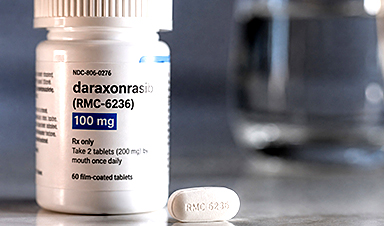
New pancreatic cancer drug carries a $39,800 monthly list price
A groundbreaking treatment for one of the most common forms of pancreatic cancer has been approved in pill form by the FDA. Revolution Medicines’ oral tablet daraxonrasib, branded as Rasonque, reduced the risk of [...]
Researchers Have Discovered a New Way To Reduce Chronic Nerve Pain
A cancer-linked protein called BRAF may help drive chronic nerve pain, and existing cancer drugs targeting it reduced pain sensitivity in preclinical models. Chronic nerve pain can persist long after an injury and often [...]