Human population and consumption have surpassed Earth's limits, increasing risks to climate and global stability.
The Earth is already operating beyond its capacity to sustainably support the global population, according to new research highlighting growing strain on food systems, climate stability, and human well-being. Despite this, researchers say that slowing population growth and increasing global awareness could still help reduce long-term risks.
Published in Environmental Research Letters, the study concludes that human activity has exceeded the planet's long-term limits. If current patterns of consumption continue, environmental and social pressures are expected to intensify across the world.
Population growth now exceeds planetary limits
Drawing on more than two centuries of global population data, the study identifies a major shift in population dynamics that began in the mid-twentieth century.
Lead author, Matthew Flinders Professor of Global Ecology Corey Bradshaw from Flinders University, says the findings reveal a clear biological signal that humanity is exceeding what Earth can sustain.

"Earth cannot keep up with the way in which we are using resources. It cannot support even today's demand without major changes, with our findings showing that we are pushing the planet harder than it can possibly cope," says Professor Bradshaw from the Global Ecology Laboratory in the College of Science and Engineering.
Growth dynamics shifted after mid-century
The research team, including distinguished Professor Paul Ehrlich who recently passed away, analyzed more than 200 years of global population records and applied ecological growth models to examine how population size and growth rates have evolved over time.
They assessed long-term trends across different regions and compared population changes with shifts in climate, emissions, and ecological footprint to better understand how human numbers contribute to environmental stress.
This pattern changed in the early 1960s, when growth rates began to decline even as the total population continued to rise.
"This shift marked the beginning of what we call 'a negative demographic phase," says Professor Bradshaw.
"It means that adding more people no longer translates into faster growth. When we examined this phase, we found the global population is likely to peak somewhere between 11.7 and 12.4 billion people by the late 2060s or 2070s if current trends hold."
Sustainable population far below current levels
Professor Bradshaw explains that this projected peak is risky and has only been made possible by heavy reliance on fossil fuels and the rapid depletion of natural resources.
"The truly sustainable population is much lower and closer to what the world supported in the mid-twentieth century. Our calculations show a sustainable global population closer to about 2.5 billion people if everyone were to live within ecological limits and comfortable, economically secure living standards," he says.
The gap between this estimate and the current global population of about 8.3 billion highlights the scale of overconsumption. According to the researchers, decades of fossil fuel use have masked this imbalance by boosting food production, energy supply, and industrial output, while also driving climate change and pollution.
Population size drives environmental stress
The study identifies a strong connection between population size and rising global temperatures, increasing ecological footprints, and higher carbon emissions during the negative demographic phase. In many cases, total population size explained more variation in these environmental indicators than per capita consumption.
Professor Bradshaw says this demonstrates how both population growth and consumption patterns contribute to environmental pressure. "Humanity's current path will push societies into deeper crises unless we make major changes," he says.
Long-term risks and possible pathways
The researchers emphasize that their findings do not predict an abrupt collapse, but instead outline the long-term pressures shaping humanity's future. Exceeding Earth's 'biocapacity' is expected to lead to stronger climate impacts, biodiversity loss, reduced food and water security, and widening inequality.
Professor Bradshaw says societies must rethink how they manage land, water, energy, and materials to ensure stable conditions for future generations.
"Smaller populations with lower consumption create better outcomes for both people and the planet," he says. "The window to act is narrowing, but meaningful change is still achievable if nations work together."
The team hopes the findings will encourage governments, organizations, and communities to adopt long-term strategies that respect environmental limits, stabilize population growth, and protect natural systems.
"The choices we make over the coming decades will determine the well-being of future generations and the resilience of the natural world that supports all life," concludes Professor Bradshaw.
Reference: "Global human population has surpassed Earth's sustainable carrying capacity" by Corey J A Bradshaw, Melinda A Judge, Daniel T Blumstein, Paul R Ehrlich, Aisha N Z Dasgupta, Mathis Wackernagel, Lewis J Z Weeda and Peter N Le Souëf, 27 March 2026, Environmental Research Letters.
DOI: 10.1088/1748-9326/ae51aa
The Kids Research Institute Australia and Population Matters supported various aspects of the project.

News – Curated by Amanda Scott, Alias Group Creative
Follow her on Bluesky

Your Voice May Reveal How Fast Your Brain Is Aging
Researchers have developed a machine-learning “speech clock” that estimates age from subtle patterns in how people speak and what they say. It is possible that people’s voices may contain certain signals of aging that [...]
Optogenetics Pioneers Win 2026 Nobel Prize in Physiology or Medicine
The 2026 Nobel Prize in Physiology or Medicine has been awarded to Peter Hegemann, Georg Nagel, and Karl Deisseroth for the development of optogenetics, a revolutionary technology that uses light to control individual neurons [...]

Molecular Manufacturing: The Future of Nanomedicine – From NanoappsMedical Inc.
This book explores the revolutionary potential of atomically precise manufacturing technologies to transform global healthcare, as well as practically every other sector across society. This forward-thinking volume examines how envisaged Factory@Home systems might enable the cost-effective [...]

What is ‘American Covid’ and how bad is it?
Cases of so-called ‘American Covid’ are on the rise in the UK. The strain is officially called XFG, or ‘Stratus’, and is the most common variant in North America, hence the name. It might soon [...]
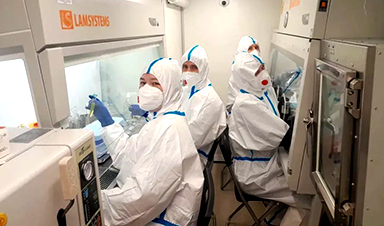
Researcher at Russian plague laboratory dies of ‘unknown’ infection
Russian authorities have imposed "anti-epidemic measures" after a laboratory worker at an institute in Siberia dedicated to studying the plague and other infectious diseases died of a mysterious illness. The researcher, a 28-year-old female [...]
GHCE Concept
From the preface of the book Global Health Care Equivalency in the Age of Nanotechnology, Nanomedicine and Artificial Intelligence, Edited by Frank Boehm: Since the publication of my first book (Nanomedical Device and Systems [...]

A Surprising Brain Signal Could Explain Why Eating Less Protein Extends Lifespan
A new paper suggests that limiting protein intake triggers a coordinated response throughout the body that may help explain how protein restriction affects healthy aging. Animals respond to protein restriction, or reduced protein in [...]

Back and shoulder surgery is often worse than useless
Millions of operations should be scrapped SIX IN TEN Britons have surgery at some point. So do lots of Americans, at a cost of perhaps $500bn a year, a third of all spending on [...]

Cocaine plays with mind, hijacks brain circuit, drives increasingly rigid and repetitive behavior
Researchers have found that cocaine hijacks brain circuit, which to drive increasingly rigid and repetitive behavior. The brain circuit that normally participates in selecting natural mouth and face movements, but which becomes disproportionately engaged [...]
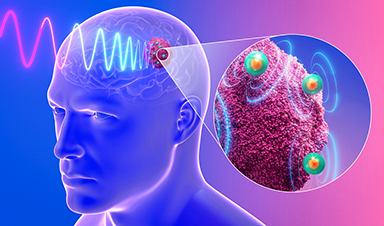
Injectable nanodevices could provide effective treatment for drug-resistant glioblastoma
The brain cancer glioblastoma is one of the most aggressive and treatment-resistant cancers known to medicine, carrying a median survival of just 12-15 months, even with the best available care. Now, researchers at the [...]
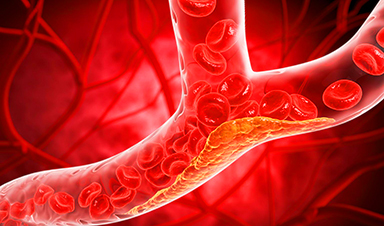
New Treatment Cuts “Bad” Cholesterol in Half for a Full Year
A single infusion of an experimental CRISPR-Cas9 therapy was reported to safely lower LDL cholesterol by 52.5% and triglycerides by 47.8%, as measured 12 months after treatment. What if one infusion could keep cholesterol [...]
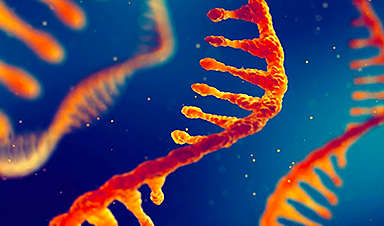
Too Much RNA Can Drain a Cell’s Energy, Scientists Discover
A virus may cripple a cell’s power supply simply by producing too much of a molecule the cell needs to survive. New research from the Texas A&M College of Veterinary Medicine and Biomedical Sciences [...]

West African scientists warn of weakening health systems and urge stronger outbreak detection
LOME, Togo (AP) — West African laboratory scientists called on governments Friday to strengthen capacity to detect disease outbreaks to avoid another major outbreak, saying health systems across the region are becoming weaker. Participants [...]

A Little-Known Protein Could Point to a New Way To Treat Alzheimer’s
A study suggests that increasing SORLA protein levels could help treat Alzheimer’s disease and other disorders involving tau protein. Increasing SORLA, a protein with a protective role in the brain, helped mice withstand damage [...]
Cancer’s Hidden Antioxidant Shield Helps It Escape the Immune System
Blocking an antioxidant protein that tumors use to suppress immune attacks improved cancer immunotherapy responses in mice. Cancer cells can release antioxidants that interfere with the immune cells trying to kill them. Researchers have [...]

Scientists Find a Berry Compound That Helps Muscle Cells Burn Fat
Pterostilbene, a compound found naturally in some foods, affects how skeletal muscles process fats by stabilizing a protein called PPARδ and increasing its signaling activity. Pterostilbene, a natural compound found in blueberries, grapes, and [...]