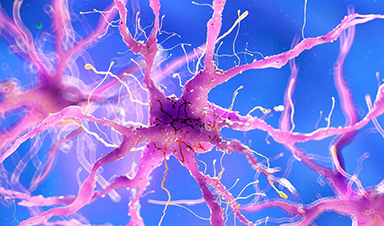
A newly identified molecular mechanism reveals how neurons weigh survival against repair after injury.
Scientists at the Icahn School of Medicine at Mount Sinai have identified a molecular switch in neurons that limits the regrowth of damaged axons. Their study, published in Nature, suggests that blocking a protein known as the aryl hydrocarbon receptor (AHR) could promote nerve regeneration and help restore function after injuries to peripheral nerves or the spinal cord.
Axons are long fibers that transmit signals between nerve cells, or neurons, throughout the central and peripheral nervous systems. These structures are essential for communication within the body. When axons are damaged, recovery depends on the neuron’s ability to regrow them.
In adult mammals, this ability is very limited. As a result, injuries to nerves or the spinal cord often lead to lasting or permanent loss of movement or sensation. Researchers have spent years trying to understand why this repair process is so constrained.
A Molecular Brake on Regeneration
The study found that AHR plays a central role in controlling how neurons respond to injury.
“When neurons are injured, they must deal with stress while also trying to regrow their axons,” said Hongyan Zou, MD, PhD, Professor of Neurosurgery, and Neuroscience, at the Icahn School of Medicine at Mount Sinai and the study’s senior author. “We discovered that AHR functions like a brake that shifts neurons toward managing stress rather than rebuilding damaged connections.”

Experiments showed that active AHR signaling slows axon regrowth. When researchers removed AHR or blocked it with drugs, damaged axons regenerated more effectively. In mouse models of peripheral nerve and spinal cord injury, inhibiting AHR also improved both movement and sensory recovery.
Balancing Survival and Growth
Further analysis revealed why this happens. After injury, AHR helps neurons maintain protein quality through a process called proteostasis. This response protects cells under stress but limits the production of new proteins needed for repair.
When AHR is turned off, neurons shift priorities. They increase protein production and activate pathways that support axon growth. The team also found that this regenerative response depends on another factor, HIF-1α, which controls genes involved in metabolism and tissue repair.
“This discovery shows that neurons use AHR to balance survival and regeneration,” Dr. Zou explained. “By releasing this brake, we can push neurons into a state that favors repair.”
A Dual Role for an Environmental Sensor
AHR was first identified as a receptor that detects environmental toxins, known as xenobiotics. The new findings show it also has an important internal role, helping neurons integrate environmental signals with their ability to regenerate after injury.
This research is an early step toward potential therapies. Several drugs that block AHR are already in clinical trials for other conditions, raising the possibility that they could be tested for nerve and spinal cord injuries.
However, more work is needed before this approach can be used in patients. Future studies will explore how well AHR inhibitors work across different types of neural damage, determine optimal timing and dosage, and examine their effects on other cells after injury.
The Mount Sinai team plans to test both AHR-blocking drugs and gene therapy approaches aimed at reducing AHR activity in neurons. The goal is to see whether these strategies can further enhance axon regrowth and improve recovery after spinal cord injury, stroke, and other neurological disorders.
Reference: “AhR inhibition promotes axon regeneration via a stress–growth switch” by Dalia Halawani, Yiqun Wang, Jiaxi Li, Daniel Halperin, Haofei Ni, Molly Estill, Aarthi Ramakrishnan, Li Shen, Arthur Sefiani, Cédric G. Geoffroy, Roland H. Friedel and Hongyan Zou, 1 April 2026, Nature.
DOI: 10.1038/s41586-026-10295-z

News – Curated by Amanda Scott, Alias Group Creative
Follow her on Bluesky

Melanoma mRNA Vaccine Shows Promise in Preventing Disease Recurrence
Key takeaways: Phase 3 trial finds personalized intismeran plus pembrolizumab may better prevent high-risk melanoma recurrence after surgery The trial enrolled 1,137 patients and builds on phase 2 results showing about half the recurrence [...]

Scientists Discover a Powerful New Weapon Against a Dangerous Gut Infection
The promise of an experimental treatment for C. difficile gut infections lies partly in the bacteria it leaves alive, according to early laboratory and mouse research. Broad-spectrum antibiotics can disrupt the gut’s microbial community, [...]
Your Bones May Hold a Hidden Clue to Blood Cancer Survival
For people with blood cancers called myelodysplastic syndromes, osteoporosis may hold an overlooked clue to survival, a three-year observational study suggests. In blood cancers that develop in the bone marrow, an important clue to [...]

Researchers Discover What Reading for Pleasure May Be Doing to Your Brain
Reading for pleasure may offer surprising benefits for the brain, with research linking the habit to better mental health, stronger cognitive abilities, and a lower risk of dementia. Reading for pleasure may do far [...]
Scientists Discover a Hidden Trigger That Keeps Inflammation Alive
Inflammation persists after proteins detach from immune receptors, revealing a potential target for autoimmune treatments. Since a Nobel Prize-winning discovery in the 1990s identified molecules called Toll-like Receptors as the guardians of the human [...]
A Virus Gives Itself Away the Moment It Attacks
Researchers have found the trigger behind a powerful bacterial defense against viruses. Viruses that prey on bacteria could become an increasingly important tool for treating bacterial infections, particularly as antibiotic resistance makes some infections [...]

Scientists Discover Aspirin May Slash Dementia Risk by 70% – but Only for Certain People
Aspirin was linked to a sharply lower dementia risk in some older adults, and their genes may hold the clue. A Monash University analysis found that older adults with a particular genetic profile had [...]
Inflammation May Awaken Dormant Cancer Cells Years After Treatment
The body’s response to inflammation may disturb cancer cells that have been lying silent for years, giving them an opportunity to grow again. Researchers at the Francis Crick Institute have found that gut inflammation [...]

Where do nanoparticles go once they enter the body?
New international best practice guidance, co-written at ANSTO, sets out how to measure where nanoparticles like titanium dioxide end up in the body and how long they remain. The guidance has been shared by [...]
Long-Acting HIV Shots Could Solve a Major Treatment Challenge for Young People
A major African trial suggests that changing how HIV treatment is delivered could significantly improve viral suppression in adolescents. Young people with HIV were more likely to keep the virus suppressed when they received [...]

WHO Factsheets – The top 10 causes of death
In 2023, the 10 leading causes of death accounted for 33 million deaths, or 54% of the total 61 million deaths worldwide. The top global causes of death, in order of total number of lives lost, [...]
Aging Cells May Be Hiding From the Immune System – Scientists Think They Know How
Your immune system is supposed to clear out damaged cells. Researchers may have found how some of them hide and linger as the body ages. Researchers led by Cedars-Sinai Health Sciences University have identified [...]

Your Voice May Reveal How Fast Your Brain Is Aging
Researchers have developed a machine-learning “speech clock” that estimates age from subtle patterns in how people speak and what they say. It is possible that people’s voices may contain certain signals of aging that [...]
Optogenetics Pioneers Win 2026 Nobel Prize in Physiology or Medicine
The 2026 Nobel Prize in Physiology or Medicine has been awarded to Peter Hegemann, Georg Nagel, and Karl Deisseroth for the development of optogenetics, a revolutionary technology that uses light to control individual neurons [...]
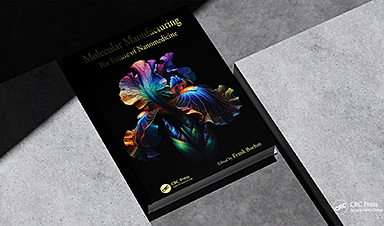
Molecular Manufacturing: The Future of Nanomedicine – From NanoappsMedical Inc.
This book explores the revolutionary potential of atomically precise manufacturing technologies to transform global healthcare, as well as practically every other sector across society. This forward-thinking volume examines how envisaged Factory@Home systems might enable the cost-effective [...]

What is ‘American Covid’ and how bad is it?
Cases of so-called ‘American Covid’ are on the rise in the UK. The strain is officially called XFG, or ‘Stratus’, and is the most common variant in North America, hence the name. It might soon [...]