Human population and consumption have surpassed Earth's limits, increasing risks to climate and global stability.
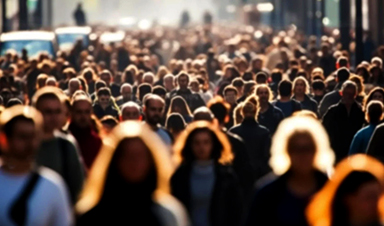
The Earth is already operating beyond its capacity to sustainably support the global population, according to new research highlighting growing strain on food systems, climate stability, and human well-being. Despite this, researchers say that slowing population growth and increasing global awareness could still help reduce long-term risks.
Published in Environmental Research Letters, the study concludes that human activity has exceeded the planet's long-term limits. If current patterns of consumption continue, environmental and social pressures are expected to intensify across the world.
Population growth now exceeds planetary limits
Drawing on more than two centuries of global population data, the study identifies a major shift in population dynamics that began in the mid-twentieth century.
Lead author, Matthew Flinders Professor of Global Ecology Corey Bradshaw from Flinders University, says the findings reveal a clear biological signal that humanity is exceeding what Earth can sustain.

"Earth cannot keep up with the way in which we are using resources. It cannot support even today's demand without major changes, with our findings showing that we are pushing the planet harder than it can possibly cope," says Professor Bradshaw from the Global Ecology Laboratory in the College of Science and Engineering.
Growth dynamics shifted after mid-century
The research team, including distinguished Professor Paul Ehrlich who recently passed away, analyzed more than 200 years of global population records and applied ecological growth models to examine how population size and growth rates have evolved over time.
They assessed long-term trends across different regions and compared population changes with shifts in climate, emissions, and ecological footprint to better understand how human numbers contribute to environmental stress.
This pattern changed in the early 1960s, when growth rates began to decline even as the total population continued to rise.
"This shift marked the beginning of what we call 'a negative demographic phase," says Professor Bradshaw.
"It means that adding more people no longer translates into faster growth. When we examined this phase, we found the global population is likely to peak somewhere between 11.7 and 12.4 billion people by the late 2060s or 2070s if current trends hold."
Sustainable population far below current levels
Professor Bradshaw explains that this projected peak is risky and has only been made possible by heavy reliance on fossil fuels and the rapid depletion of natural resources.
"The truly sustainable population is much lower and closer to what the world supported in the mid-twentieth century. Our calculations show a sustainable global population closer to about 2.5 billion people if everyone were to live within ecological limits and comfortable, economically secure living standards," he says.
The gap between this estimate and the current global population of about 8.3 billion highlights the scale of overconsumption. According to the researchers, decades of fossil fuel use have masked this imbalance by boosting food production, energy supply, and industrial output, while also driving climate change and pollution.
Population size drives environmental stress
The study identifies a strong connection between population size and rising global temperatures, increasing ecological footprints, and higher carbon emissions during the negative demographic phase. In many cases, total population size explained more variation in these environmental indicators than per capita consumption.
Professor Bradshaw says this demonstrates how both population growth and consumption patterns contribute to environmental pressure. "Humanity's current path will push societies into deeper crises unless we make major changes," he says.
Long-term risks and possible pathways
The researchers emphasize that their findings do not predict an abrupt collapse, but instead outline the long-term pressures shaping humanity's future. Exceeding Earth's 'biocapacity' is expected to lead to stronger climate impacts, biodiversity loss, reduced food and water security, and widening inequality.
Professor Bradshaw says societies must rethink how they manage land, water, energy, and materials to ensure stable conditions for future generations.
"Smaller populations with lower consumption create better outcomes for both people and the planet," he says. "The window to act is narrowing, but meaningful change is still achievable if nations work together."
The team hopes the findings will encourage governments, organizations, and communities to adopt long-term strategies that respect environmental limits, stabilize population growth, and protect natural systems.
"The choices we make over the coming decades will determine the well-being of future generations and the resilience of the natural world that supports all life," concludes Professor Bradshaw.
Reference: "Global human population has surpassed Earth's sustainable carrying capacity" by Corey J A Bradshaw, Melinda A Judge, Daniel T Blumstein, Paul R Ehrlich, Aisha N Z Dasgupta, Mathis Wackernagel, Lewis J Z Weeda and Peter N Le Souëf, 27 March 2026, Environmental Research Letters.
DOI: 10.1088/1748-9326/ae51aa
The Kids Research Institute Australia and Population Matters supported various aspects of the project.

News – Curated by Amanda Scott, Alias Group Creative
Follow her on Bluesky
Regenerative Healthcare by Design: Engineering Health-Centric Buildings and Urban Ecosystems
Introduction The next evolution of healthcare will not be confined to hospitals, clinics, or episodic interventions—it will be embedded into the infrastructure of everyday life. Regenerative health ecosystems require a systemic re-architecture of how [...]
Scientists Warn: Humanity Has Pushed the Planet Past Its Limits
Human population and consumption have surpassed Earth’s limits, increasing risks to climate and global stability. The Earth is already operating beyond its capacity to sustainably support the global population, according to new research highlighting [...]
Breakthrough Study Reveals Why Damaged Nerves Struggle To Heal
A newly identified molecular mechanism reveals how neurons weigh survival against repair after injury. Scientists at the Icahn School of Medicine at Mount Sinai have identified a molecular switch in neurons that limits the regrowth of [...]
Popular Vitamin B3 Supplements May Help Cancer Cells Survive, Scientists Warn
A new study raises important questions about widely used NAD+ supplements, suggesting that compounds often taken to boost energy and support healthy aging may have unintended consequences in cancer treatment. Millions of Americans take [...]
Scientists Discover Cancer Tumors Are “Addicted” to This Common Antioxidant
Cancer cells may be exploiting a common antioxidant as fuel, revealing a potential weakness that future therapies could target. Cancer cells may be tapping into an unexpected energy source: an antioxidant long associated with [...]
Nanotube injector transfers cytoplasmic contents and organelles between living cells safely
Cells are not isolated units; they continuously exchange proteins, genetic material, and even entire organelles with their neighbors. Intercellular transfer influences how tissues develop, respond to stress, and repair damage. In certain cancers, for [...]
CEO of America’s largest public hospital system is ready to replace radiologists with AI
The chief executive of America’s largest public hospital system says he is prepared to start replacing radiologists with artificial intelligence in some circumstances, once the regulatory landscape catches up. Mitchell H. Katz, MD, president [...]

Our books now available worldwide!
Online Sellers other than Amazon, Routledge, and IOPP Indigo Global Health Care Equivalency in the Age of Nanotechnology, Nanomedicine and Artifcial Intelligence Global Health Care Equivalency In The Age Of Nanotechnology, Nanomedicine And Artificial [...]

Study finds higher heart disease risk in long COVID patients
People with long COVID are at increased risk of developing cardiovascular disease, according to a new study from Karolinska Institutet published in eClinicalMedicine. The results show that the risk of conditions such as cardiac arrhythmias [...]
The Corona variant Cicada is here – we know that
Online and on social media, reports are piling up about a new Sars-Cov-2 variant that is currently on the rise: BA.3.2, also known as Cicada. That's what it's all about: The Omicron variant BA.3.2, [...]

A Simple Blood Test Could Predict Dementia Risk 25 Years Early
A single blood marker may quietly signal dementia risk decades in advance. Scientists at the University of California, San Diego, have identified a blood signal that could forecast dementia risk decades before symptoms begin. Their [...]
Sperm Get Lost in Space and Scientists Finally Know Why
Having a baby in space may be far more complicated than expected, as new research shows sperm struggle to find their way in microgravity. Starting a family beyond Earth could be more complicated than [...]
Digital Dementia – Brain fog and disassociation from being chronically online
New medical evidence, featured on 60 Minutes Australia, indicates excessive screen time is causing "digital dementia" in young Australians, with brain scans showing physical shrinkage and damage. Experts warn that high device usage (6-8 hours [...]
A new, highly mutated COVID variant called ‘Cicada’ is spreading in the US.
BA.3.2, a heavily mutated new COVID-19 variant which may be better able to escape immunity from vaccines or prior infection, is now spreading in the United States. Although COVID cases are currently low nationally, [...]
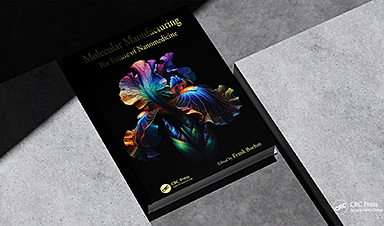
Molecular Manufacturing: The Future of Nanomedicine – New book from NanoappsMedical Inc.
This book explores the revolutionary potential of atomically precise manufacturing technologies to transform global healthcare, as well as practically every other sector across society. This forward-thinking volume examines how envisaged Factory@Home systems might enable the cost-effective [...]

Ancient bacteria strain discovered in ice cave is resistant to some modern antibiotics
In the depths of Scarisoara cave in Romania sits one of the world’s biggest underground glaciers, a monumental slab of ice the size of roughly 40 Olympic swimming pools that began to form around [...]