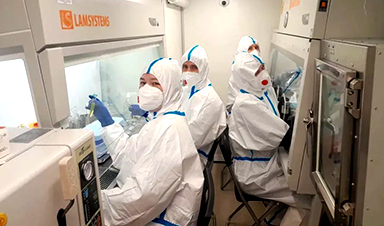
Russian authorities have imposed “anti-epidemic measures” after a laboratory worker at an institute in Siberia dedicated to studying the plague and other infectious diseases died of a mysterious illness.
The researcher, a 28-year-old female laboratory technician at the Irkutsk Research Anti-Plague Institute of Siberia, in the town of Shelekhov, died after being diagnosed with a pneumonia of “unknown” origin, according to Rospotrebnadzor, the Russian agency that handles infectious disease.
Authorities are implementing a “comprehensive set of anti-epidemic measures,” said Maxim Modin, the mayor of the Shelekhovsky district in eastern Russia, near the Mongolian border. The woman’s death was confirmed by officials last week.
The inpatient facility at the hospital where the worker was treated has been placed under quarantine, and several departments have stopped discharging or admitting patients, Modin said. Other hospitals in the region have also been closed, according to local media reports.
According to Rospotrebnadzor, “no micro-organisms associated with the employee’s professional duties were detected in samples taken from the patient,” Modin said.
There have been no cases of infectious diseases reported among institute staff over the past 10 days, and all of the employee’s recent contacts are being tested and examined, Modin said.
Unofficial reports, including by the independent regional news outlet Liudi Baikala, have said that nearly 200 people are under observation.
Rospotrednadzor previously said the “sanitary and epidemiological situation” in Shelekhov and the state capital of Irkutsk was “stable.”
Angela Rassmussen, a virologist at the Vaccine and Infectious Disease Organization,
According to its website, the Anti-Plague Institute employs around 95 researchers and is a major research and public health facility responsible for monitoring and preventing outbreaks of high-risk bacterial and viral infections across Siberia and Russia’s Far East.
The head of the neighboring republic of Buryatia, Alexei Tsydenov, said earlier that the employee died “possibly from the plague.” He also noted that “there are no plague outbreaks” in Buryatia.
Pneumonic plague is one of three types of plagues that are caused by the bacterium Yersinia pestis and can transfer easily from person to person through respiratory particles.
The other two types typically spread from contact with infected fleas, animals or infected tissues.
An aluminum plant near the laboratory instructed staff to wear masks as a precautionary measure. The director of Irkutsk Aluminum Plant, Artem Fominikh, also urged calm and noted that “there are many rumors and conflicting reports circulating.”
The infection in the Irkutsk region is “most likely not the plague, but even if confirmed, there will be no spread of this disease,” a previous head of Rospotrebnadzor, Gennady Onishchenko, said on Friday.
Onishchenko told the state news agency TASS that the onset of cold weather would likely prevent transmission.
A US State Department spokesperson told CNN Sunday that it is aware of the possible death due to pneumonic plague in Russia.
“We are monitoring the situation closely with the CDC and our other interagency partners,” the spokesperson said. “Many details have not been confirmed. We encourage Russian authorities to share accurate information quickly and openly.”
Patients with pneumonic plague develop fever, headache, weakness and and “a rapidly developing pneumonia with shortness of breath, chest pain, cough, and sometimes bloody or watery mucous,” according to the US Centers for Disease Control and Prevention (CDC).
The US Department of Health and Human Services told CNN that the CDC is closely monitoring the situation in Russia, and that the “safety and security of U.S. citizens is our highest priority.”
The World Health Organization has noted that plague has a high fatality rate but is also easily treated with antibiotics and the use of precautions to prevent infections.

News – Curated by Amanda Scott, Alias Group Creative
Follow her on Bluesky
Researcher at Russian plague laboratory dies of ‘unknown’ infection
Russian authorities have imposed "anti-epidemic measures" after a laboratory worker at an institute in Siberia dedicated to studying the plague and other infectious diseases died of a mysterious illness. The researcher, a 28-year-old female [...]
GHCE Concept
From the preface of the book Global Health Care Equivalency in the Age of Nanotechnology, Nanomedicine and Artificial Intelligence, Edited by Frank Boehm: Since the publication of my first book (Nanomedical Device and Systems [...]

A Surprising Brain Signal Could Explain Why Eating Less Protein Extends Lifespan
A new paper suggests that limiting protein intake triggers a coordinated response throughout the body that may help explain how protein restriction affects healthy aging. Animals respond to protein restriction, or reduced protein in [...]

Back and shoulder surgery is often worse than useless
Millions of operations should be scrapped SIX IN TEN Britons have surgery at some point. So do lots of Americans, at a cost of perhaps $500bn a year, a third of all spending on [...]

Cocaine plays with mind, hijacks brain circuit, drives increasingly rigid and repetitive behavior
Researchers have found that cocaine hijacks brain circuit, which to drive increasingly rigid and repetitive behavior. The brain circuit that normally participates in selecting natural mouth and face movements, but which becomes disproportionately engaged [...]
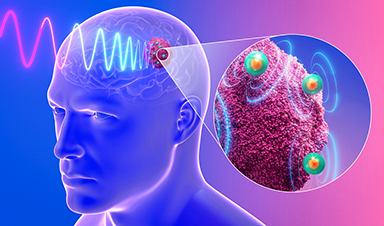
Injectable nanodevices could provide effective treatment for drug-resistant glioblastoma
The brain cancer glioblastoma is one of the most aggressive and treatment-resistant cancers known to medicine, carrying a median survival of just 12-15 months, even with the best available care. Now, researchers at the [...]
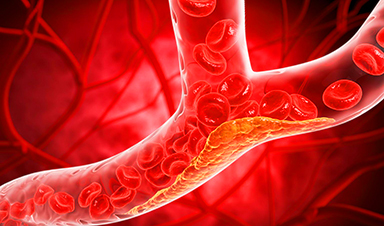
New Treatment Cuts “Bad” Cholesterol in Half for a Full Year
A single infusion of an experimental CRISPR-Cas9 therapy was reported to safely lower LDL cholesterol by 52.5% and triglycerides by 47.8%, as measured 12 months after treatment. What if one infusion could keep cholesterol [...]

Too Much RNA Can Drain a Cell’s Energy, Scientists Discover
A virus may cripple a cell’s power supply simply by producing too much of a molecule the cell needs to survive. New research from the Texas A&M College of Veterinary Medicine and Biomedical Sciences [...]
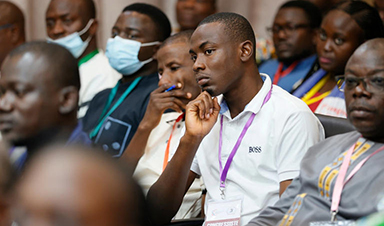
West African scientists warn of weakening health systems and urge stronger outbreak detection
LOME, Togo (AP) — West African laboratory scientists called on governments Friday to strengthen capacity to detect disease outbreaks to avoid another major outbreak, saying health systems across the region are becoming weaker. Participants [...]

A Little-Known Protein Could Point to a New Way To Treat Alzheimer’s
A study suggests that increasing SORLA protein levels could help treat Alzheimer’s disease and other disorders involving tau protein. Increasing SORLA, a protein with a protective role in the brain, helped mice withstand damage [...]
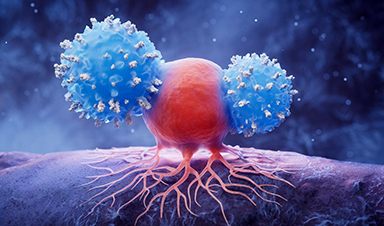
Cancer’s Hidden Antioxidant Shield Helps It Escape the Immune System
Blocking an antioxidant protein that tumors use to suppress immune attacks improved cancer immunotherapy responses in mice. Cancer cells can release antioxidants that interfere with the immune cells trying to kill them. Researchers have [...]

Scientists Find a Berry Compound That Helps Muscle Cells Burn Fat
Pterostilbene, a compound found naturally in some foods, affects how skeletal muscles process fats by stabilizing a protein called PPARδ and increasing its signaling activity. Pterostilbene, a natural compound found in blueberries, grapes, and [...]

Two Hidden Forces Help Build the Human Brain Before Birth
Scientists have uncovered two surprising forces that help guide how the human brain forms before birth. Before birth, the human brain is shaped in large part by an unusual class of stem cells known [...]
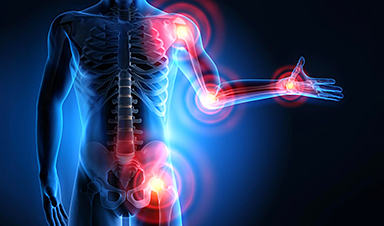
Researchers Uncover a Hidden Trigger Behind Chronic Inflammation
The findings offer new insights that could help guide the development of future therapies. A protein called human resistin may help flip on one of the immune system’s most powerful inflammatory switches. Researchers at [...]
Scientists Have Uncovered Previously Hidden Microbial Activity on Human Skin
The most abundant microbes on your skin may not be the ones doing most of the work. Human skin supports vast communities of bacteria, fungi, and viruses that can influence its protective barrier, immune [...]

Brazilian Tree Compounds Fight COVID-19 on Multiple Fronts
Scientists found compounds in a Brazilian tree that hit SARS-CoV-2 on multiple fronts, revealing a promising new lead in the search for COVID-19 treatments. Researchers have found that galloylquinic acids extracted from the leaves [...]