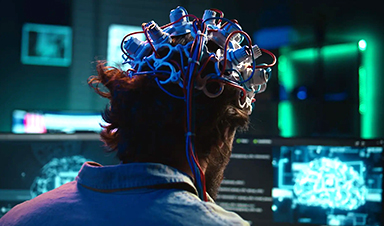
Chinese researchers are testing whether focused ultrasound can help restore consciousness in patients with severe brain injuries, adding to a growing international effort to use sound waves to stimulate deep brain structures without surgery.
A team involving the Chinese Academy of Sciences’ Shenzhen Institutes of Advanced Technology has used targeted ultrasound pulses to stimulate brain regions associated with awareness and communication. The technology was presented at a brain-computer interface industry conference in Shenzhen, where researchers highlighted a potential medical application beyond the field’s better-known efforts to connect brains with computers and robotic systems.
According to Chinese state media, one patient who had spent three months in a coma after a brain haemorrhage regained the ability to speak, eat independently and walk with assistance following a month of ultrasound treatment and rehabilitation.
Ultrasound targets deep brain structures without surgery
The technique uses magnetic resonance imaging to identify specific areas of the brain for stimulation, particularly the thalamus. This structure acts as a central relay between different neural networks and plays an important role in consciousness, sensory processing and communication across the brain.
Researchers then direct focused ultrasound pulses towards the selected regions. Unlike conventional approaches involving implanted electrodes or invasive surgery, the method is designed to reach deep brain structures from outside the skull.
The approach is based on the idea that stimulating disrupted neural networks could help restore some of the activity associated with conscious behaviour. This is particularly relevant to patients with prolonged disorders of consciousness, including those who remain in minimally conscious or vegetative states following traumatic injuries, strokes or other neurological events.
In a preliminary study conducted with Kunming Medical University, 24 patients with chronic disorders of consciousness received three 20-minute ultrasound sessions per week over four weeks. Chinese media reported that 13 of them showed improvements in conscious behaviour.
Early findings need larger controlled trials
The results follow a peer-reviewed case study published by the same research group in Frontiers in Psychiatry in February. The paper tracked one patient treated with focused ultrasound and documented progressive behavioural improvements, with the patient eventually emerging from a minimally conscious state.
Researchers in the US are pursuing a more extensive clinical assessment. A multicentre trial led by the University of California, Los Angeles, is recruiting 60 patients with severe brain injuries. It includes a sham-stimulation control group, allowing investigators to compare patients receiving actual ultrasound treatment with those undergoing a simulated procedure.
Focused ultrasound is attracting attention because it can influence brain activity without requiring implanted hardware. That makes it a potential tool for neurological research and treatment, although questions remain about the optimal stimulation parameters, patient selection, treatment duration and long-term effects.
The development also signals a broader effort to create less invasive ways of interacting with the brain. While some BCI projects focus on translating neural signals into commands for computers or robotic devices, ultrasound-based approaches could potentially stimulate neural activity or enable new forms of communication with brain tissue.

News – Curated by Amanda Scott, Alias Group Creative
Follow her on Bluesky
China makes early progress in using sound waves to stimulate damaged brains
Chinese researchers are testing whether focused ultrasound can help restore consciousness in patients with severe brain injuries, adding to a growing international effort to use sound waves to stimulate deep brain structures without surgery. [...]
Micro-drones fly through the body thanks to ultrasound
At the EPFL, micro-drones have been developed that can be moved without a motor or battery.No motors, no batteries, no electronics on board, just small cavities that convert sound waves into thrust: this is [...]
A Single Enzyme Could Hold the Key to Treating a Devastating Brain Disorder
Blocking an enzyme’s production restored brain growth and healthy behaviors in mice engineered to develop Angelman syndrome, pointing to a possible treatment target. Children with Angelman syndrome begin to show difficulties with thinking and [...]
Scientists Develop a Clever New Way To Kill Cancer Cells From the Inside
Scientists have developed an experimental strategy that exploits a chemical byproduct of cancer cells to produce anticancer drugs directly inside them. Scientists in Japan have developed an experimental method that uses a chemical produced [...]
Our books are available worldwide!
Online Sellers other than Amazon, Routledge, and IOPP Indigo Global Health Care Equivalency in the Age of Nanotechnology, Nanomedicine and Artifcial Intelligence Global Health Care Equivalency In The Age Of Nanotechnology, Nanomedicine And Artificial [...]

After only a short training, people in a coma managed to send targeted signals
Researchers have succeeded in communicating with brain-injured patients who are unconscious. They see enormous potential in this for future treatments. Patients who lie motionless in bed after a severe brain injury and do not [...]
MIT Scientists Reprogram Immune Cells Inside the Body To Destroy Cancer
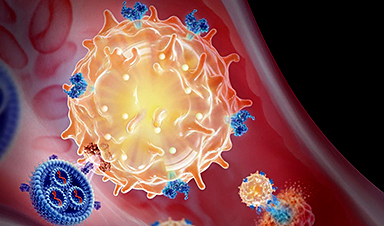
Natural killer cells reprogrammed inside mice eliminated lymphoma tumors and helped damaged livers heal, though whether this approach could help people with cancer or autoimmune disease remains unknown. To make a cancer treatment from [...]
Melanoma mRNA Vaccine Shows Promise in Preventing Disease Recurrence
Key takeaways: Phase 3 trial finds personalized intismeran plus pembrolizumab may better prevent high-risk melanoma recurrence after surgery The trial enrolled 1,137 patients and builds on phase 2 results showing about half the recurrence [...]

Scientists Discover a Powerful New Weapon Against a Dangerous Gut Infection
The promise of an experimental treatment for C. difficile gut infections lies partly in the bacteria it leaves alive, according to early laboratory and mouse research. Broad-spectrum antibiotics can disrupt the gut’s microbial community, [...]
Your Bones May Hold a Hidden Clue to Blood Cancer Survival
For people with blood cancers called myelodysplastic syndromes, osteoporosis may hold an overlooked clue to survival, a three-year observational study suggests. In blood cancers that develop in the bone marrow, an important clue to [...]

Researchers Discover What Reading for Pleasure May Be Doing to Your Brain
Reading for pleasure may offer surprising benefits for the brain, with research linking the habit to better mental health, stronger cognitive abilities, and a lower risk of dementia. Reading for pleasure may do far [...]
Scientists Discover a Hidden Trigger That Keeps Inflammation Alive
Inflammation persists after proteins detach from immune receptors, revealing a potential target for autoimmune treatments. Since a Nobel Prize-winning discovery in the 1990s identified molecules called Toll-like Receptors as the guardians of the human [...]
A Virus Gives Itself Away the Moment It Attacks
Researchers have found the trigger behind a powerful bacterial defense against viruses. Viruses that prey on bacteria could become an increasingly important tool for treating bacterial infections, particularly as antibiotic resistance makes some infections [...]
Scientists Discover Aspirin May Slash Dementia Risk by 70% – but Only for Certain People
Aspirin was linked to a sharply lower dementia risk in some older adults, and their genes may hold the clue. A Monash University analysis found that older adults with a particular genetic profile had [...]
Inflammation May Awaken Dormant Cancer Cells Years After Treatment
The body’s response to inflammation may disturb cancer cells that have been lying silent for years, giving them an opportunity to grow again. Researchers at the Francis Crick Institute have found that gut inflammation [...]

Where do nanoparticles go once they enter the body?
New international best practice guidance, co-written at ANSTO, sets out how to measure where nanoparticles like titanium dioxide end up in the body and how long they remain. The guidance has been shared by [...]