A new study reveals that the amount of carbon dioxide produced by human metabolism has increased dramatically over three decades.
The carbon dioxide produced by human bodies as they convert food into energy increased by 74% over three decades, according to a University of Bath-led study. By 2015, the global total had reached an estimated 2.05 billion metric tons (2.26 billion U.S. tons) annually, highlighting a substantial component of the Earth’s carbon cycle that scientists had not previously quantified on this scale.
Unlike emissions from burning fossil fuels, the CO2 humans exhale largely comes from carbon recently absorbed from the atmosphere by plants and transferred through food. Burning coal, oil, and natural gas releases carbon that has been stored underground for millions of years, adding it to the active carbon cycle.
Population Growth Drove Most of the Increase
Published in The Lancet Planetary Health, the study found that annual CO2 production from human metabolism rose from 1.18 billion metric tons (1.30 billion U.S. tons) in 1985 to 2.05 billion metric tons (2.26 billion U.S. tons) in 2015. More than 60% of that increase was attributable to population growth rather than a substantial rise in the amount produced by each individual.
To estimate global emissions from metabolism, the researchers analyzed thousands of real-world measurements of CO2 production in people ranging from infants to older adults. They combined these findings with worldwide population and body weight data to calculate how human metabolic activity changed over time.
Professor Javier Gonzalez, who led the research at the University of Bath’s Centre for Exercise, Nutrition and Metabolism, explained:
“We all produce carbon dioxide simply by turning food into energy, but until now we haven’t had a good idea how much that adds up to worldwide.
Improving Our Understanding of the Carbon Cycle
“What we’ve found is that the increase is mainly because there are more of us. This gives scientists one more piece of the puzzle when working out where carbon comes from and where it goes. Ultimately, this information can help scientists more accurately predict how effective carbon reduction strategies may be.”
Human metabolism contributes to the continuous movement of carbon through the environment, particularly in densely populated cities. Accounting for that activity could help researchers develop more accurate carbon budgets and better assess the effects of strategies designed to reduce emissions.
Why Human Breathing Is Not Driving Climate Change
The researchers emphasize that their findings do not suggest people should exercise less, change their diets, or attempt to reduce the carbon dioxide they breathe out. The purpose is to improve scientific measurements of carbon movement, not identify respiration as a contributor to fossil fuel emissions.
Gonzalez stressed the distinction: “The important thing is that the carbon dioxide we breathe out is not the same as burning fossil fuels. We’re not saying that breathing is driving climate change.
“What this study does is give us a much clearer picture of how much CO2 people produce around the world, and how that is changing as the population grows. This understanding can help improve the accuracy predictions of carbon reduction programs.”
Reference: “Accounting for global carbon dioxide production from human metabolism between 1985 and 2015: a modelling study” by Javier T Gonzalez, Lorenzo Lolli, Bruno Spellanzon, Greg Atkinson, Ed Maunder, Alfonso Moreno-Cabañas, Jariya Buniam, Dylan Thompson, James Betts, Philip N Ainslie, Heliodoro Alemán-Mateo, Linda Bandini, Ellen E Blaak, Carlijn V C Bouten, Pascal Bovet, Soren Brage, Regina Casper, Prasangi Dabare, Barry W Fudge, Melanie Gillingham, Annalies H Goris, Michael Gurven, Hinke Haisma, Marije B Hoos, Noorjehan Joonas, Peter Katzmarzyk, Misaka Kimura, Sai Krupa Das, Pulani Lanerolle, Christel L Larsson, Marie Löf, Aviva Must, Marian Neuhouser, Theresa A Nicklas, Robert M Ojiambo, Kirsi H Pietilainen, Susan B Racette, Eric Ravussin, Leanne M Redman, John J Reilly, Susan Roberts, Luis B Sardinha, Analiza M Silva, Srishti Sinha, Anders M Sjödin, Eric Stice, Samuel S Urlacher, Edgar A Van Mil, Jeanine A Verbunt, Jonathan C K Wells, Tsukasa Yoshida, Xueying Zhang, Alexia Murphy-Alford, Cornelia U Loechl, Amy Luke, Michele Novaes Ravelli, Herman Pontzer, Jennifer Rood, Hiroyuki Sagayama, Dale A Schoeller, Klaas R Westerterp, William W Wong, Yosuke Yamada and John Speakman, 26 October 2026, The Lancet Planetary Health.
DOI: 10.1016/j.lanplh.2026.101546

News – Curated by Amanda Scott, Alias Group Creative
Follow her on Bluesky
Human Bodies Are Producing Two Billion Tons of CO2 a Year
A new study reveals that the amount of carbon dioxide produced by human metabolism has increased dramatically over three decades. The carbon dioxide produced by human bodies as they convert food into energy increased [...]
A Hidden DNA Mechanism Could Explain How 20% of Human Cancers Develop
Researchers have identified an unexpected molecular vulnerability in cancers carrying BAF mutations. Mutations found in roughly 20% of human cancers may promote tumor growth by changing how DNA is organized inside cells. Researchers have [...]

Ebola kills over 5,300 in fastest-growing outbreak on record
Africa’s latest Ebola outbreak has killed nearly 5,400 people, the vast majority of them in the Democratic Republic of Congo (DRC), according to the continent’s top health agency. Africa Centres for Disease Control and [...]
China makes early progress in using sound waves to stimulate damaged brains
Chinese researchers are testing whether focused ultrasound can help restore consciousness in patients with severe brain injuries, adding to a growing international effort to use sound waves to stimulate deep brain structures without surgery. [...]
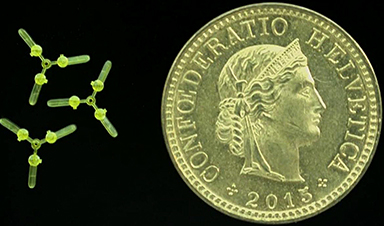
Micro-drones fly through the body thanks to ultrasound
At the EPFL, micro-drones have been developed that can be moved without a motor or battery.No motors, no batteries, no electronics on board, just small cavities that convert sound waves into thrust: this is [...]
A Single Enzyme Could Hold the Key to Treating a Devastating Brain Disorder
Blocking an enzyme’s production restored brain growth and healthy behaviors in mice engineered to develop Angelman syndrome, pointing to a possible treatment target. Children with Angelman syndrome begin to show difficulties with thinking and [...]

Scientists Develop a Clever New Way To Kill Cancer Cells From the Inside
Scientists have developed an experimental strategy that exploits a chemical byproduct of cancer cells to produce anticancer drugs directly inside them. Scientists in Japan have developed an experimental method that uses a chemical produced [...]

Our books are available worldwide!
Online Sellers other than Amazon, Routledge, and IOPP Indigo Global Health Care Equivalency in the Age of Nanotechnology, Nanomedicine and Artifcial Intelligence Global Health Care Equivalency In The Age Of Nanotechnology, Nanomedicine And Artificial [...]

After only a short training, people in a coma managed to send targeted signals
Researchers have succeeded in communicating with brain-injured patients who are unconscious. They see enormous potential in this for future treatments. Patients who lie motionless in bed after a severe brain injury and do not [...]
MIT Scientists Reprogram Immune Cells Inside the Body To Destroy Cancer
Natural killer cells reprogrammed inside mice eliminated lymphoma tumors and helped damaged livers heal, though whether this approach could help people with cancer or autoimmune disease remains unknown. To make a cancer treatment from [...]

Melanoma mRNA Vaccine Shows Promise in Preventing Disease Recurrence
Key takeaways: Phase 3 trial finds personalized intismeran plus pembrolizumab may better prevent high-risk melanoma recurrence after surgery The trial enrolled 1,137 patients and builds on phase 2 results showing about half the recurrence [...]
Scientists Discover a Powerful New Weapon Against a Dangerous Gut Infection
The promise of an experimental treatment for C. difficile gut infections lies partly in the bacteria it leaves alive, according to early laboratory and mouse research. Broad-spectrum antibiotics can disrupt the gut’s microbial community, [...]
Your Bones May Hold a Hidden Clue to Blood Cancer Survival
For people with blood cancers called myelodysplastic syndromes, osteoporosis may hold an overlooked clue to survival, a three-year observational study suggests. In blood cancers that develop in the bone marrow, an important clue to [...]

Researchers Discover What Reading for Pleasure May Be Doing to Your Brain
Reading for pleasure may offer surprising benefits for the brain, with research linking the habit to better mental health, stronger cognitive abilities, and a lower risk of dementia. Reading for pleasure may do far [...]
Scientists Discover a Hidden Trigger That Keeps Inflammation Alive
Inflammation persists after proteins detach from immune receptors, revealing a potential target for autoimmune treatments. Since a Nobel Prize-winning discovery in the 1990s identified molecules called Toll-like Receptors as the guardians of the human [...]
A Virus Gives Itself Away the Moment It Attacks
Researchers have found the trigger behind a powerful bacterial defense against viruses. Viruses that prey on bacteria could become an increasingly important tool for treating bacterial infections, particularly as antibiotic resistance makes some infections [...]