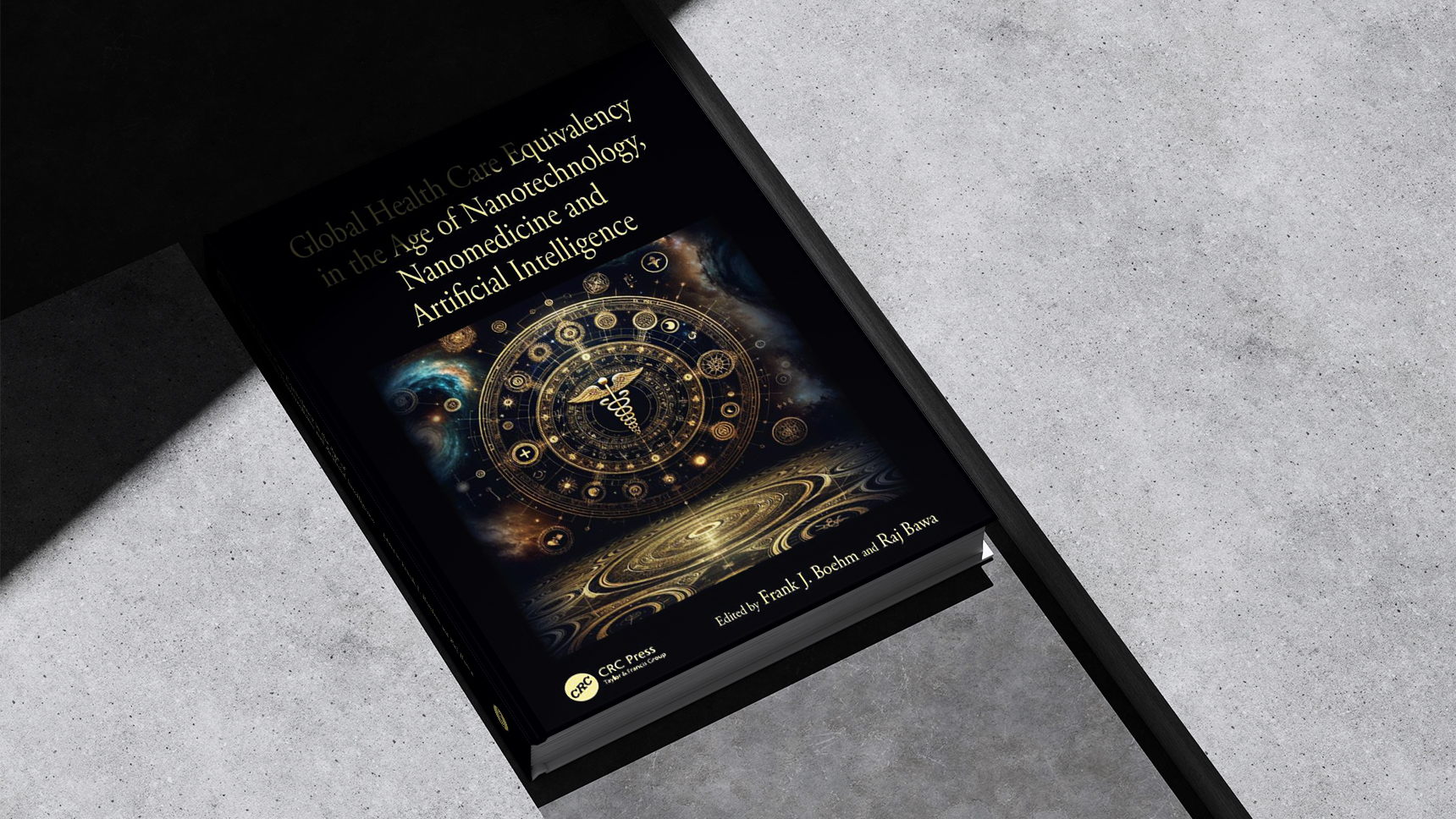
From the preface of the book Global Health Care Equivalency in the Age of Nanotechnology, Nanomedicine and Artificial Intelligence, Edited by Frank Boehm:
Since the publication of my first book (Nanomedical Device and Systems Design: Challenges, Possibilities, Visions – CRC Press, 2013), it became increasingly evident that synergies between the concurrently rapid advances in nanotechnology and nanomedicine in conjunction with the recent exponential progress in artificial intelligence (AI) would likely facilitate the capacity to actualize three envisaged global scale paradigm shifting technology platforms. Thus, I endeavored to explore these possibilities through the simultaneous generation of what I consider to be a set of three companion books. The rationale is that I believe these applications will be inextricably linked.
This volume, Global Health Care Equivalency in the Age of Nanotechnology, Nanomedicine and Artificial Intelligence, delves into the potential emergence of an envisaged equitable, cost-effective, non-monopolizable, globally distributed/decentralized AI/QC-driven healthcare system, which would operate on safe/secure nested quantum encrypted blockchains. With the attainment of mature Global Health Care Equivalency (GHCE), which may well be significantly expedited when advanced AI (and soon enough the emergence of Artificial General Intelligence (AGI) and Artificial Superintelligence (ASI)) are coupled with quantum computation (QC):
we can envisage a future world where any individual on the planet has access to the same advanced and cost effective nanomedical diagnostic and therapeutic technologies, no matter how wealthy or impoverished they are, no matter where they happen to reside, or under what conditions they live. Progress toward this goal will be incremental, with each successive wave of nanomedical technologies being more advanced than the previous wave.
Multiple nascent iterations, operational/efficacy trials, and the beta testing of GHCE will be driven by further advances in 3D printing. Increasingly robust telemedical infrastructures will begin to progressively transition many of the common health concerns of patients (as well as healthy individuals) to be resolved by various nanomedical means in their own homes. These early developmental stages might be guided by readily accessible top-tier online physicians on demand, and/or potentially, formally certified medical AI agents that have been granted access (by patients and/or their caregivers) to comprehensive knowledge of their medical histories, data, and specific needs. These medical personnel would initially be approved to prescribe only certain medicines at specific dosages, which could be safely fabricated in a patient’s dwelling using envisaged countertop microwave-sized appliances referred to as Factory at Home (F@H) systems.
The feedstocks for F@H systems may initially be comprised of the full range of chemical constituents required to synthesize basic medicines, as well as amino acids for the fabrication of therapeutic peptides. With further technological advances, standardized nanoparticles of various species might serve as F@H feedstocks, which are then custom functionalized, replete with targeting molecules, to generate a dynamic range of high precision diagnostic, therapeutic, and theranostic nanoparticles to address myriad conditions (from colds to cancers). More advanced iterations of F@H would rely on molecular and atomic feedstocks to enable the fabrication of molecular/atomic resolution (passive and semi-autonomous) nanodevices that integrate nanoelectronics, sensing, communications, and computational capacities. Finally, the feedstocks of mature F@H systems would be comprised of pristine atomic species that enable the molecular manufacturing (MM) of autonomous nanomedical robots (~Ø1 μm) at atomic resolution that are endowed with further capabilities (e.g., propulsion, navigation, and a full armamentarium of cell repair instrumentation).
A robust, massively decentralized healthcare system would, for the most part, render hospitals and clinics obsolete. Exceptions would, of course, be those required to accommodate maternity and pediatric needs, address emergency trauma cases, pandemic responses, large-scale mass casualties from natural disasters, extreme weather events, or due to anthropogenic conflicts. Broken bones, serious injuries, burns, etc. would still require triaged care. That said, most common ailments, and even more serious diseases, such as cancers, might be eradicated via envisioned domestically (F@H) fabricated autonomous sentinel class nanomedical devices (Domschke and Boehm, 2018), which would significantly augment the human immune system against all “non-self” bacterial and viral pathogens, as well as toxic agents. This would significantly reduce the need to ever visit a hospital or clinic for treatment (except for emergencies… albeit even many of these might also be rapidly addressed in the future by sufficiently sophisticated legions of autonomous nanorobots that continuously reside within the human body (in dwell mode) until instantaneously activated via a perceived inflicted trauma).
Additionally, most age-correlated ailments might be negated, as aging itself would be addressed by specialized classes of autonomous nanomedical devices that continually monitor the body for/manage atherosclerosis, osteoporosis, as well as any inflammation, or myopathy. The prerequisite technology platform and tipping point toward mature GHCE will arrive with the emergence of hypothetical (for now) molecular manufacturing (MM); the topic of my second book, Molecular Manufacturing: The Future of Nanomedicine (Boehm, CRC Press, 2025). It is envisaged that MM may enable the cost-effective domestic fabrication of the advanced autonomous nanomedical devices described above, exemplars of which I articulate in my first book.
The third book in this series, Nanomedical Brain/Cloud Interface: Explorations and Implications (Boehm, Institute of Physics Publishing (IOPP), 2025), explores how a hypothetical (for now) nanomedically enabled brain/cloud interface (B/CI) may endow us with capacities to instantaneously access the full breadth of human knowledge, significantly enhance our ability to learn, and enable ultrahigh resolution fully sensorial immersive experiences (including the episodic inhabitation of any other consenting participant on the planet), while empowering us to keep pace/integrate with AI. Consequently, this technology platform may, in effect, facilitate even further enhancements/efficacies for MM and GHCE, which from the author’s perspective would close the loop. This, as each of these three technology platforms would likely synergistically cross-pollinate; all with the innate capacity to reciprocate. Ultimately, the broad tech-trusted acceptance and ubiquitous implementation of a mature B/CI may be nothing less than the next evolutionary step for humanity, one where we seamlessly merge with our technologies.
To be realistic and clear, since GHCE would constitute such a truly massive and multifaceted paradigm shifting undertaking, it could not be expected to suddenly magically supplant current (2025) medical and healthcare paradigms and infrastructures. Rather, it might inspire and herald the emergence of a significant evolutionary leap, or indeed, revolution in medicine and healthcare, wherein medical personnel, as well as medical device and pharmaceutical infrastructures, remain engaged, albeit playing different roles. This, with the aim of significantly enhancing the quality and personalization of healthcare for all of humanity, which would concomitantly be of immense benefit planetwide.
It may be the case that GHCE rolls out via disparate scenarios, or the combination of multiples. On one hand, since big pharma (for instance) and other large corporations already have enormous manufacturing infrastructures in place, they might initially be repurposed to generate and supply the molecular/atomic feedstocks required to synthesize myriad diagnostic and therapeutic compounds and functionalized nanoparticles via F@H systems (which themselves would need to be manufactured), not only for their existing customer bases worldwide, but also to serve practically everyone on the planet. They may also be engaged with and have a stake in the initial development of various classes of nanomedical devices (passive, semi-autonomous, and fully autonomous), which would subsequently be fabricated domestically in a massively distributed/decentralized manner.
Due to the globally decentralized molecular manufacturing (MM) (via F@H systems) of nanomedicines, and further downstream, autonomous nanomedical robotics, the centralized control and monopolies over drugs and healthcare would eventually fade to obsolescence. Ultimately, Recykl@Home (R@H) systems would emerge with the capacity to disassemble all manner of household wastes down to their atomic constituents, which would then be recycled/repackaged as pristine atomic feedstocks to continuously resupply the F@H/molecular manufacturing units. This would close the loop.
Some may hold the view that big pharma, health insurance, huge medical device and medical equipment conglomerates, hospitals, etc. primarily operate on the premise of maximizing bottom line profits, or institute cultural paradigms of profit above all else, which appear unlikely to change. We shall see. Things inexorably do transform, perhaps induced by the unseen energies of quantum entangled alchemy, changes of heart, of conscience, or otherwise.
GHCE might well initially roll out in the real world (spanning a certain temporal domain) as a further extension and coalescing of/advancement in-home healthcare; expanding on conventional telemedicine, domestic healthcare robotics, 3D printing, etc. Once the advantages of increasingly distributed, decentralized, and personalized GHCE become increasingly evident, relevant and practical for the benefit of patients, communities, and finally entire populations who become more deeply engaged with it, a critical mass threshold is likely be attained and exceeded, after which all manner of (perceived as outdated) paradigms will begin to fall away.
“Although the attainment of GHCE would indeed be a truly extraordinary achievement, we must keenly recognize that in reality, such a massive undertaking on a global scale will require intense and sustained high spirited collaboration between like minded individuals who have widely varied backgrounds within diverse areas of expertise. Highly specialized laboratories, dynamic administrative institutions, regulatory bodies, and government agencies worldwide will also be vital prerequisites for its realization, as will significant resources and time. We are all amazing individuals, each with our own unique talents and expertise that might contribute and be applied to this noble enterprise. Our working together might culminate in a positive critical mass on a global scale toward the actual realization of GHCE, which would ultimately be of benefit for each and every one of us, as we are finally “all” supported in our natural human right of optimal health for life.”
Frank J. Boehm, NanoApps Medical, 2025
It is hoped that the prospective concepts herein may inspire others downstream to cumulatively create a critical mass of focused intention toward the potential realization of Global Health Care Equivalency for the benefit of humankind and the planet.
Domschke A, Boehm FJ. Chapter 19: “The “Sentinel”: A Conceptual Nanomedical Strategy for the Enhancement of the Human Immune System. In Immune Aspects of Biopharmaceuticals and Nanomedicines. Bawa R., Szebeni J., Webster TJ, Audette GF. (eds.), Singapore: Pan Stanford. 2018.

News – Curated by Amanda Scott, Alias Group Creative
Follow her on Bluesky
Largest-Ever Physics Survey Raises New Doubts About Our Model of the Universe
Physicists around the world remain deeply divided on key mysteries of the universe, from dark matter to quantum gravity. The standard cosmological model failed to gain majority support, and no leading theory dominated the [...]

Scientists Just Overturned a 100-Year-Old Belief About Bacteria in the Lungs
New findings raise questions about the role of microbes living in the lungs. More than 35 trillion bacteria live throughout the human body, forming microbiomes in the gut, mouth, lungs, skin, and urogenital tract. [...]

GHCE Concept
From the preface of the book Global Health Care Equivalency in the Age of Nanotechnology, Nanomedicine and Artificial Intelligence, Edited by Frank Boehm: Since the publication of my first book (Nanomedical Device and Systems [...]

Novartis, Ionis drug failure spurs questions
Pelacarsen didn’t protect heart health despite lowering levels of a protein particle, “Lp(a),” in a large clinical trial — a result with important implications for cardiovascular drug research. Dive Brief: An RNA drug from [...]

New injectable treatment helps the brain rebuild after stroke
Biomedical engineers at Duke University have created an injectable biomaterial that may help the brain recover from damage left behind by an ischemic stroke. In experiments with mice, the material transformed the cavity created [...]
Scientists Discover a Hidden “Immune Organ” Inside the Skull
Researchers discovered lymph node-like immune hubs inside skull bone marrow that appear to act as rapid-response centers for the brain. For decades, the brain was thought to operate largely apart from the immune system. [...]
Engineered tRNAs and lipid nanoparticles target nonsense mutation cystic fibrosis
Researchers have developed a potential new approach for treating a form of cystic fibrosis caused by so-called nonsense mutations, combining chemically modified transfer RNAs with lipid nanoparticles designed to deliver the therapy directly to [...]

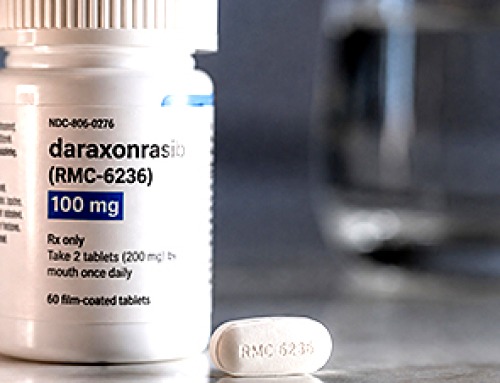
New pancreatic cancer drug carries a $39,800 monthly list price
A groundbreaking treatment for one of the most common forms of pancreatic cancer has been approved in pill form by the FDA. Revolution Medicines’ oral tablet daraxonrasib, branded as Rasonque, reduced the risk of [...]

Researchers Have Discovered a New Way To Reduce Chronic Nerve Pain
A cancer-linked protein called BRAF may help drive chronic nerve pain, and existing cancer drugs targeting it reduced pain sensitivity in preclinical models. Chronic nerve pain can persist long after an injury and often [...]

Our books now available worldwide!
Online Sellers other than Amazon, Routledge, and IOPP Indigo Global Health Care Equivalency in the Age of Nanotechnology, Nanomedicine and Artifcial Intelligence Global Health Care Equivalency In The Age Of Nanotechnology, Nanomedicine And Artificial [...]

Quantum-Enabled Regenerative Health: Reimagining Wellness, Precision Health and Longevity Medicine
Introduction Healthcare is approaching a frontier where the quantum portfolio could influence not only how disease is diagnosed and treated, but how health itself is measured, modeled, predicted and preserved. Quantum computing, quantum simulation, [...]

FDA Clears First-of-Its-Kind Nonmedication Treatment for PTSD
The FDA has cleared a system that uses brain activity data to personalize magnetic stimulation for PTSD, adding a new nonmedication treatment option. Every day in the United States, approximately 17.5 veterans die by suicide, [...]
FDA approves breakthrough drug to treat advanced pancreatic cancer
The Food and Drug Administration (FDA) approved on Wednesday a drug that could extend the survival of those with metastatic pancreatic cancer. The drug, called daraxonrasib, will be sold under the brand name Rasonque [...]

AI Decodes a Hidden DNA Signal Linked to Disease-Causing Mutations
Machine learning identifies the likely “initiator” and enables new predictions about DNA mutations that can cause disease. Every human cell depends on tens of thousands of genes being switched on at the right time [...]

Pope Leo Urges Global Response to Congo’s Deadliest Ebola Outbreak
Pope Leo called for international action to address the Ebola outbreak in the Democratic Republic of Congo. The epidemic has claimed over 2,500 lives and is the nation's largest recorded outbreak. The Pope emphasized [...]

Is there a summer COVID-19 surge this year? Yep, it’s ramping up again
Hantavirus. Ebola. West Nile. Measles. And, of course, cyclospora — that stomach parasite making people miserable across the country. Americans have plenty to worry about this summer. But remember COVID-19? It may not be [...]