A new study reveals surprising differences in how male and female hearts age at the cellular level.
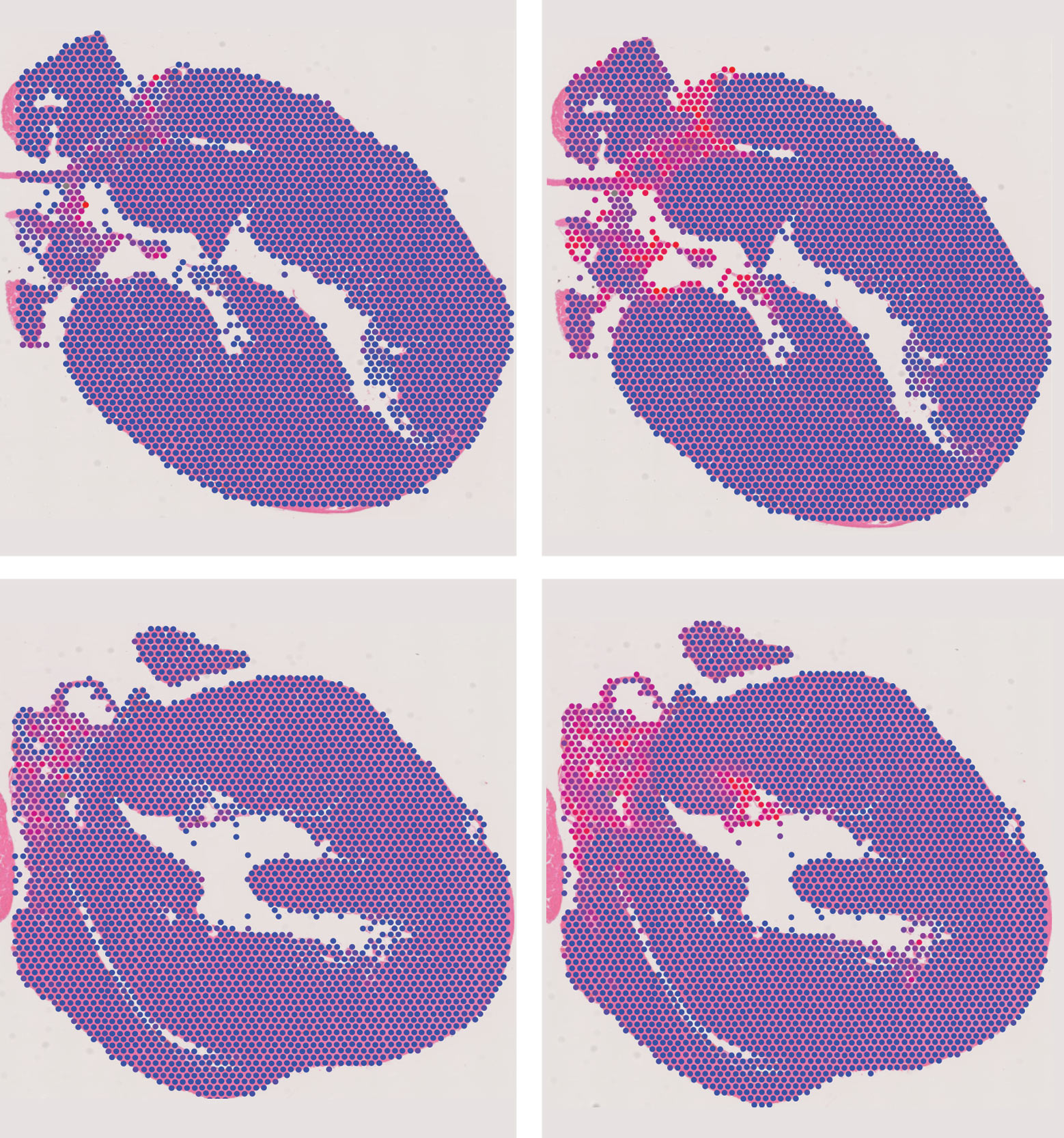
The heart may age very differently from one region to another. A detailed study of mouse hearts found that molecular signs associated with chronic inflammation and tissue scarring were concentrated around the aortic valves and aortic root, rather than being distributed evenly throughout the organ.
Researchers at The Jackson Laboratory (JAX) identified these hotspots by mapping thousands of cells from young and aged mice. Published in Aging Cell, the findings suggest that structures often overlooked in cardiac aging research may play a central role in how the heart changes over time.
Why the Heart’s Valves May Be Aging Hotspots
Previous studies of cardiac aging have largely concentrated on heart muscle, particularly the left ventricle, which pumps oxygenated blood into the aorta and throughout the body. Because mammalian heart muscle cells have very limited capacity for regeneration, understanding how they deteriorate with age has been a major research priority. The JAX team instead examined the entire heart, using single-cell and spatial genomics technologies to identify both the molecular activity of individual cells and their locations within the organ.
“The valves and the major blood vessels are parts often thought of as plumbing rather than the main engine, but this is a very complicated little machine,” said study author Nadia Rosenthal, scientific director at JAX. “It turns out they’re home to many of the cells we’re interested in, and that’s where some of the most important aging-related signals were concentrated.”
“Some of the markers associated with inflammaging were there from the very beginning in young hearts, but they were focused specifically in areas no one had defined before, in the valves and the aorta rather than in muscle tissue,” Rosenthal said. “We really have to think of aging as something that is not linear, because just like we know that people don’t age at the same rate, what we know now is that organs and tissues don’t age at the same rate either, even within one individual.”

How Immune Cells and Fibroblasts Influence Cardiac Aging
Aging is associated with persistent, low-grade inflammation, sometimes called “inflammaging.” The researchers focused on two cell populations involved in this process: immune cells that help regulate inflammation (macrophages) and structural cells responsible for maintaining connective tissue and producing scar tissue (fibroblasts). In older mouse hearts, macrophages showed increased activity in genes associated with inflammation and tissue remodeling, while fibroblasts exhibited molecular patterns linked to fibrosis (or scarring).
“To keep muscle cells happy, the other cells in the heart have to continue supporting them throughout life,” Rosenthal said. “What this study does, for the first time, is provide a comprehensive picture of how those support cells, particularly fibroblasts and macrophages, change with age and contribute to what we call inflammaging.”
The team also detected increased activity in two genes within the identified hotspots. Ccl8 produces an inflammatory signaling molecule, while Cdkn1a (also known as p21) helps regulate the cell cycle and is commonly associated with cellular senescence. Their activity points to changes in signaling between neighboring cells, not simply isolated changes within individual cell types. “We’re not talking about single genes. We’re talking about an entire conversation between immune cells and fibroblasts. As the heart ages, the way those cells communicate changes, and that shift appears to be linked to the inflammation and tissue remodeling we see in older hearts,” Rosenthal said.
A Surprising Discovery in Young Hearts
Some molecular markers traditionally associated with senescent cells were already present in young mouse hearts. Cellular senescence occurs when cells permanently stop dividing, often following stress or damage. Senescent cells can contribute to inflammation and tissue deterioration, but the researchers found that the presence of commonly used senescence markers does not necessarily establish that a cell has entered this state.
“What surprised us was that some of these markers that have been associated with aging were already present in young hearts. They weren’t where anyone expected to find them, and that forced us to rethink what those markers are telling us,” Rosenthal said. “That turns the usual interpretation of cardiac aging on its ear because these markers alone don’t mean a cell is senescent. There’s nothing senescent about a six-month-old mouse heart.”
Male and Female Hearts Show Different Molecular Changes
The study also identified differences in how fibroblasts responded to aging in male and female mice. In males, older fibroblasts showed greater involvement in molecular pathways associated with fibrosis. In females, aging was linked more closely to pathways involved in heart development and protein production. These findings describe differences in gene activity, not demonstrated differences in cardiac function or disease risk.
Rosenthal noted that cardiovascular disease patterns also differ between men and women, with disease risk generally increasing after menopause in women. However, the mouse findings do not establish a mechanism for those human differences. Comparisons with previously published human heart data did identify several shared molecular programs associated with aging, including pathways involved in cellular stress responses.
“Our findings change the focus from aging across the entire heart to specific anatomical hotspots, helping us better understand how inflammation and fibrosis are connected and which regions of the heart are involved in the aging process,” said study author Amalia Sintou, a postdoctoral associate at JAX.
What the Findings Could Mean for Cardiovascular Health
Age is the leading risk factor for cardiovascular disease, but separating changes caused by aging itself from those associated with lifestyle, environmental exposures, and disease remains difficult. Although the study did not establish whether the identified cellular changes directly impair heart function, the controlled conditions in which the mice lived helped researchers examine the biological effects of aging.
“Valve replacement is common in older adults, and one of the big questions is how much of the underlying damage is driven by aging itself,” said study author Aleksandra Aljakna Khan, a postdoctoral associate at JAX. “Because all of the mice in our study lived in the same environment and ate the same diet, we were able to isolate the effects of aging and show that aging alone can initiate some of these changes in the valves and aorta.”
The researchers are now investigating how exercise, diet, and disease influence the interactions between immune cells and fibroblasts. Their goal is to distinguish changes that occur during normal aging from those that may increase the heart’s susceptibility to disease. Although the current findings do not immediately suggest new treatments, the cellular map provides a foundation for studying how inflammation and fibrosis develop in specific regions of the aging heart.
Reference: “Alterations in the Immune-Fibrotic Axis Are Spatially Localized in the Aging Heart” by Aleksandra Aljakna Khan, Amalia Sintou, Yue Zhao, Antonios Somarakis, Harshpreet Chandok, Juliana Alcoforado Diniz, Ramalakshmi Ramasamy, Gretchen T. Clark, Leon Frommer, Sikander Hayat, Brian S. White, Paul Robson, Ron Korstanje, J. Matthew Mahoney and Nadia A. Rosenthal, 5 November 2026, Aging Cell.
DOI: 10.1111/acel.70768
This work was supported by the NIH Common Fund through The Jackson Laboratory Senescence Tissue Mapping Center (JAX-Sen TMC U54 AG079753), with additional support from JAX’s National Cancer Institute-designated Cancer Center (P30 CA034196).

News – Curated by Amanda Scott, Alias Group Creative
Follow her on Bluesky
Scientists Discover That Male and Female Hearts Age in Surprisingly Different Ways
A new study reveals surprising differences in how male and female hearts age at the cellular level. The heart may age very differently from one region to another. A detailed study of mouse hearts [...]
An Ancient Virus May Hold the Secret to What Makes the Human Brain Different
Could a virus that infected chimpanzees millions of years ago help explain how the human brain became different? Researchers at Lund University have discovered that ancient viral DNA embedded in the chimpanzee genome silences [...]
Could a Nasal Spray Stop Alzheimer’s Before Memory Loss Begins?
Protecting memory from Alzheimer’s may one day involve a nasal spray, with encouraging results in animals and evidence that its particles also protect human neurons grown in the lab. Alzheimer’s disease damages the connections [...]

A sceptical guide to AI agents in drug discovery
In conversation with Dr Eric Ma, Senior Principal Data Scientist at Moderna, Dr Raminderpal Singh examines what AI agents are actually good for, where the lock-in hides and why expertise has become more valuable [...]
Study identifies new targets for antiviral drugs against coronaviruses
A study led by researchers at the University of California San Diego School of Medicine and University of California, Riverside (UCR) School of Medicine has identified new targets for antiviral drugs against coronaviruses, including [...]
“Nearly Everybody Had Given Up” – Scientists Finally Solve a 60-Year Chemistry Mystery
After more than six decades of failed attempts, chemists have achieved a breakthrough involving a class of molecules long considered too unstable to isolate. Chemists have succeeded in isolating a group of molecules that [...]
Depression Symptoms Improved in Just 48 Hours After a Single Psychedelic Dose
A single dose of psilocybin produced rapid antidepressant effects in a small Swedish clinical trial, with improvements lasting for weeks. A single dose of psilocybin, the psychedelic compound found in magic mushrooms, produced rapid [...]

GHCE Concept
From the preface of the book Global Health Care Equivalency in the Age of Nanotechnology, Nanomedicine and Artificial Intelligence, Edited by Frank Boehm: Since the publication of my first book (Nanomedical Device and Systems [...]

Human Bodies Are Producing Two Billion Tons of CO2 a Year
A new study reveals that the amount of carbon dioxide produced by human metabolism has increased dramatically over three decades. The carbon dioxide produced by human bodies as they convert food into energy increased [...]
A Hidden DNA Mechanism Could Explain How 20% of Human Cancers Develop
Researchers have identified an unexpected molecular vulnerability in cancers carrying BAF mutations. Mutations found in roughly 20% of human cancers may promote tumor growth by changing how DNA is organized inside cells. Researchers have [...]
Ebola kills over 5,300 in fastest-growing outbreak on record
Africa’s latest Ebola outbreak has killed nearly 5,400 people, the vast majority of them in the Democratic Republic of Congo (DRC), according to the continent’s top health agency. Africa Centres for Disease Control and [...]
China makes early progress in using sound waves to stimulate damaged brains
Chinese researchers are testing whether focused ultrasound can help restore consciousness in patients with severe brain injuries, adding to a growing international effort to use sound waves to stimulate deep brain structures without surgery. [...]
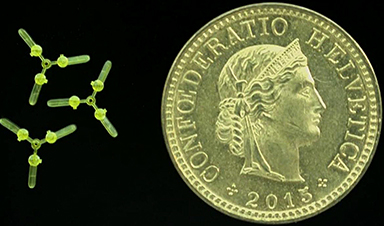
Micro-drones fly through the body thanks to ultrasound
At the EPFL, micro-drones have been developed that can be moved without a motor or battery.No motors, no batteries, no electronics on board, just small cavities that convert sound waves into thrust: this is [...]
A Single Enzyme Could Hold the Key to Treating a Devastating Brain Disorder
Blocking an enzyme’s production restored brain growth and healthy behaviors in mice engineered to develop Angelman syndrome, pointing to a possible treatment target. Children with Angelman syndrome begin to show difficulties with thinking and [...]

Scientists Develop a Clever New Way To Kill Cancer Cells From the Inside
Scientists have developed an experimental strategy that exploits a chemical byproduct of cancer cells to produce anticancer drugs directly inside them. Scientists in Japan have developed an experimental method that uses a chemical produced [...]
Our books are available worldwide!
Online Sellers other than Amazon, Routledge, and IOPP Indigo Global Health Care Equivalency in the Age of Nanotechnology, Nanomedicine and Artifcial Intelligence Global Health Care Equivalency In The Age Of Nanotechnology, Nanomedicine And Artificial [...]