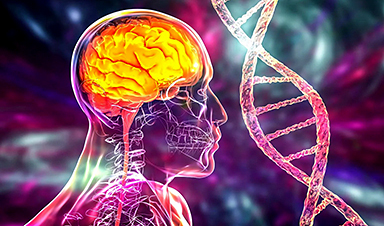
Could a virus that infected chimpanzees millions of years ago help explain how the human brain became different?
Researchers at Lund University have discovered that ancient viral DNA embedded in the chimpanzee genome silences a gene involved in early human brain development. Their study, published in Science Advances, found that the gene, LINC00662, remains active in human brain organoids, where it helps support the development of nerve cells and the connections between them.
The finding offers a way to explore how humans and chimpanzees developed different biological traits despite sharing much of their genetic makeup. Evolution can change how existing genes are used, as well as which genes a species carries.
“The virus we investigated specifically affected chimpanzees. Yet humans and chimpanzees have largely the same genetic makeup. That is why it is important to understand the differences in how genes are regulated. Our findings suggest that one gene, LINC00662, plays a significant role in early human brain development,” says Johan Jakobsson, professor of molecular neurogenetics at Lund University.
How Viral DNA Silences A Gene
The genetic remnant belongs to PTERV1, an endogenous retrovirus. Its DNA became embedded in the chimpanzee genome during an ancient infection and has been inherited ever since. The researchers found copies of the viral sequence at numerous locations throughout chimpanzee DNA.
Those sequences are systematically shut down through methylation, a chemical process that helps regulate gene activity. At the LINC00662 location, the inherited viral insertion also keeps the neighboring gene silent.
To examine this difference during brain development, the team grew brain organoids from human and chimpanzee stem cells. These miniature, three-dimensional structures resemble brain tissue and reproduce some features of its early development.
“The gene was strongly expressed in the human organoids, but not at all in the chimpanzee organoids,” says Patricia Gerdes, a postdoctoral researcher in molecular neurogenetics at Lund University.
Removing the Virus Restores Gene Activity
The researchers then tested whether the viral sequence caused the shutdown. Using the CRISPR-Cas9 gene-editing tool, they removed it from chimpanzee cells. LINC00662 became active again.
“This shows that it is in fact the viral insertion that is responsible for the gene being switched off in chimpanzees,” says Patricia Gerdes.
A separate experiment explored the gene’s role in humans. When the team used CRISPR to silence LINC00662 in human brain organoids, genes involved in nerve cell development and the formation of connections between those cells became less active.
For Jakobsson, the results show how an infection can leave a lasting genetic change across a population, while helping explain how gene regulation can protect the brain or contribute to damage. The team will next investigate whether other viral remnants influenced brain evolution and whether such sequences are linked to brain diseases.
Reference: “Retroviral insertions contributed to the divergence of human and chimpanzee brains” by Patricia Gerdes, Ofelia Karlsson, Raquel Garza, Diahann A. M. Atacho, PingHsun Hsieh, Bharat Prajapati, DongAhn Yoo, Chandramouli Muralidharan, Anita Adami, Carrie Davis-Hansson, Emily M. Johansson, Yogita Sharma, Laura Castilla-Vallmanya, Wiktor West, Meghna Vinod, Lucian Domitrovic, Pia A. Johansson, Jenny Johansson, Christopher H. Douse, Chandrasekhar Kanduri, Patric Jern, Evan E. Eichler and Johan Jakobsson, 23 October 2026, Science Advances.
DOI: 10.1126/sciadv.aeg5791
This study was funded by the Swedish Research Council; the Swedish Brain Foundation; Cancerfonden; Barncancerfonden; the Swedish Government Initiative for Strategic Research Areas (MultiPark & StemTherapy); and the European Union’s Horizon Europe research and innovation program.

News – Curated by Amanda Scott, Alias Group Creative
Follow her on Bluesky
An Ancient Virus May Hold the Secret to What Makes the Human Brain Different
Could a virus that infected chimpanzees millions of years ago help explain how the human brain became different? Researchers at Lund University have discovered that ancient viral DNA embedded in the chimpanzee genome silences [...]
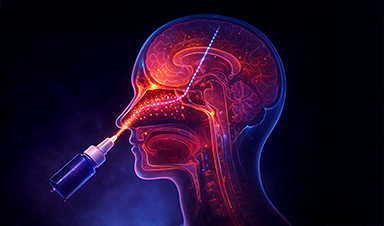
Could a Nasal Spray Stop Alzheimer’s Before Memory Loss Begins?
Protecting memory from Alzheimer’s may one day involve a nasal spray, with encouraging results in animals and evidence that its particles also protect human neurons grown in the lab. Alzheimer’s disease damages the connections [...]
A sceptical guide to AI agents in drug discovery
In conversation with Dr Eric Ma, Senior Principal Data Scientist at Moderna, Dr Raminderpal Singh examines what AI agents are actually good for, where the lock-in hides and why expertise has become more valuable [...]
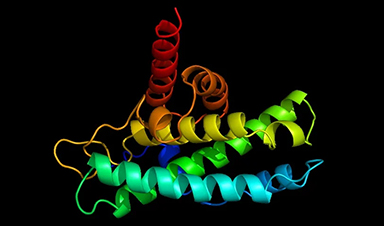
Study identifies new targets for antiviral drugs against coronaviruses
A study led by researchers at the University of California San Diego School of Medicine and University of California, Riverside (UCR) School of Medicine has identified new targets for antiviral drugs against coronaviruses, including [...]
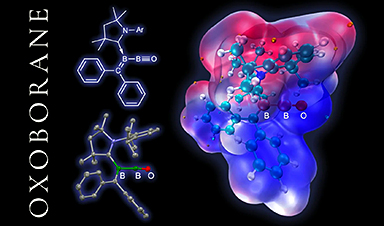
“Nearly Everybody Had Given Up” – Scientists Finally Solve a 60-Year Chemistry Mystery
After more than six decades of failed attempts, chemists have achieved a breakthrough involving a class of molecules long considered too unstable to isolate. Chemists have succeeded in isolating a group of molecules that [...]

Depression Symptoms Improved in Just 48 Hours After a Single Psychedelic Dose
A single dose of psilocybin produced rapid antidepressant effects in a small Swedish clinical trial, with improvements lasting for weeks. A single dose of psilocybin, the psychedelic compound found in magic mushrooms, produced rapid [...]
GHCE Concept
From the preface of the book Global Health Care Equivalency in the Age of Nanotechnology, Nanomedicine and Artificial Intelligence, Edited by Frank Boehm: Since the publication of my first book (Nanomedical Device and Systems [...]

Human Bodies Are Producing Two Billion Tons of CO2 a Year
A new study reveals that the amount of carbon dioxide produced by human metabolism has increased dramatically over three decades. The carbon dioxide produced by human bodies as they convert food into energy increased [...]
A Hidden DNA Mechanism Could Explain How 20% of Human Cancers Develop
Researchers have identified an unexpected molecular vulnerability in cancers carrying BAF mutations. Mutations found in roughly 20% of human cancers may promote tumor growth by changing how DNA is organized inside cells. Researchers have [...]

Ebola kills over 5,300 in fastest-growing outbreak on record
Africa’s latest Ebola outbreak has killed nearly 5,400 people, the vast majority of them in the Democratic Republic of Congo (DRC), according to the continent’s top health agency. Africa Centres for Disease Control and [...]
China makes early progress in using sound waves to stimulate damaged brains
Chinese researchers are testing whether focused ultrasound can help restore consciousness in patients with severe brain injuries, adding to a growing international effort to use sound waves to stimulate deep brain structures without surgery. [...]
Micro-drones fly through the body thanks to ultrasound
At the EPFL, micro-drones have been developed that can be moved without a motor or battery.No motors, no batteries, no electronics on board, just small cavities that convert sound waves into thrust: this is [...]
A Single Enzyme Could Hold the Key to Treating a Devastating Brain Disorder
Blocking an enzyme’s production restored brain growth and healthy behaviors in mice engineered to develop Angelman syndrome, pointing to a possible treatment target. Children with Angelman syndrome begin to show difficulties with thinking and [...]

Scientists Develop a Clever New Way To Kill Cancer Cells From the Inside
Scientists have developed an experimental strategy that exploits a chemical byproduct of cancer cells to produce anticancer drugs directly inside them. Scientists in Japan have developed an experimental method that uses a chemical produced [...]
Our books are available worldwide!
Online Sellers other than Amazon, Routledge, and IOPP Indigo Global Health Care Equivalency in the Age of Nanotechnology, Nanomedicine and Artifcial Intelligence Global Health Care Equivalency In The Age Of Nanotechnology, Nanomedicine And Artificial [...]

After only a short training, people in a coma managed to send targeted signals
Researchers have succeeded in communicating with brain-injured patients who are unconscious. They see enormous potential in this for future treatments. Patients who lie motionless in bed after a severe brain injury and do not [...]