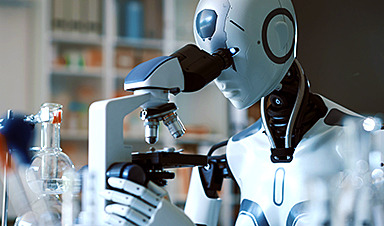
In conversation with Dr Eric Ma, Senior Principal Data Scientist at Moderna, Dr Raminderpal Singh examines what AI agents are actually good for, where the lock-in hides and why expertise has become more valuable rather than less.
Model releases now arrive weekly, each claiming a step change. Meanwhile the software is converging. Across chat apps, desktop assistants and coding tools, the same pattern is emerging: an agent, a language model inside software that can loop, call tools and act on your behalf.
For scientists watching from the sidelines, knowing what these systems do well and badly matters more than benchmark scores.
Eric Ma uses these systems daily – both at work and in his own teaching and writing. I asked him where drug discovery actually is with agents, as opposed to where the marketing says it is.
A super-powered search engine
“I think the best way to think about AI agents in drug discovery is as this extremely super-powered autonomous search engine.”
That is Ma’s mental model, and it is how he uses agents most. Take the question of whether a new region of chemical space is worth entering. The old approach was to run a literature search yourself and judge from the handful of papers it returned. An agent fires off many searches at once and reads across them.
That fan-out comes with a caveat: an agent will not question what it already believes unless it is told to. The literature baked into a model’s training is always somewhat stale, so Ma instructs his agents to look for work that contradicts it.
He distinguishes two modes: a deep research run when you need to gauge the lay of the land in an unfamiliar field, and a targeted search when you need a specific detail. Of the first, he says:
“All of deep research is basically just looping over shallower searches until you get a more comprehensive picture.”
The pattern is exactly the same inside the company firewall. If an electronic lab notebook, a document repository or a structured database exposes a queryable interface, an agent can run tens of queries in the time it takes a human to compose one.
All of deep research is basically just looping over shallower searches until you get a more comprehensive picture.
Internal sources bring their own problem: many scientific systems expose a clumsy application programming interface (API). Ma’s point is that the API itself matters most. A well-structured, well-documented API needs no command-line tool; the command-line interface is just one layer that calls on the API underneath. A good API makes the system reachable through almost any interface, and that is what makes it powerful.
Even the jargon is less of a barrier than it used to be: you can ask your assistant what an API is and why you are using one. Basic questions go to the AI; better questions reach the human expert.
The zeitgeist of AI in drug discovery is molecule design. We did not discuss molecule design here – we discussed knowledge retrieval: finding, reading and checking what is already known. All of it is part of making science run at the speed of thought. One scope note: the search-engine framing is about generative AI and agentic harnesses. Drug discovery also runs on protein language models, protein folding models and chemical foundation models. Those are legit too but fall outside this article.
App or coding tool?
Most scientists will first meet agents in a chat app such as ChatGPT, Claude or Gemini.
I actually don’t think there’s a difference. I think the unlock has been that it’s less intimidating and therefore has greater reach.
He does concede one difference, though: the local-versus-remote one. Desktop applications, whether or not they brand themselves as coding tools, run on your machine and can touch your files; web apps live in someone else’s datacentre.
Beyond that split, he sees no practical one. I pushed back on friction anyway: you can get either route to do the same job, but the default path differs and the coding harness assumes you are a programmer, which shapes what you build.
My own view is that the coding route is the more powerful one. Most readers will arrive through the app, and that is a fine place to start.
Lock-in hides in behaviour
“Vendor lock-in is the thing that I have been extremely wary about.”
The subtler point is that lock-in is not only contractual but also behavioural. You get used to how a model behaves. Swap it, even for a better model, and a workflow that depended on that behaviour stops working. A provider-agnostic harness buys freedom at the tooling layer; it does not free a tuned workflow from the model it was tuned against.
Frontier or open?
So where should a drug discovery group draw the line between frontier and open models? Ma invokes Ethan Mollick’s jagged frontier and refuses to generalise:
In his experience, the frontier models currently lead on breadth: they will produce the pedestrian but technically demanding work of diagrams, slides and documents, and they will run a data analysis largely on their own. The frontier labs’ specialised science variants go further still, as he understands it: they add recent literature to training and loosen the biology and chemistry guardrails that have blocked legitimate work on lipid nanoparticles and RNA.
Those guardrails he regards as more gesture than substance. That is his opinion, but people in the safety community disagree.
Expertise just got more valuable
Expertise in an age of AI has just become exponentially more valuable. Expertise, taste and judgement.
This is the thread Ma cares about most. The real risk of using AI badly is that it does something wrong and you cannot tell: the output is plausible and only expertise lets you catch it.
That is why he keeps returning to expertise, taste and judgement. Those qualities come from building and teaching; prompt only for answers and you will not retain them, and the forgetting curve is real.
That thesis underpins the learning retreat he is running with Daniel Chen of the University of British Columbia, aimed at working professionals with five to ten years in a specialty – not limited to the life sciences. The premise is a single compressed experience of teaching yourself something new with AI, verifying as you go, so that checking the machine’s work becomes a habit rather than an afterthought. The confidence of having done it once carries into whatever domain comes next.
Run the experiment
One of the things that defines a scientist is we come in with a hypothesis. We run an experiment and see whether it works.
Ma’s closing advice is to treat all agents this way: as a small bet, not a strategic commitment. Build something over a weekend; if your organisation cannot deploy it, you have lost nothing and gained a place on the learning curve.
That is why we are asking for real-life case studies, negative results included, for the SLAS Discovery special issue I am co-editing, linked below.
Further reading
- Eric Ma’s blog: ericmjl.github.io/blog
- Learn Anything retreat: learn-anything.nonlinearlabs.ai
- SLAS Discovery call for papers, Real-Life Case Studies in AI-Driven Drug Discovery Workflows: slas-discovery.org/content/call-for-paper


News – Curated by Amanda Scott, Alias Group Creative
Follow her on Bluesky
A sceptical guide to AI agents in drug discovery
In conversation with Dr Eric Ma, Senior Principal Data Scientist at Moderna, Dr Raminderpal Singh examines what AI agents are actually good for, where the lock-in hides and why expertise has become more valuable [...]
Study identifies new targets for antiviral drugs against coronaviruses
A study led by researchers at the University of California San Diego School of Medicine and University of California, Riverside (UCR) School of Medicine has identified new targets for antiviral drugs against coronaviruses, including [...]
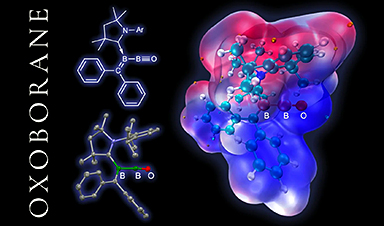
“Nearly Everybody Had Given Up” – Scientists Finally Solve a 60-Year Chemistry Mystery
After more than six decades of failed attempts, chemists have achieved a breakthrough involving a class of molecules long considered too unstable to isolate. Chemists have succeeded in isolating a group of molecules that [...]

Depression Symptoms Improved in Just 48 Hours After a Single Psychedelic Dose
A single dose of psilocybin produced rapid antidepressant effects in a small Swedish clinical trial, with improvements lasting for weeks. A single dose of psilocybin, the psychedelic compound found in magic mushrooms, produced rapid [...]
GHCE Concept
From the preface of the book Global Health Care Equivalency in the Age of Nanotechnology, Nanomedicine and Artificial Intelligence, Edited by Frank Boehm: Since the publication of my first book (Nanomedical Device and Systems [...]

Human Bodies Are Producing Two Billion Tons of CO2 a Year
A new study reveals that the amount of carbon dioxide produced by human metabolism has increased dramatically over three decades. The carbon dioxide produced by human bodies as they convert food into energy increased [...]
A Hidden DNA Mechanism Could Explain How 20% of Human Cancers Develop
Researchers have identified an unexpected molecular vulnerability in cancers carrying BAF mutations. Mutations found in roughly 20% of human cancers may promote tumor growth by changing how DNA is organized inside cells. Researchers have [...]

Ebola kills over 5,300 in fastest-growing outbreak on record
Africa’s latest Ebola outbreak has killed nearly 5,400 people, the vast majority of them in the Democratic Republic of Congo (DRC), according to the continent’s top health agency. Africa Centres for Disease Control and [...]
China makes early progress in using sound waves to stimulate damaged brains
Chinese researchers are testing whether focused ultrasound can help restore consciousness in patients with severe brain injuries, adding to a growing international effort to use sound waves to stimulate deep brain structures without surgery. [...]

Micro-drones fly through the body thanks to ultrasound
At the EPFL, micro-drones have been developed that can be moved without a motor or battery.No motors, no batteries, no electronics on board, just small cavities that convert sound waves into thrust: this is [...]
A Single Enzyme Could Hold the Key to Treating a Devastating Brain Disorder
Blocking an enzyme’s production restored brain growth and healthy behaviors in mice engineered to develop Angelman syndrome, pointing to a possible treatment target. Children with Angelman syndrome begin to show difficulties with thinking and [...]

Scientists Develop a Clever New Way To Kill Cancer Cells From the Inside
Scientists have developed an experimental strategy that exploits a chemical byproduct of cancer cells to produce anticancer drugs directly inside them. Scientists in Japan have developed an experimental method that uses a chemical produced [...]
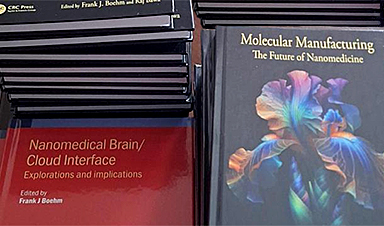
Our books are available worldwide!
Online Sellers other than Amazon, Routledge, and IOPP Indigo Global Health Care Equivalency in the Age of Nanotechnology, Nanomedicine and Artifcial Intelligence Global Health Care Equivalency In The Age Of Nanotechnology, Nanomedicine And Artificial [...]

After only a short training, people in a coma managed to send targeted signals
Researchers have succeeded in communicating with brain-injured patients who are unconscious. They see enormous potential in this for future treatments. Patients who lie motionless in bed after a severe brain injury and do not [...]
MIT Scientists Reprogram Immune Cells Inside the Body To Destroy Cancer
Natural killer cells reprogrammed inside mice eliminated lymphoma tumors and helped damaged livers heal, though whether this approach could help people with cancer or autoimmune disease remains unknown. To make a cancer treatment from [...]

Melanoma mRNA Vaccine Shows Promise in Preventing Disease Recurrence
Key takeaways: Phase 3 trial finds personalized intismeran plus pembrolizumab may better prevent high-risk melanoma recurrence after surgery The trial enrolled 1,137 patients and builds on phase 2 results showing about half the recurrence [...]