Introduction
The next evolution of healthcare will not be confined to hospitals, clinics, or episodic interventions—it will be embedded into the infrastructure of everyday life. Regenerative health ecosystems require a systemic re-architecture of how health is generated, sustained, and optimized. At the center of this transformation are health-centric buildings and urban ecosystems designed to function as continuous, adaptive, and intelligent health platforms. These environments integrate environmental stewardship, precision health, and advanced engineering systems to support a planet-positive economy and society.
Global Landscape
Health-centric buildings represent a shift from static infrastructure to dynamic, responsive systems. Unlike legacy healthcare facilities, which primarily deliver reactive care, these buildings are engineered to continuously optimize human physiology, cognition, and well-being. Renewable energy is foundational. Solar photovoltaic systems, geothermal loops, advanced battery storage, and smart grid integration enable buildings to operate at net-zero or net-positive energy levels. This transition is not only environmentally responsible—it directly impacts health by reducing air pollution, mitigating climate-related disease burdens, and enhancing resilience during energy disruptions.
Internally, these buildings function as precision health environments. Advances in sensing, edge computing, and AI-driven control systems enable real-time modulation of environmental variables. Lighting systems dynamically adjust intensity and wavelength to align with circadian biology, improving sleep architecture, endocrine balance, and neurocognitive performance. Acoustic systems reduce harmful noise exposure while introducing therapeutic soundscapes. Air quality systems integrate advanced filtration, carbon capture, and biophilic elements to optimize respiratory health and microbial balance. Thermal conditions are individualized to account for variability in metabolic responses and clinical conditions. In this paradigm, the built environment becomes an active therapeutic agent rather than a passive container.
Design
A defining characteristic of Regenerative Health Ecosystems is decentralization. Health is no longer delivered primarily within centralized hospitals but distributed across homes, workplaces, schools, and public spaces. Micro-health nodes embedded within urban environments provide preventive diagnostics, remote monitoring, and AI-assisted triage. Continuous data streams from wearables, bioimplants, and ambient sensors enable early disease detection and personalized interventions. Hospitals evolve into specialized centers for acute and complex care, while the majority of health maintenance occurs seamlessly in everyday settings.
Urban ecosystems extend these principles at scale. Cities designed with health as a primary performance indicator integrate green corridors, clean mobility systems, and digitally orchestrated infrastructure. Environmental variables—air quality, noise, temperature, and exposure to toxins—are continuously monitored and optimized. Biophilic design becomes a clinical strategy, with access to nature, water, and biodiversity embedded into urban planning. These elements are strongly associated with reduced inflammation, improved mental health, and enhanced immune function. At scale, such interventions translate into measurable improvements in population health outcomes and economic productivity.
Environmental health is therefore not peripheral but central to regenerative systems. A planet-positive economy depends on aligning human health with ecological restoration. Buildings and cities must reduce emissions, regenerate natural resources, and actively contribute to environmental resilience. This alignment creates a reinforcing cycle: healthier environments yield healthier populations, which in turn reduce healthcare costs and enable reinvestment into sustainable infrastructure.
Engineering Stack
The realization of health-centric buildings and urban ecosystems depends on a sophisticated, interoperable engineering stack that integrates cyber-physical, digital, and biological systems.
Physical AI forms the operational core of these environments. Embedded sensors, robotics, and intelligent control systems enable real-time perception and actuation within physical spaces. Physical AI enables buildings to autonomously adjust lighting, airflow, temperature, and spatial configurations in response to human physiological signals and environmental conditions. This creates adaptive environments that continuously optimize health outcomes.
Blockchain infrastructure provides the trust layer for these ecosystems. As health data is generated across decentralized nodes—homes, wearables, public infrastructure—secure, immutable, and auditable data exchange becomes critical. Blockchain enables decentralized identity, verifiable credentials, and secure data provenance, ensuring that sensitive health and environmental data can be shared across stakeholders while preserving privacy and integrity.
Autonomous systems extend operational efficiency and responsiveness. From robotic maintenance of building systems to autonomous mobility solutions within smart cities, these systems reduce human burden while enhancing precision and safety. In healthcare contexts, autonomous systems can support logistics, environmental sanitation, and even aspects of patient monitoring and intervention.
6G connectivity represents the high-speed, low-latency communication backbone required for real-time orchestration of these ecosystems. With capabilities far beyond those of current networks, 6G enables continuous data exchange among devices, buildings, and urban systems, supporting advanced applications such as holographic interfaces, digital twins, and ultra-reliable remote interventions.
Satellite internet complements terrestrial networks, ensuring ubiquitous connectivity across geographic regions, including underserved and remote areas. This is critical for equitable access to regenerative health ecosystems, enabling decentralized care models to scale globally. Satellite-enabled resilience also ensures continuity of operations during disasters or infrastructure disruptions.
Together, this engineering stack enables a transition from fragmented, reactive healthcare systems to integrated, proactive, and resilient ecosystems. Importantly, these technologies must be governed by robust standards and frameworks—such as those from NIST, ISO, IEEE, and WHO—to ensure interoperability, cybersecurity, and ethical deployment.
Conclusion
Regenerative Health Ecosystems represent a convergence of environmental design, advanced engineering, and precision medicine. Health-centric buildings and urban infrastructures are emerging as critical assets in this transformation, embedding health into the environments where people live, work, and interact. By integrating renewable energy, adaptive environments, decentralized care, and a robust engineering stack, we can architect systems that are not only sustainable but regenerative—systems that restore human health while revitalizing the planet.

Prof Dr Ingrid Vasiliu-Feltes
Quantum-AI Governance Expert I Deep Tech Diplomate I Investor & Tech Sovereignty Architect I Innovation Ecosystem Founder I Strategist

News – Curated by Amanda Scott, Alias Group Creative
Follow her on Bluesky
Regenerative Healthcare by Design: Engineering Health-Centric Buildings and Urban Ecosystems
Introduction The next evolution of healthcare will not be confined to hospitals, clinics, or episodic interventions—it will be embedded into the infrastructure of everyday life. Regenerative health ecosystems require a systemic re-architecture of how [...]

Scientists Warn: Humanity Has Pushed the Planet Past Its Limits
Human population and consumption have surpassed Earth’s limits, increasing risks to climate and global stability. The Earth is already operating beyond its capacity to sustainably support the global population, according to new research highlighting [...]
Breakthrough Study Reveals Why Damaged Nerves Struggle To Heal
A newly identified molecular mechanism reveals how neurons weigh survival against repair after injury. Scientists at the Icahn School of Medicine at Mount Sinai have identified a molecular switch in neurons that limits the regrowth of [...]

Popular Vitamin B3 Supplements May Help Cancer Cells Survive, Scientists Warn
A new study raises important questions about widely used NAD+ supplements, suggesting that compounds often taken to boost energy and support healthy aging may have unintended consequences in cancer treatment. Millions of Americans take [...]

Scientists Discover Cancer Tumors Are “Addicted” to This Common Antioxidant
Cancer cells may be exploiting a common antioxidant as fuel, revealing a potential weakness that future therapies could target. Cancer cells may be tapping into an unexpected energy source: an antioxidant long associated with [...]
Nanotube injector transfers cytoplasmic contents and organelles between living cells safely
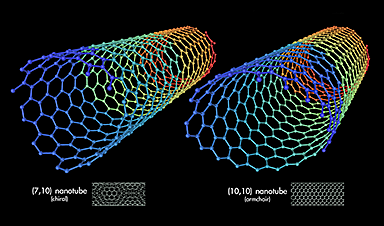
Cells are not isolated units; they continuously exchange proteins, genetic material, and even entire organelles with their neighbors. Intercellular transfer influences how tissues develop, respond to stress, and repair damage. In certain cancers, for [...]
CEO of America’s largest public hospital system is ready to replace radiologists with AI
The chief executive of America’s largest public hospital system says he is prepared to start replacing radiologists with artificial intelligence in some circumstances, once the regulatory landscape catches up. Mitchell H. Katz, MD, president [...]

Our books now available worldwide!
Online Sellers other than Amazon, Routledge, and IOPP Indigo Global Health Care Equivalency in the Age of Nanotechnology, Nanomedicine and Artifcial Intelligence Global Health Care Equivalency In The Age Of Nanotechnology, Nanomedicine And Artificial [...]

Study finds higher heart disease risk in long COVID patients
People with long COVID are at increased risk of developing cardiovascular disease, according to a new study from Karolinska Institutet published in eClinicalMedicine. The results show that the risk of conditions such as cardiac arrhythmias [...]
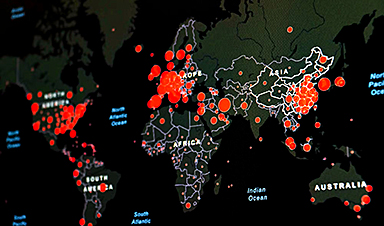
The Corona variant Cicada is here – we know that
Online and on social media, reports are piling up about a new Sars-Cov-2 variant that is currently on the rise: BA.3.2, also known as Cicada. That's what it's all about: The Omicron variant BA.3.2, [...]

A Simple Blood Test Could Predict Dementia Risk 25 Years Early
A single blood marker may quietly signal dementia risk decades in advance. Scientists at the University of California, San Diego, have identified a blood signal that could forecast dementia risk decades before symptoms begin. Their [...]

Sperm Get Lost in Space and Scientists Finally Know Why
Having a baby in space may be far more complicated than expected, as new research shows sperm struggle to find their way in microgravity. Starting a family beyond Earth could be more complicated than [...]
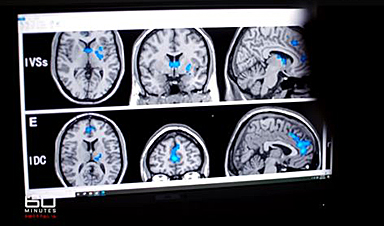
Digital Dementia – Brain fog and disassociation from being chronically online
New medical evidence, featured on 60 Minutes Australia, indicates excessive screen time is causing "digital dementia" in young Australians, with brain scans showing physical shrinkage and damage. Experts warn that high device usage (6-8 hours [...]

A new, highly mutated COVID variant called ‘Cicada’ is spreading in the US.
BA.3.2, a heavily mutated new COVID-19 variant which may be better able to escape immunity from vaccines or prior infection, is now spreading in the United States. Although COVID cases are currently low nationally, [...]

Molecular Manufacturing: The Future of Nanomedicine – New book from NanoappsMedical Inc.
This book explores the revolutionary potential of atomically precise manufacturing technologies to transform global healthcare, as well as practically every other sector across society. This forward-thinking volume examines how envisaged Factory@Home systems might enable the cost-effective [...]

Ancient bacteria strain discovered in ice cave is resistant to some modern antibiotics
In the depths of Scarisoara cave in Romania sits one of the world’s biggest underground glaciers, a monumental slab of ice the size of roughly 40 Olympic swimming pools that began to form around [...]