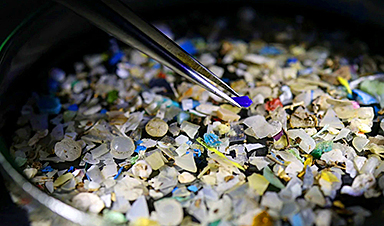
In a new study, researchers found microplastics deep inside prostate cancer tumors, raising more questions about the role the ubiquitous pollutants play in public health.
The findings — which come from a small study of 10 men — were presented Monday at the American Society of Clinical Oncology’s Genitourinary Cancers Symposium and have not yet been published in a peer-reviewed journal.
In the study, researchers analyzed tissue samples taken from 10 men with prostate cancer, with an average age of 65, whose prostate had been removed as part of their treatment for the disease. They also analyzed noncancerous tissue taken from the opposite side of the organ.
Microplastics were present in 90% of the tumors and 70% of the noncancerous samples. The cancerous tissue contained 2.5 times the amount of plastic on average than the noncancerous tissue with approximately 40 micrograms of plastic per gram of tissue.
Dr. Stacy Loeb, the lead study author and a urologist at NYU Langone Health, said the higher concentrations in the tumor tissue “was very surprising and concerning.”
It “raised questions over whether it could have an association with the development of prostate cancer,” she said. “So this is definitely something we’re going to continue to study further with more cases.”
Dr. Michael Eisenberg, a urology professor at the Stanford University School of Medicine, who wasn’t involved in the study, said that the new research does not establish cause and effect.
However, “we are finding many signals about the astonishing prevalences of micro/nanoplastics and the concerning associations with health problems,” he wrote in an email. “We need more data to understand the implications of these findings.”
The study is not the first to find microplastics in prostate cancer tumors. A 2024 study published in The Lancet from researchers in China also found higher levels of plastics in tumors compared to nearby tissue. Loeb said the new study used more precise techniques to measure the different plastics found in the samples. The researchers also took extensive steps to avoid contamination that could’ve skewed the results.
The ubiquity of plastic makes studying the presence of microplastics in human tissue challenging — was the plastic actually found in the body, or was it introduced through plastic used in the research? Previous studies that have identified microplastics in postmortem brain tissue and carotid artery plaques have been criticized for their methodology, including suggestions that the measurements may have been influenced by lab contamination.
With this mind, Loeb said, extra stringent precautions were taken in her study, which took a year of planning. When conducting the surgical prostate removal, she said, plastic was eliminated from the operating room as much as possible and the team deliberately accounted for contamination in their analysis.
“I would say, if anything, this might have been overly conservative, because the samples we took were from deep in the middle of the prostate, so it’s unclear how much anything could have actually touched these samples,” Loeb said. “The tumor and the benign tissue samples were from the same patient and underwent exactly the same handling, so the fact that we’re seeing a high concentration of plastics in the tumor can’t really easily be explained by a contamination.”
Dr. Andrea Viale, an associate professor in the department of genomic medicine, at the MD Anderson Cancer Center in Houston, said that while the results don’t establish a causal relationship between microplastics and prostate cancer, they show that this needs to be taken seriously as a possible theory for the rising rates of advanced disease.
Around 1 in 8 men in the U.S. will be diagnosed with prostate cancer at some point in their lifetime, according to the American Cancer Society. Over the past decade, cases of late-stage disease have increased annually by 2.6% in men under 55, 6% in men ages 55–69, and 6.2% in men 70 and older.
“The fact that it is being detected in tumors, means that from a public health perspective, this issue deserves really serious attention,” said Viale, who was not involved with the study. “We should really begin implementing strategies to limit the exposure, because we do not know what it’s actually doing, but it is something that should not be there.”
According to Eisenberg, microplastics could be driving higher levels of oxidative damage to cells in the prostate, as well as impacting immune function. Loeb said they might also be increasing inflammation in the tissue, as well as helping transport potentially carcinogenic chemicals such as phthalates and bisphenols into the prostate. Greater exposure to these chemicals, which are commonly found in plastic packaging, has previously been associated with prostate cancer.
At the same time, pinning down whether plastic particles are playing a role in the development or progression of the disease will be far from straightforward.
“The challenging problem is that when you talk about plastic, you have dozens of polymers, shapes, sizes, geometries, and plastic contains tens of different chemicals, additives, stabilizers, plasticizers, dyes and contaminants as well, so it’s really difficult to understand the causative role,” Viale said. “It could be playing a physical role in the tissue, or it could be related to the chemical composition of the plastic itself.”
Loeb and her colleagues have already secured a grant from the Defense Department, now rebranded the Department of War, for a larger study, analyzing the amount of plastic in tissue samples from 30 prostate cancer patients, as well as assessing whether there is a link between the quantity of plastic and the amount of inflammation in the tissue.
In future research, Loeb said she would also like to compare the prevalence of plastic in high-grade or aggressive prostate tumors, versus low-grade tumors. She’s also calling for similar studies from other research groups in more patient populations to try and confirm this apparent link.
“The bottom line is that this study is just preliminary data, so we’re nowhere near the point of saying that this causes prostate cancer,” she said. “But I think more needs to be done to determine whether that is a possibility.”

News

Scientists Warn: Humanity Has Pushed the Planet Past Its Limits
Human population and consumption have surpassed Earth’s limits, increasing risks to climate and global stability. The Earth is already operating beyond its capacity to sustainably support the global population, according to new research highlighting [...]
Breakthrough Study Reveals Why Damaged Nerves Struggle To Heal
A newly identified molecular mechanism reveals how neurons weigh survival against repair after injury. Scientists at the Icahn School of Medicine at Mount Sinai have identified a molecular switch in neurons that limits the regrowth of [...]
Popular Vitamin B3 Supplements May Help Cancer Cells Survive, Scientists Warn
A new study raises important questions about widely used NAD+ supplements, suggesting that compounds often taken to boost energy and support healthy aging may have unintended consequences in cancer treatment. Millions of Americans take [...]
Scientists Discover Cancer Tumors Are “Addicted” to This Common Antioxidant
Cancer cells may be exploiting a common antioxidant as fuel, revealing a potential weakness that future therapies could target. Cancer cells may be tapping into an unexpected energy source: an antioxidant long associated with [...]
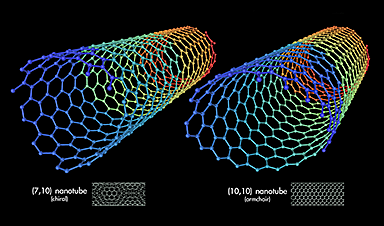
Nanotube injector transfers cytoplasmic contents and organelles between living cells safely
Cells are not isolated units; they continuously exchange proteins, genetic material, and even entire organelles with their neighbors. Intercellular transfer influences how tissues develop, respond to stress, and repair damage. In certain cancers, for [...]

CEO of America’s largest public hospital system is ready to replace radiologists with AI
The chief executive of America’s largest public hospital system says he is prepared to start replacing radiologists with artificial intelligence in some circumstances, once the regulatory landscape catches up. Mitchell H. Katz, MD, president [...]

Our books now available worldwide!
Online Sellers other than Amazon, Routledge, and IOPP Indigo Global Health Care Equivalency in the Age of Nanotechnology, Nanomedicine and Artifcial Intelligence Global Health Care Equivalency In The Age Of Nanotechnology, Nanomedicine And Artificial [...]

Study finds higher heart disease risk in long COVID patients
People with long COVID are at increased risk of developing cardiovascular disease, according to a new study from Karolinska Institutet published in eClinicalMedicine. The results show that the risk of conditions such as cardiac arrhythmias [...]
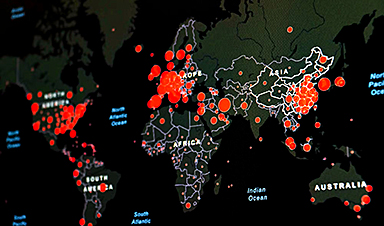
The Corona variant Cicada is here – we know that
Online and on social media, reports are piling up about a new Sars-Cov-2 variant that is currently on the rise: BA.3.2, also known as Cicada. That's what it's all about: The Omicron variant BA.3.2, [...]
A Simple Blood Test Could Predict Dementia Risk 25 Years Early
A single blood marker may quietly signal dementia risk decades in advance. Scientists at the University of California, San Diego, have identified a blood signal that could forecast dementia risk decades before symptoms begin. Their [...]

Sperm Get Lost in Space and Scientists Finally Know Why
Having a baby in space may be far more complicated than expected, as new research shows sperm struggle to find their way in microgravity. Starting a family beyond Earth could be more complicated than [...]
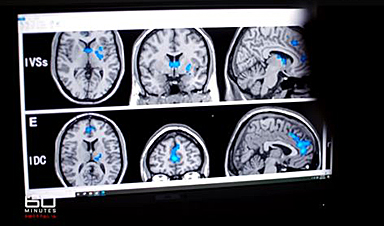
Digital Dementia – Brain fog and disassociation from being chronically online
New medical evidence, featured on 60 Minutes Australia, indicates excessive screen time is causing "digital dementia" in young Australians, with brain scans showing physical shrinkage and damage. Experts warn that high device usage (6-8 hours [...]
A new, highly mutated COVID variant called ‘Cicada’ is spreading in the US.
BA.3.2, a heavily mutated new COVID-19 variant which may be better able to escape immunity from vaccines or prior infection, is now spreading in the United States. Although COVID cases are currently low nationally, [...]
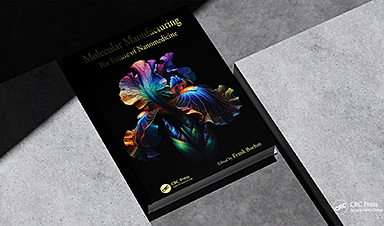
Molecular Manufacturing: The Future of Nanomedicine – New book from NanoappsMedical Inc.
This book explores the revolutionary potential of atomically precise manufacturing technologies to transform global healthcare, as well as practically every other sector across society. This forward-thinking volume examines how envisaged Factory@Home systems might enable the cost-effective [...]

Ancient bacteria strain discovered in ice cave is resistant to some modern antibiotics
In the depths of Scarisoara cave in Romania sits one of the world’s biggest underground glaciers, a monumental slab of ice the size of roughly 40 Olympic swimming pools that began to form around [...]

Scientists Identify “Good” Bacteria That May Prevent Long COVID
According to the WHO, about 6% of people worldwide who get COVID-19, roughly 400 million people, later develop a long-lasting form of the illness. That shows the condition remains a significant public health challenge. In [...]