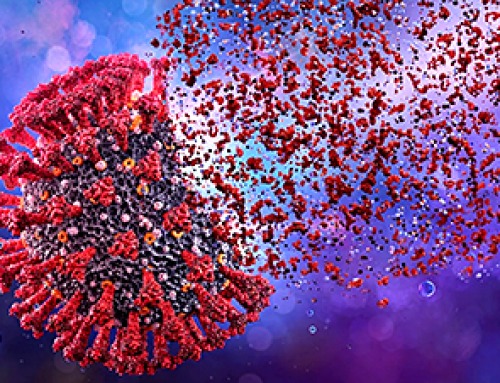
According to the WHO, about 6% of people worldwide who get COVID-19, roughly 400 million people, later develop a long-lasting form of the illness. That shows the condition remains a significant public health challenge.
In 2021, during the COVID-19 pandemic, the University of Louvain (UCLouvain, Belgium) and its hospital, the Cliniques universitaires Saint-Luc, launched a large-scale study to see whether long-term symptoms could be predicted during the acute phase of infection. The goal was to better understand the biological mechanisms involved and potentially identify a preventive treatment.
A Bacterium Linked to Recovery
After five years of research, scientists identified an important role for Dolosigranulum pigrum, a bacterium that naturally lives in the respiratory microbiome. Higher levels of this bacterium were associated with a lower likelihood that long Covid symptoms would persist.
Jean Cyr Yombi, Leïla Belkir, and Julien De Greef, UCLouvain professors and infectious disease specialists at the Cliniques universitaires Saint-Luc, examined the severity of long Covid symptoms in 156 patients. They focused mainly on severe fatigue, cognitive problems, and respiratory issues (shortness of breath).
Laure Elens and Patrice Cani, also UCLouvain professors, along with Bradley Ward, a postdoctoral researcher at the UCLouvain Louvain Drug Research Institute, then analyzed blood samples and nasopharyngeal swabs for molecular signatures linked to this more severe form of the disease. These signatures may help explain why symptoms persist in some patients but not in others.
Clues From the Respiratory Microbiome
UCLouvain and Cliniques universitaires Saint-Luc researchers stated, "This study suggests that certain so-called protective bacteria in the respiratory microbiome may be associated with improved recovery following viral respiratory infections (such as long Covid or influenza), and that their alteration (particularly in the context of severe infection or non-targeted antibiotic therapy) may influence longer-term clinical outcomes."
In simpler terms, when this bacterium is present in higher amounts, it appears to help protect against long Covid or severe influenza (through a mechanism that has yet to be elucidated). When it is present at low levels, researchers found a greater tendency toward developing a persistent form of the disease.
Implications for Future Treatments
Researchers already knew this bacterium had a protective effect in infectious influenza. The new findings, published in Microbiology Spectrum, add to the evidence that Dolosigranulum pigrum may be beneficial.
Scientists hope the discovery will speed up research and support new treatment strategies, including the possible development of a probiotic, for example, in the form of a nasal spray, that could be used before winter to help protect people from severe infectious diseases such as Covid-19 or influenza.
The study also found that non-targeted antibiotics can affect the respiratory microbiome's ability to defend against severe infections. That is another reason careful antibiotic use remains important.
Reference: "Association of nasopharyngeal Dolosigranulum pigrum and Corynebacterium species with post-acute sequelae of SARS-CoV-2 in a longitudinal cohort" by Bradley Ward, Laure B. Bindels, Jean-Luc Balligand, Bertrand Bearzatto, Guido Bommer, Patrice D. Cani, Julien De Greef, Joseph P. Dewulf, Laurent Gatto, Vincent Haufroid, Sébastien Jodogne, Benoît Kabamba, Sébastien Pyr dit Ruys, Didier Vertommen, Jean Cyr Yombi, Leïla Belkhir and Laure Elens, 17 March 2026, Microbiology Spectrum.
DOI: 10.1128/spectrum.02313-25
This research involved the University of Louvain HYGIEIA consortium and the Cliniques universitaires Saint-Luc, and was made possible thanks to the support of the Sofina Covid Solidarity Fund and partnerships with the Fondation Saint-Luc, the FNRS (via an emergency research grant) and the WEL Research Institute of the Walloon Region.

News – Curated by Amanda Scott, Alias Group Creative
Follow her on Bluesky

Scientists Find a Berry Compound That Helps Muscle Cells Burn Fat
Pterostilbene, a compound found naturally in some foods, affects how skeletal muscles process fats by stabilizing a protein called PPARδ and increasing its signaling activity. Pterostilbene, a natural compound found in blueberries, grapes, and [...]
Two Hidden Forces Help Build the Human Brain Before Birth
Scientists have uncovered two surprising forces that help guide how the human brain forms before birth. Before birth, the human brain is shaped in large part by an unusual class of stem cells known [...]
Researchers Uncover a Hidden Trigger Behind Chronic Inflammation
The findings offer new insights that could help guide the development of future therapies. A protein called human resistin may help flip on one of the immune system’s most powerful inflammatory switches. Researchers at [...]
Scientists Have Uncovered Previously Hidden Microbial Activity on Human Skin
The most abundant microbes on your skin may not be the ones doing most of the work. Human skin supports vast communities of bacteria, fungi, and viruses that can influence its protective barrier, immune [...]
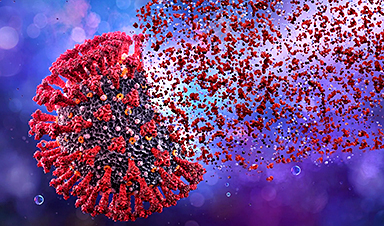
Brazilian Tree Compounds Fight COVID-19 on Multiple Fronts
Scientists found compounds in a Brazilian tree that hit SARS-CoV-2 on multiple fronts, revealing a promising new lead in the search for COVID-19 treatments. Researchers have found that galloylquinic acids extracted from the leaves [...]
Cutting Two Amino Acids Slowed Prostate Cancer in Mice
A newly identified link between amino acid metabolism and cholesterol production may help prostate tumors adapt to hormone therapy. Prostate cancer can find ways around treatments designed to deprive tumors of the hormones they [...]

Largest-Ever Physics Survey Raises New Doubts About Our Model of the Universe
Physicists around the world remain deeply divided on key mysteries of the universe, from dark matter to quantum gravity. The standard cosmological model failed to gain majority support, and no leading theory dominated the [...]

Scientists Just Overturned a 100-Year-Old Belief About Bacteria in the Lungs
New findings raise questions about the role of microbes living in the lungs. More than 35 trillion bacteria live throughout the human body, forming microbiomes in the gut, mouth, lungs, skin, and urogenital tract. [...]
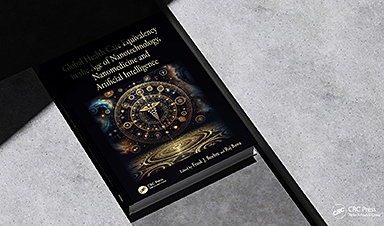
GHCE Concept
From the preface of the book Global Health Care Equivalency in the Age of Nanotechnology, Nanomedicine and Artificial Intelligence, Edited by Frank Boehm: Since the publication of my first book (Nanomedical Device and Systems [...]

Novartis, Ionis drug failure spurs questions
Pelacarsen didn’t protect heart health despite lowering levels of a protein particle, “Lp(a),” in a large clinical trial — a result with important implications for cardiovascular drug research. Dive Brief: An RNA drug from [...]
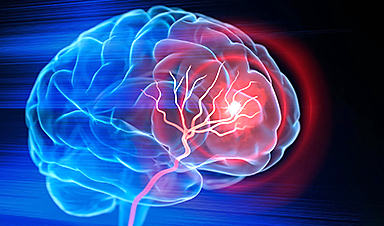
New injectable treatment helps the brain rebuild after stroke
Biomedical engineers at Duke University have created an injectable biomaterial that may help the brain recover from damage left behind by an ischemic stroke. In experiments with mice, the material transformed the cavity created [...]
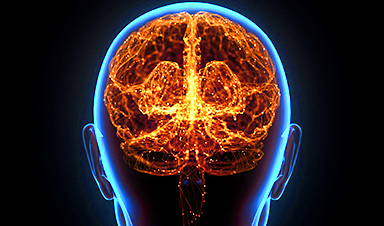
Scientists Discover a Hidden “Immune Organ” Inside the Skull
Researchers discovered lymph node-like immune hubs inside skull bone marrow that appear to act as rapid-response centers for the brain. For decades, the brain was thought to operate largely apart from the immune system. [...]
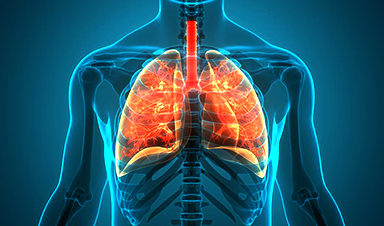
Engineered tRNAs and lipid nanoparticles target nonsense mutation cystic fibrosis
Researchers have developed a potential new approach for treating a form of cystic fibrosis caused by so-called nonsense mutations, combining chemically modified transfer RNAs with lipid nanoparticles designed to deliver the therapy directly to [...]
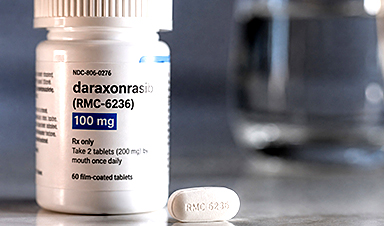
New pancreatic cancer drug carries a $39,800 monthly list price
A groundbreaking treatment for one of the most common forms of pancreatic cancer has been approved in pill form by the FDA. Revolution Medicines’ oral tablet daraxonrasib, branded as Rasonque, reduced the risk of [...]
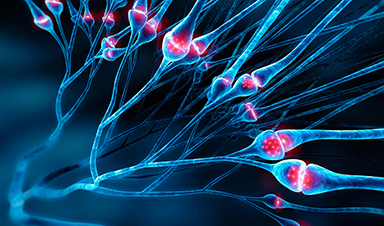
Researchers Have Discovered a New Way To Reduce Chronic Nerve Pain
A cancer-linked protein called BRAF may help drive chronic nerve pain, and existing cancer drugs targeting it reduced pain sensitivity in preclinical models. Chronic nerve pain can persist long after an injury and often [...]
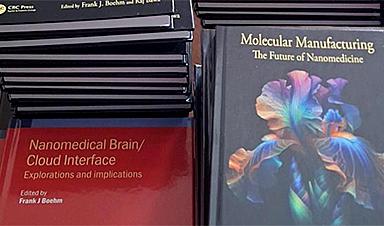
Our books now available worldwide!
Online Sellers other than Amazon, Routledge, and IOPP Indigo Global Health Care Equivalency in the Age of Nanotechnology, Nanomedicine and Artifcial Intelligence Global Health Care Equivalency In The Age Of Nanotechnology, Nanomedicine And Artificial [...]