A newly identified molecular mechanism reveals how neurons weigh survival against repair after injury.
Scientists at the Icahn School of Medicine at Mount Sinai have identified a molecular switch in neurons that limits the regrowth of damaged axons. Their study, published in Nature, suggests that blocking a protein known as the aryl hydrocarbon receptor (AHR) could promote nerve regeneration and help restore function after injuries to peripheral nerves or the spinal cord.
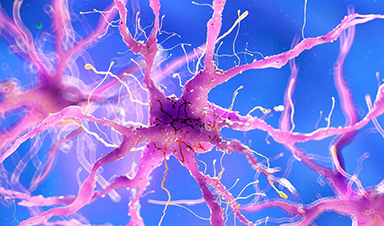
Axons are long fibers that transmit signals between nerve cells, or neurons, throughout the central and peripheral nervous systems. These structures are essential for communication within the body. When axons are damaged, recovery depends on the neuron’s ability to regrow them.
In adult mammals, this ability is very limited. As a result, injuries to nerves or the spinal cord often lead to lasting or permanent loss of movement or sensation. Researchers have spent years trying to understand why this repair process is so constrained.
A Molecular Brake on Regeneration
The study found that AHR plays a central role in controlling how neurons respond to injury.
“When neurons are injured, they must deal with stress while also trying to regrow their axons,” said Hongyan Zou, MD, PhD, Professor of Neurosurgery, and Neuroscience, at the Icahn School of Medicine at Mount Sinai and the study’s senior author. “We discovered that AHR functions like a brake that shifts neurons toward managing stress rather than rebuilding damaged connections.”

Experiments showed that active AHR signaling slows axon regrowth. When researchers removed AHR or blocked it with drugs, damaged axons regenerated more effectively. In mouse models of peripheral nerve and spinal cord injury, inhibiting AHR also improved both movement and sensory recovery.
Balancing Survival and Growth
Further analysis revealed why this happens. After injury, AHR helps neurons maintain protein quality through a process called proteostasis. This response protects cells under stress but limits the production of new proteins needed for repair.
When AHR is turned off, neurons shift priorities. They increase protein production and activate pathways that support axon growth. The team also found that this regenerative response depends on another factor, HIF-1α, which controls genes involved in metabolism and tissue repair.
“This discovery shows that neurons use AHR to balance survival and regeneration,” Dr. Zou explained. “By releasing this brake, we can push neurons into a state that favors repair.”
A Dual Role for an Environmental Sensor
AHR was first identified as a receptor that detects environmental toxins, known as xenobiotics. The new findings show it also has an important internal role, helping neurons integrate environmental signals with their ability to regenerate after injury.
This research is an early step toward potential therapies. Several drugs that block AHR are already in clinical trials for other conditions, raising the possibility that they could be tested for nerve and spinal cord injuries.
However, more work is needed before this approach can be used in patients. Future studies will explore how well AHR inhibitors work across different types of neural damage, determine optimal timing and dosage, and examine their effects on other cells after injury.
The Mount Sinai team plans to test both AHR-blocking drugs and gene therapy approaches aimed at reducing AHR activity in neurons. The goal is to see whether these strategies can further enhance axon regrowth and improve recovery after spinal cord injury, stroke, and other neurological disorders.
Reference: “AhR inhibition promotes axon regeneration via a stress–growth switch” by Dalia Halawani, Yiqun Wang, Jiaxi Li, Daniel Halperin, Haofei Ni, Molly Estill, Aarthi Ramakrishnan, Li Shen, Arthur Sefiani, Cédric G. Geoffroy, Roland H. Friedel and Hongyan Zou, 1 April 2026, Nature.
DOI: 10.1038/s41586-026-10295-z

News – Curated by Amanda Scott, Alias Group Creative
Follow her on Bluesky

Scientists Warn: Humanity Has Pushed the Planet Past Its Limits
Human population and consumption have surpassed Earth’s limits, increasing risks to climate and global stability. The Earth is already operating beyond its capacity to sustainably support the global population, according to new research highlighting [...]
Breakthrough Study Reveals Why Damaged Nerves Struggle To Heal
A newly identified molecular mechanism reveals how neurons weigh survival against repair after injury. Scientists at the Icahn School of Medicine at Mount Sinai have identified a molecular switch in neurons that limits the regrowth of [...]
Popular Vitamin B3 Supplements May Help Cancer Cells Survive, Scientists Warn
A new study raises important questions about widely used NAD+ supplements, suggesting that compounds often taken to boost energy and support healthy aging may have unintended consequences in cancer treatment. Millions of Americans take [...]
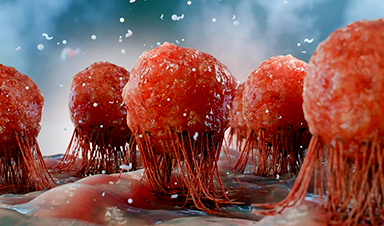
Scientists Discover Cancer Tumors Are “Addicted” to This Common Antioxidant
Cancer cells may be exploiting a common antioxidant as fuel, revealing a potential weakness that future therapies could target. Cancer cells may be tapping into an unexpected energy source: an antioxidant long associated with [...]
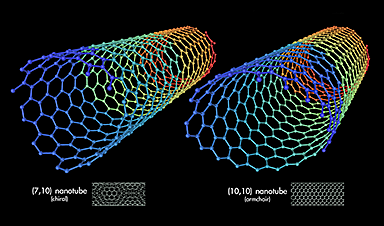
Nanotube injector transfers cytoplasmic contents and organelles between living cells safely
Cells are not isolated units; they continuously exchange proteins, genetic material, and even entire organelles with their neighbors. Intercellular transfer influences how tissues develop, respond to stress, and repair damage. In certain cancers, for [...]

CEO of America’s largest public hospital system is ready to replace radiologists with AI
The chief executive of America’s largest public hospital system says he is prepared to start replacing radiologists with artificial intelligence in some circumstances, once the regulatory landscape catches up. Mitchell H. Katz, MD, president [...]
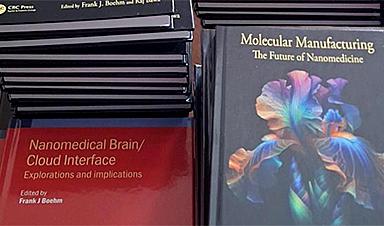
Our books now available worldwide!
Online Sellers other than Amazon, Routledge, and IOPP Indigo Global Health Care Equivalency in the Age of Nanotechnology, Nanomedicine and Artifcial Intelligence Global Health Care Equivalency In The Age Of Nanotechnology, Nanomedicine And Artificial [...]

Study finds higher heart disease risk in long COVID patients
People with long COVID are at increased risk of developing cardiovascular disease, according to a new study from Karolinska Institutet published in eClinicalMedicine. The results show that the risk of conditions such as cardiac arrhythmias [...]
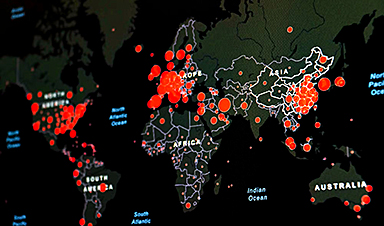
The Corona variant Cicada is here – we know that
Online and on social media, reports are piling up about a new Sars-Cov-2 variant that is currently on the rise: BA.3.2, also known as Cicada. That's what it's all about: The Omicron variant BA.3.2, [...]
A Simple Blood Test Could Predict Dementia Risk 25 Years Early
A single blood marker may quietly signal dementia risk decades in advance. Scientists at the University of California, San Diego, have identified a blood signal that could forecast dementia risk decades before symptoms begin. Their [...]
Sperm Get Lost in Space and Scientists Finally Know Why
Having a baby in space may be far more complicated than expected, as new research shows sperm struggle to find their way in microgravity. Starting a family beyond Earth could be more complicated than [...]
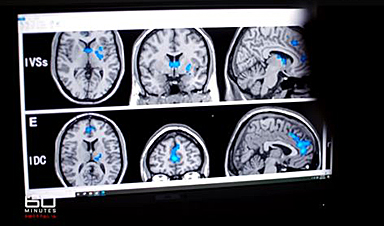
Digital Dementia – Brain fog and disassociation from being chronically online
New medical evidence, featured on 60 Minutes Australia, indicates excessive screen time is causing "digital dementia" in young Australians, with brain scans showing physical shrinkage and damage. Experts warn that high device usage (6-8 hours [...]
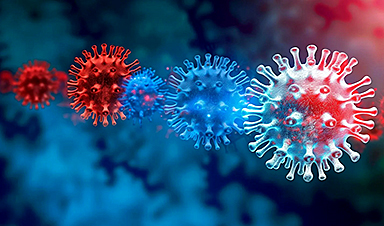
A new, highly mutated COVID variant called ‘Cicada’ is spreading in the US.
BA.3.2, a heavily mutated new COVID-19 variant which may be better able to escape immunity from vaccines or prior infection, is now spreading in the United States. Although COVID cases are currently low nationally, [...]
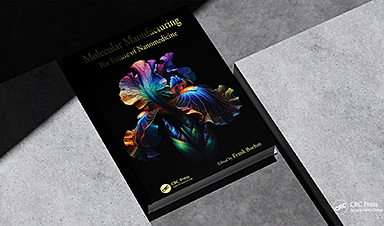
Molecular Manufacturing: The Future of Nanomedicine – New book from NanoappsMedical Inc.
This book explores the revolutionary potential of atomically precise manufacturing technologies to transform global healthcare, as well as practically every other sector across society. This forward-thinking volume examines how envisaged Factory@Home systems might enable the cost-effective [...]

Ancient bacteria strain discovered in ice cave is resistant to some modern antibiotics
In the depths of Scarisoara cave in Romania sits one of the world’s biggest underground glaciers, a monumental slab of ice the size of roughly 40 Olympic swimming pools that began to form around [...]

Scientists Identify “Good” Bacteria That May Prevent Long COVID
According to the WHO, about 6% of people worldwide who get COVID-19, roughly 400 million people, later develop a long-lasting form of the illness. That shows the condition remains a significant public health challenge. In [...]