You're driving, and suddenly a familiar song fills the air. Before you even know it, a wave of emotions comes over you – not just memories, but a deep, almost physical feeling.
This powerful reaction goes beyond nostalgia; it is linked to the way our brains process music during the formative years of adolescence.Scientific research sheds light on why songs from this period have such a lasting effect by appealing to emotional and identity-related regions of the brain.
The Science Behind the Reminiscence Height Effect
Psychologists have long talked about the so-called reminiscence height effect – the period of time when people form the strongest and most emotionally lasting connections to music.
In a study published in the Memory Journal in 2024, Dr. Iballa Burunat and her team investigated this phenomenon and analyzed how these emotional connections arise across cultures.
Dr. Burunat's study shows that this reminiscence height effect is not limited to a specific culture. Music from adolescence has emotional significance worldwide, even if the age of emotional climaxes can vary.
Men tend to experience this connection a little earlier — around age 17 — while women experience it a little later, in their early twenties. This discovery helps deepen our understanding of how age and gender influence our emotional attachments to music throughout life.
Music as emotional activation
So why do certain songs from our youth still trigger such strong reactions? The answer lies in the brain's response to music.
Music doesn't just trigger memories – it activates areas of the brain that are responsible for processing both emotions and memories. For example, the hippocampus, which is associated with memory, and the amygdala, which is responsible for processing emotions, are activated when we listen to music associated with emotionally significant times, such as adolescence.
Burunat's research helps explain why this happens. "Adolescents' brains are a sponge for emotionally rich experiences, and music is uniquely capable of capturing these feelings in ways that other senses cannot," she explains.
This double activation – of memory and emotion – explains why we can be overwhelmed by a song even before we consciously identify it. It's as if your brain rewinds and briefly activates the emotions of the person you were back then, long before your conscious mind follows suit.
Music and Identity: A Lifelong Impact
For many people, the music they listened to in their youth is not just a background soundtrack; it becomes an integral part of their identity.
It's not just about reviving old times; it's about connecting with the emotional and identity-building work that the brain did back then. Music from adolescence acts as an emotional anchor that influences not only who we were, but also who we have become.
Farley Ledgerwood, who writes for Global English Editing, shares his own experience of listening to a song from his youth. He describes how it immediately triggered a physical, emotional response before he even realized what he was hearing.
It wasn't just a memory, but a return to the emotional state of his 17-year-old self. "The song didn't remind me of who I was; it made me that person again," Ledgerwood writes.
It is this deep connection that also highlights Burunat's study. During adolescence, our brains actively form identities – and music from this time is interwoven with these formative experiences. That's why a song from that phase can revive that emotional essence years later and connect us to who we were back then.
The role of music in the digital age
In today's world, we have easy access to every song from every era. Streaming platforms make music from all generations instantly accessible. Nevertheless, the music we listened to in our youth still has a unique place in our hearts.
Dr. Burunat's study suggests that even though we listen to more music than ever before, the songs from our youth continue to possess unparalleled emotional power. These songs are not only part of our past. They are embedded in our emotional DNA and shape our self-image.
In many ways, technology has amplified these emotional connections. Whether we rediscover old favorites or share them with younger generations, the emotional significance of music from youth remains.

News – Curated by Amanda Scott, Alias Group Creative
Follow her on Bluesky
Why music from your youth still has such an intense effect years later: A psychological perspective
You're driving, and suddenly a familiar song fills the air. Before you even know it, a wave of emotions comes over you – not just memories, but a deep, almost physical feeling. This powerful [...]
AI to antibody in days: breaking the wet lab bottleneck via high-throughput integration
The role of artificial intelligence (AI) in drug design has fundamentally shifted from a speculative tool to a central pillar of pharmaceutical research and development (R&D). Sino Biological plays a critical role in this [...]
Regenerative Healthcare by Design: Engineering Health-Centric Buildings and Urban Ecosystems
Introduction The next evolution of healthcare will not be confined to hospitals, clinics, or episodic interventions—it will be embedded into the infrastructure of everyday life. Regenerative health ecosystems require a systemic re-architecture of how [...]

Scientists Warn: Humanity Has Pushed the Planet Past Its Limits
Human population and consumption have surpassed Earth’s limits, increasing risks to climate and global stability. The Earth is already operating beyond its capacity to sustainably support the global population, according to new research highlighting [...]
Breakthrough Study Reveals Why Damaged Nerves Struggle To Heal
A newly identified molecular mechanism reveals how neurons weigh survival against repair after injury. Scientists at the Icahn School of Medicine at Mount Sinai have identified a molecular switch in neurons that limits the regrowth of [...]

Popular Vitamin B3 Supplements May Help Cancer Cells Survive, Scientists Warn
A new study raises important questions about widely used NAD+ supplements, suggesting that compounds often taken to boost energy and support healthy aging may have unintended consequences in cancer treatment. Millions of Americans take [...]
Scientists Discover Cancer Tumors Are “Addicted” to This Common Antioxidant
Cancer cells may be exploiting a common antioxidant as fuel, revealing a potential weakness that future therapies could target. Cancer cells may be tapping into an unexpected energy source: an antioxidant long associated with [...]
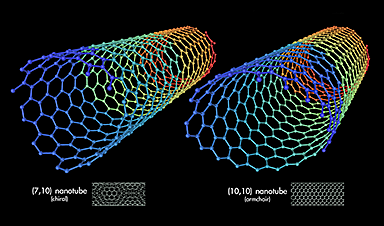
Nanotube injector transfers cytoplasmic contents and organelles between living cells safely
Cells are not isolated units; they continuously exchange proteins, genetic material, and even entire organelles with their neighbors. Intercellular transfer influences how tissues develop, respond to stress, and repair damage. In certain cancers, for [...]

CEO of America’s largest public hospital system is ready to replace radiologists with AI
The chief executive of America’s largest public hospital system says he is prepared to start replacing radiologists with artificial intelligence in some circumstances, once the regulatory landscape catches up. Mitchell H. Katz, MD, president [...]
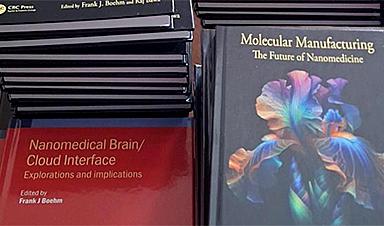
Our books now available worldwide!
Online Sellers other than Amazon, Routledge, and IOPP Indigo Global Health Care Equivalency in the Age of Nanotechnology, Nanomedicine and Artifcial Intelligence Global Health Care Equivalency In The Age Of Nanotechnology, Nanomedicine And Artificial [...]

Study finds higher heart disease risk in long COVID patients
People with long COVID are at increased risk of developing cardiovascular disease, according to a new study from Karolinska Institutet published in eClinicalMedicine. The results show that the risk of conditions such as cardiac arrhythmias [...]
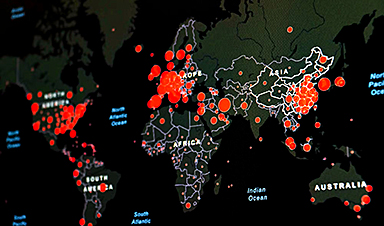
The Corona variant Cicada is here – we know that
Online and on social media, reports are piling up about a new Sars-Cov-2 variant that is currently on the rise: BA.3.2, also known as Cicada. That's what it's all about: The Omicron variant BA.3.2, [...]

A Simple Blood Test Could Predict Dementia Risk 25 Years Early
A single blood marker may quietly signal dementia risk decades in advance. Scientists at the University of California, San Diego, have identified a blood signal that could forecast dementia risk decades before symptoms begin. Their [...]

Sperm Get Lost in Space and Scientists Finally Know Why
Having a baby in space may be far more complicated than expected, as new research shows sperm struggle to find their way in microgravity. Starting a family beyond Earth could be more complicated than [...]
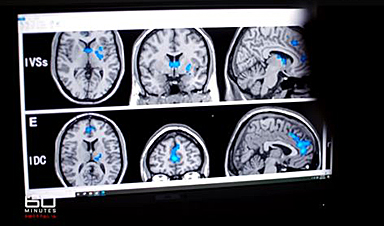
Digital Dementia – Brain fog and disassociation from being chronically online
New medical evidence, featured on 60 Minutes Australia, indicates excessive screen time is causing "digital dementia" in young Australians, with brain scans showing physical shrinkage and damage. Experts warn that high device usage (6-8 hours [...]

A new, highly mutated COVID variant called ‘Cicada’ is spreading in the US.
BA.3.2, a heavily mutated new COVID-19 variant which may be better able to escape immunity from vaccines or prior infection, is now spreading in the United States. Although COVID cases are currently low nationally, [...]