UC San Diego researchers have developed a device that predicts breast cancer aggressiveness by measuring tumor cell adhesion. Weakly adherent cells indicate a higher risk of metastasis, especially in early-stage DCIS. This innovation could help personalize treatments and improve cancer prognosis.
By evaluating the "stickiness" of tumor cells, researchers at the University of California, San Diego, have identified a potential method for predicting whether a patient's early-stage breast cancer is likely to spread. This discovery, enabled by a specially designed microfluidic device, could help doctors identify high-risk patients and tailor their treatments accordingly.
The device, tested in an investigator-initiated trial, operates by pushing tumor cells through fluid-filled chambers and sorting them based on their ability to adhere to the chamber walls. When tested on tumor cells from patients at different stages of breast cancer, researchers observed a striking pattern: cells from patients with aggressive cancers were weakly adherent (less sticky), whereas cells from patients with less aggressive cancers were strongly adherent (more sticky).
The findings were published on March 5 in Cell Reports.
Potential for Improved Cancer Diagnosis
"What we were able to show in this trial is that the physical property of how adhesive tumor cells are could be a key metric to sort patients into more or less aggressive cancers," said study senior author Adam Engler, a professor in the Shu Chien-Gene Lay Department of Bioengineering at the UC San Diego Jacobs School of Engineering. "If we can improve diagnostic capabilities with this method, we could better personalize treatment plans based on the tumors that patients have."
Previous research by Engler's lab, in collaboration with Anne Wallace, director of the Comprehensive Breast Health Center at Moores Cancer Center at UC San Diego Health, had already established that weakly adherent cancer cells are more likely to migrate and invade other tissues compared to strongly adherent cells. Now with patient tumors, the team has taken this insight a step further, demonstrating that adhesion strength of tumor cells is variable and the next step will be to determine if adhesion can help forecast whether a patient's cancer is likely to metastasize.

Their latest study examined cell adhesion in an early-stage breast cancer known as ductal carcinoma in situ (DCIS). Often classified as stage zero breast cancer, DCIS can remain harmless, never progressing beyond the milk ducts where it forms. But in some cases, it develops into invasive breast cancer that could be potentially life-threatening. Scientists and doctors have spent years trying to determine which cases require aggressive treatment and which can be left alone, but the answers have remained elusive.
Current clinical decisions often rely on the size and grade of the DCIS lesion, but these factors do not always predict its behavior.
"Having a mechanism to better predict which DCIS is going to behave more aggressively, such as is seen with this adhesion model, could hold great promise to help us more aggressively treat this type of cancer," Wallace said. "We don't want to over-treat with aggressive surgery, medicines, and radiation if not necessary, but we need to utilize those when the cancer has higher invasive potential. We want to continue to personalize therapy."
"Right now, we don't have a reliable way to identify which DCIS patients are at risk of developing more aggressive breast cancer," Engler said. "Our device could change that."
The Microfluidic Device: How It Measures Adhesion
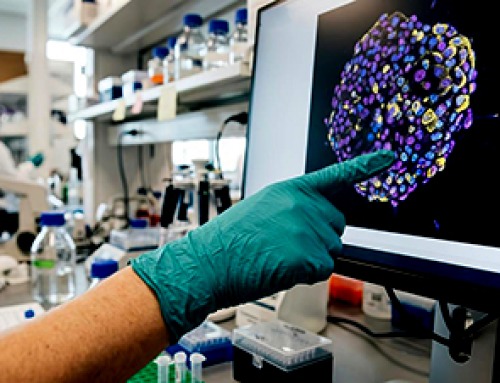
The team's device, which is roughly the size of an index card, consists of microfluidic chambers coated with adhesive proteins found in breast tissue, such as fibronectin. When tumor cells are placed into the chambers, they adhere to the fibronectin coating. They are then subjected to increasing shear stress as fluid flows through the chambers. By observing where cells detach under specific stress levels, researchers classify them as weakly or strongly adherent.
The team tested the device on samples from 16 patients. These samples consisted of normal breast tissue, DCIS tumors, and aggressive breast cancer tumors obtained from patients with invasive ductal and lobular carcinomas. The experiments revealed that aggressive breast cancer samples contained weakly adherent cells, while normal breast tissue samples contained strongly adherent cells. DCIS samples showed intermediate adhesion levels, but with significant variability among patients.

"What's interesting is that there is a lot of heterogeneity from patient to patient within a single disease subtype," said study co-first author Madison Kane, a bioengineering Ph.D. student in Engler's lab. "Among DCIS patients, for example, we found some with strongly adherent tumor cells and others with weakly adherent cells. We hypothesize that those with weakly adherent cells are at higher risk of developing invasive cancer, and they are likely being underdiagnosed at the beginning of their patient care plan."
The team plans to track DCIS patients over the next five years to determine whether adhesion strength correlates with metastatic progression. If their hypothesis holds, the device could offer oncologists a powerful new tool to guide treatment strategies, recommending more aggressive interventions for patients whose tumor cells show weak adhesion.
"Our hope is that this device will allow us to prospectively identify those at highest risk, so that we can intervene before metastasis occurs," Engler said.
This project highlights the importance of interdisciplinary collaboration. Engler's bioengineering team worked closely with Wallace's team at Moores Cancer Center, which provided patient samples and support. Funding from the National Institutes of Health (NIH), which includes grants that support shared resources and facilities at Moores Cancer Center, as well as training grants for student researchers working on the project, played a crucial role in the device's development and the clinical study.
"It's been a great partnership with Dr. Wallace and Moores Cancer Center," Engler said. "Their support has been instrumental in advancing investigator-initiated trials like this. We are also extremely grateful for all the different funding mechanisms that support facilities, training, and lab work, which make research like this possible."
Reference: "Adhesion strength of tumor cells predicts metastatic disease in vivo" by Madison A. Kane, Katherine G. Birmingham, Benjamin Yeoman, Neal Patel, Hayley Sperinde, Thomas G. Molley, Pranjali Beri, Jeremy Tuler, Aditya Kumar, Sarah Klein, Somaye Zare, Anne Wallace, Parag Katira and Adam J. Engler, 5 March 2025, Cell Reports.
DOI: 10.1016/j.celrep.2025.115359
This work was supported by the National Institutes of Health (R01CA280279, R01CA206880 and R21CA217735), the National Science Foundation (CMMI-1763139, CMMI-1763132), Cy pres research awards from the Krueger v. Wyeth settlement fund, and the National Cancer Institute (T32CA009523).

News

Is there a summer COVID-19 surge this year? Yep, it’s ramping up again
Hantavirus. Ebola. West Nile. Measles. And, of course, cyclospora — that stomach parasite making people miserable across the country. Americans have plenty to worry about this summer. But remember COVID-19? It may not be [...]

Natural Compound in Broccoli Could Help Treat a Rare, Incurable Neurological Disease
Swinburne researchers have discovered how broccoli could help treat an extremely rare and incurable disease that affects only about 200 Australians. A naturally occurring compound in broccoli is being investigated as a possible treatment [...]
Antibody recycling, FcRn and the next generation of biologics
FcRn plays a central role in regulating the half-life of IgG antibodies and albumin, making it a critical target in both antibody engineering and autoimmune disease therapy. This article explores the biology of FcRn, [...]
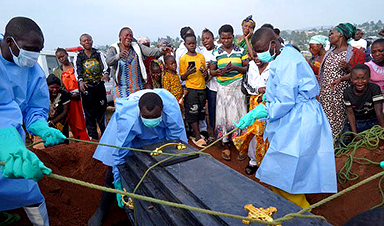
Ebola kills 2,300 in three months with no vaccine available for Congo’s deadliest ever outbreak
It’s Congo’s 17th outbreak, with a toll that has eclipsed that of the country’s 2018-2020 outbreak when 2,299 deaths out of 3,481 cases were recorded. The latest data shows 101 new cases and 33 [...]

Beyond an Agency: How AI, Creativity and Commercialization Are Converging Into a New Growth Model
At a moment when AI is forcing a fundamental rethink of how work gets done, the life sciences industry is grappling with a deeper question: what role should human creativity play in an increasingly [...]

New $60 Blood Test Detects Lung Cancer Without Costly DNA Sequencing
A simple blood test that detects chemical changes in DNA identified more than 90% of stage 2-4 lung cancers in an early study, without relying on costly DNA sequencing. Researchers at Tel Aviv University and collaborating [...]
Reducing drug development failures with human-relevant models and AI
Professor Joseph C. Wu of Stanford University explains how stem cells, human-relevant models and AI are helping researchers predict which drug candidates are most likely to succeed before clinical trials. Researchers now have access [...]
Half of vaccines are binned – ‘fridge-free’ versions could change that
Vaccines that do not need to be kept cool in a fridge have been successfully trialed in patients for the first time, say UK scientists. Currently, most vaccines need to be refrigerated or frozen [...]

Mushroom Mystery: The Fungus That Makes People See Tiny Humans
A mushroom sold in markets and served in restaurants in Southwest China has an unusual warning attached to it: cook it thoroughly, or you may start seeing tiny people. For decades, people have reported [...]

Artificial intelligence used to design brand new viruses
Artificial Intelligence has been used to design brand new viruses that are fully functional and can replicate in the laboratory, say US researchers. It is the first time whole genomes have been successfully designed [...]

Molecular Manufacturing: The Future of Nanomedicine – New book from NanoappsMedical Inc.
This book explores the revolutionary potential of atomically precise manufacturing technologies to transform global healthcare, as well as practically every other sector across society. This forward-thinking volume examines how envisaged Factory@Home systems might enable the cost-effective [...]

Moderna kicks off Phase I Ebola trial as Africa readies itself for research
If the Phase I trial is successful, Moderna plans to quickly initiate Phase II and Phase III trials of its Ebola vaccine. Moderna has initiated a Phase I trial of its mRNA Ebola vaccine [...]

3D Human Brain Tissue Model Replicates Alzheimer’s Pathology
Summary: Researchers introduced a highly reproducible three-dimensional human brain tissue model capable of replicating complex neurodegenerative processes in Alzheimer’s disease. Developed over nine years using human stem cells, the self-organizing tissue spheroids integrate functional neurons, [...]
A Common Sugar May Loosen Cancer Cells and Help Them Spread
Chemotherapy may kill most ovarian cancer cells, but the few that survive can turn dangerously active. By releasing fructose, they may help nearby tumor cells break free and spread. Researchers at The Wistar Institute [...]
COVID-19 can wake up dormant viruses in the body, large study confirms
Virus reactivations by SARS-CoV-2 could worsen initial symptoms and increase risk of Long Covid. Early in the COVID-19 pandemic, scientists noticed that a SARS-CoV-2 infection can “wake up” other, dormant viruses already present in [...]

Scientists Discover the Brain May Enter a New Biological Phase Between 50 and 75
A single-cell study reveals major changes in immune cells, genome organization, and gene regulation within the aging human hippocampus, offering important insights into brain aging and dementias associated with age. Between roughly ages 50 [...]