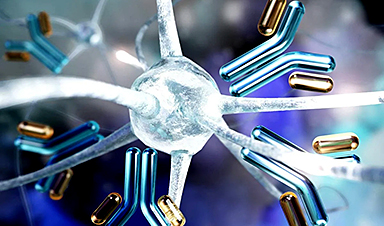
A newly identified trigger of brain inflammation could offer a fresh target for slowing Alzheimer's progression.
The brain has its own built-in immune system that identifies threats and responds to them. In Alzheimer's disease, growing evidence shows that this system becomes persistently overactive. The result is chronic inflammation that damages the connections between brain cells.
In a preclinical study using human Alzheimer's brain cells, scientists at Scripps Research have identified a molecular trigger behind this process. The finding points to a potential drug target that could help control harmful inflammation.
A Molecular Switch Behind Inflammation
The study, published in Cell Chemical Biology, focuses on a protein called STING. Under normal conditions, STING acts as part of the immune system's early warning network. In Alzheimer's brains, however, researchers found that STING undergoes a chemical change called S-nitrosylation (or SNO, a reaction involving sulfur, oxygen and nitrogen). This modification drives the protein into an overactive state. When scientists blocked this change in a mouse model, brain inflammation was reduced.
"This is a new and important therapeutic target for Alzheimer's disease," says senior author Stuart Lipton, the Step Family Foundation Endowed Chair at Scripps Research and a clinical neurologist. "It's exciting to see that blocking this switch in mice reduces inflammation and protects the very brain cell connections that are lost in Alzheimer's, especially because we found the same pathway to be activated in human Alzheimer's brain samples and in human stem cell-derived models."
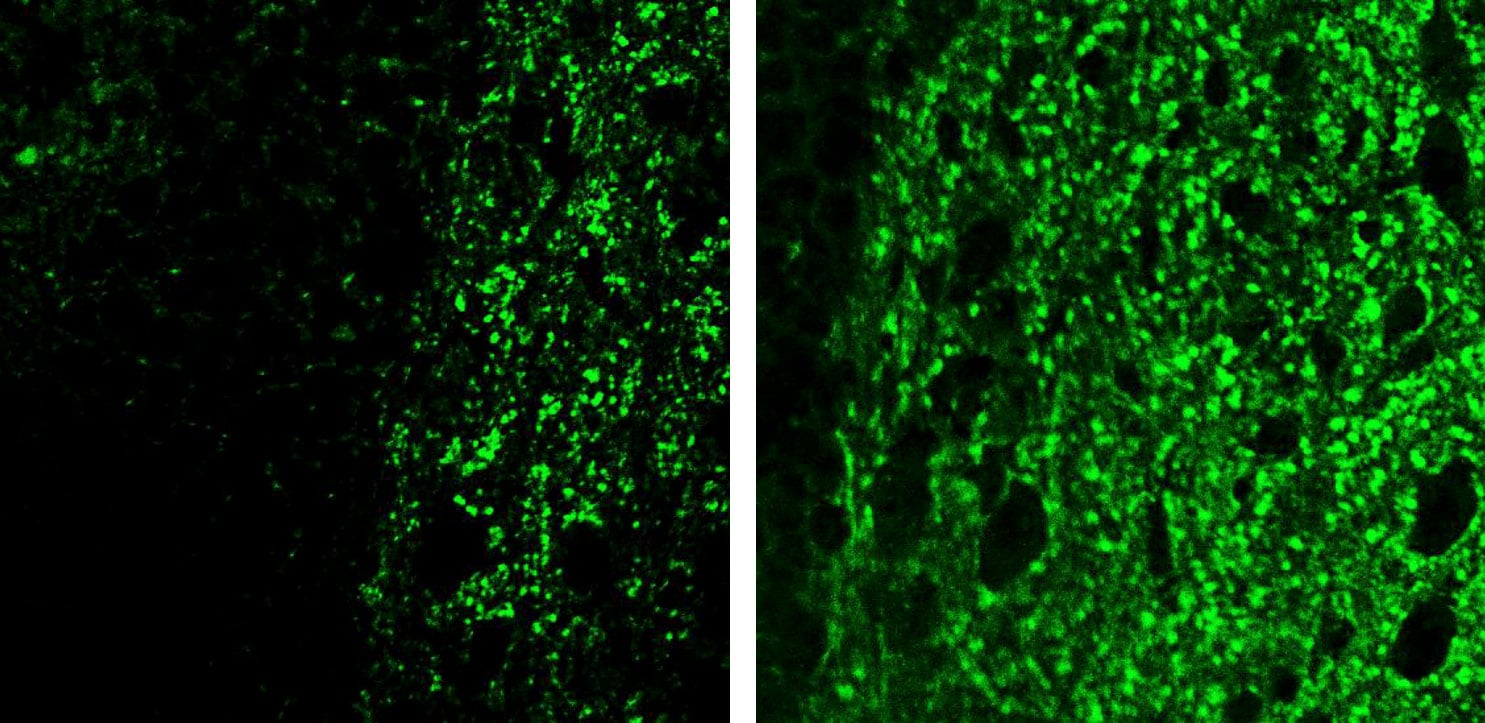
More than 30 years ago, Lipton, who also co-directs the Neurodegeneration New Medicines Center at Scripps Research, first described S-nitrosylation. In this process, a molecule related to nitric oxide (NO) attaches to a cysteine amino acid in proteins, forming "SNO" and altering how the protein behaves.
His lab later showed that SNO can be triggered by aging, inflammation, and environmental exposures such as air pollution and wildfire smoke. These changes can disrupt many proteins throughout the body. This widespread effect, referred to as a "SNO-STORM," has been linked to diseases including cancer, Parkinson's disease, and Alzheimer's.
Pinpointing STING's Weak Spot
In the new study, researchers took a closer look at STING, which had already been associated with Alzheimer's-related inflammation. Lipton's team, led by postdoctoral researcher Lauren Carnevale, worked with Professor John Yates III, a mass spectrometry expert at Scripps Research and holder of the John Lytton Young Endowed Chair.
They identified the exact location where S-nitrosylation occurs on STING, focusing on a single amino acid known as cysteine 148. When this site is modified, STING forms clusters and sets off inflammatory signaling.
Elevated levels of this altered form, called SNO-STING, were detected in postmortem brain tissue from Alzheimer's patients, in lab-grown human brain immune cells exposed to Alzheimer's proteins, and in mice with the disease.
Further experiments revealed that hallmark Alzheimer's protein clumps, including amyloid-beta and alpha-synuclein, can directly trigger S-nitrosylation of STING. This suggests a feedback loop. Protein buildup, along with aging and environmental stress, may spark inflammation that produces nitric oxide. That, in turn, modifies STING and amplifies inflammation even further.
Protecting Brain Connections
To test this mechanism, the team created a version of STING that lacks cysteine 148, preventing the S-nitrosylation step. When introduced into a mouse model of Alzheimer's, this modified protein significantly reduced inflammation in brain immune cells.
Importantly, it also preserved synapses, the connections between nerve cells that are essential for memory and thinking. Loss of synapses is closely linked to cognitive decline in dementia, so protecting them is a key goal in Alzheimer's research.
"What makes this target particularly promising is that we can quiet the pathological overactivation of STING without shutting down the normal immune response," says Lipton. "You still need STING to protect yourself from infections, and when we target cysteine 148, we're not blocking the entire molecule; we're just preventing STING from becoming overactivated."
Lipton's team is now developing small molecules designed to block cysteine 148, with plans to test them in future preclinical studies.
Reference: "Redox regulation of neuroinflammatory pathways contributes to damage in Alzheimer's disease brain" by Lauren N. Carnevale, Piu Banerjee, Xu Zhang, Jazmin Navarro, Charlene K Raspur, Parth Patel, Tomohiro Nakamura, Emily Schahrer, Henry Scott, Nhi Lang, Jolene K. Diedrich, Amanda J. Roberts, John R. Yates and Stuart A. Lipton, 23 April 2026, Cell Chemical Biology.
DOI: 10.1016/j.chembiol.2026.03.017
This work was supported in part by the National Institutes of Health (R35 AG071734, U01 AG088679, RF1 AG057409, R01 AG078756, R01 AG056259, R01 DA048882, DP1 DA041722 and R01 AG077046), and the U.S. Department of Defense/U.S. Department of the Army (AR230101).

News – Curated by Amanda Scott, Alias Group Creative
Follow her on Bluesky

Largest-Ever Physics Survey Raises New Doubts About Our Model of the Universe
Physicists around the world remain deeply divided on key mysteries of the universe, from dark matter to quantum gravity. The standard cosmological model failed to gain majority support, and no leading theory dominated the [...]

Scientists Just Overturned a 100-Year-Old Belief About Bacteria in the Lungs
New findings raise questions about the role of microbes living in the lungs. More than 35 trillion bacteria live throughout the human body, forming microbiomes in the gut, mouth, lungs, skin, and urogenital tract. [...]

GHCE Concept
From the preface of the book Global Health Care Equivalency in the Age of Nanotechnology, Nanomedicine and Artificial Intelligence, Edited by Frank Boehm: Since the publication of my first book (Nanomedical Device and Systems [...]

Novartis, Ionis drug failure spurs questions
Pelacarsen didn’t protect heart health despite lowering levels of a protein particle, “Lp(a),” in a large clinical trial — a result with important implications for cardiovascular drug research. Dive Brief: An RNA drug from [...]
New injectable treatment helps the brain rebuild after stroke
Biomedical engineers at Duke University have created an injectable biomaterial that may help the brain recover from damage left behind by an ischemic stroke. In experiments with mice, the material transformed the cavity created [...]
Scientists Discover a Hidden “Immune Organ” Inside the Skull
Researchers discovered lymph node-like immune hubs inside skull bone marrow that appear to act as rapid-response centers for the brain. For decades, the brain was thought to operate largely apart from the immune system. [...]
Engineered tRNAs and lipid nanoparticles target nonsense mutation cystic fibrosis
Researchers have developed a potential new approach for treating a form of cystic fibrosis caused by so-called nonsense mutations, combining chemically modified transfer RNAs with lipid nanoparticles designed to deliver the therapy directly to [...]
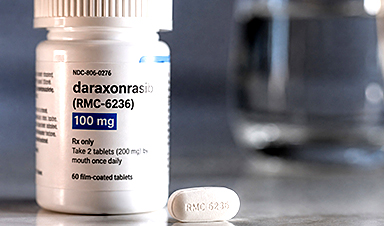
New pancreatic cancer drug carries a $39,800 monthly list price
A groundbreaking treatment for one of the most common forms of pancreatic cancer has been approved in pill form by the FDA. Revolution Medicines’ oral tablet daraxonrasib, branded as Rasonque, reduced the risk of [...]
Researchers Have Discovered a New Way To Reduce Chronic Nerve Pain
A cancer-linked protein called BRAF may help drive chronic nerve pain, and existing cancer drugs targeting it reduced pain sensitivity in preclinical models. Chronic nerve pain can persist long after an injury and often [...]
Our books now available worldwide!
Online Sellers other than Amazon, Routledge, and IOPP Indigo Global Health Care Equivalency in the Age of Nanotechnology, Nanomedicine and Artifcial Intelligence Global Health Care Equivalency In The Age Of Nanotechnology, Nanomedicine And Artificial [...]

Quantum-Enabled Regenerative Health: Reimagining Wellness, Precision Health and Longevity Medicine
Introduction Healthcare is approaching a frontier where the quantum portfolio could influence not only how disease is diagnosed and treated, but how health itself is measured, modeled, predicted and preserved. Quantum computing, quantum simulation, [...]

FDA Clears First-of-Its-Kind Nonmedication Treatment for PTSD
The FDA has cleared a system that uses brain activity data to personalize magnetic stimulation for PTSD, adding a new nonmedication treatment option. Every day in the United States, approximately 17.5 veterans die by suicide, [...]
FDA approves breakthrough drug to treat advanced pancreatic cancer
The Food and Drug Administration (FDA) approved on Wednesday a drug that could extend the survival of those with metastatic pancreatic cancer. The drug, called daraxonrasib, will be sold under the brand name Rasonque [...]

AI Decodes a Hidden DNA Signal Linked to Disease-Causing Mutations
Machine learning identifies the likely “initiator” and enables new predictions about DNA mutations that can cause disease. Every human cell depends on tens of thousands of genes being switched on at the right time [...]

Pope Leo Urges Global Response to Congo’s Deadliest Ebola Outbreak
Pope Leo called for international action to address the Ebola outbreak in the Democratic Republic of Congo. The epidemic has claimed over 2,500 lives and is the nation's largest recorded outbreak. The Pope emphasized [...]

Is there a summer COVID-19 surge this year? Yep, it’s ramping up again
Hantavirus. Ebola. West Nile. Measles. And, of course, cyclospora — that stomach parasite making people miserable across the country. Americans have plenty to worry about this summer. But remember COVID-19? It may not be [...]