Korean Scientists develop new nanotechnology material capable of reducing radiation impacts in space missions, hospitals, and power plants.
The search for more efficient protection technologies in extreme environments has just gained an important advance. Korean Scientists have developed a radiation shield based on nanotechnology capable of blocking different types of harmful emissions using an ultra-thin, flexible, and extremely lightweight material. The discovery was presented in a study published in the scientific journal Advanced Materials on March 4, 2026 and is already attracting interest for its possible applications in strategic areas.
The new project stands out because it combines characteristics considered rare in shielding systems. The new material created by the researchers is thinner than a human hair, can be stretched like rubber, and still maintains high performance against radiation. According to the released results, the compound can block up to 99.999% of electromagnetic waves and approximately 72% of neutron radiation.
The technology was developed by researchers from the Korea Institute of Science and Technology (KIST), including scientist Joo Yong-ho, affiliated with the Extreme Environment Shielding Materials Research Center. For the experts involved in the study, the advance could represent a new generation of solutions for space, hospital, industrial, and technological protection.
Korean Scientists bet on nanotechnology to face the risks of radiation
Exposure to radiation continues to be one of the biggest challenges for modern technological sectors. In space missions, for example, astronauts constantly live with energetic particles capable of causing health damage and compromising sensitive electronic equipment.
Beyond space, radiation is also present in hospitals, nuclear power plants, laboratories, and advanced industrial systems. Many professionals work daily exposed to different levels of these emissions, which reinforces the need for more efficient and comfortable protection methods.
It was precisely with this scenario in mind that Korean scientists decided to create a lighter and more adaptable radiation shield. The proposal was to develop a material capable of combining high protection, flexibility, and low weight, something extremely important, especially in the aerospace industry.
The use of nanotechnology was decisive in achieving this result. According to the researchers, the created structure has a minimal thickness comparable to adhesive tape but shows advanced performance in blocking particles and electromagnetic waves.
New material combines carbon nanotubes and boron nitride
The project’s differential lies in the composition of the new material. Korean scientists used carbon nanotubes and boron nitride nanotubes to create the protection system.
Carbon nanotubes are known for their high mechanical strength and ability to conduct electricity and heat. In the new radiation shield, they help absorb and reflect electromagnetic waves that can affect electronic equipment.
Boron nitride nanotubes, on the other hand, play a fundamental role in capturing neutrons, a type of radiation considered highly harmful in extreme environments.
Among the main characteristics of the material are:
- Ultra-thin and extremely lightweight structure;
- Ability to block up to 99.999% of electromagnetic waves;
- Reduction of about 72% of neutron radiation;
- Elasticity capable of doubling the material’s size;
- 3D printing compatibility.
The combination of these properties places the project among the most promising currently in the technological shielding sector.

Space exploration appears as one of the areas most impacted by the discovery of Korean Scientists. In space travel, protection against radiation is considered an absolute priority due to the risks associated with prolonged exposure.
Space agencies, including NASA, have already released studies showing that astronauts exposed to cosmic radiation may face an increased risk of cancer, neurological problems, and cardiovascular diseases on long-duration missions.
In this context, the new radiation shield created with nanotechnology could represent a strategic alternative. As the new material has reduced weight, it can lower operational costs and improve the efficiency of space launches.
Another important point is its flexibility. The material can be molded into different shapes, facilitating applications in:
- Space suits;
- Satellites;
- Orbital stations;
- Scientific equipment;
- Sensitive electronic systems.
According to Joo Yong-ho and the other Korean scientists involved in the research, the objective is to create solutions capable of protecting both humans and technological devices in extreme environments.
Honeycomb structure enhances nanotechnology efficiency
Tests conducted by the researchers also revealed another important detail. When the new material is molded into a honeycomb-like shape, its efficiency increases by approximately 15%.
According to the Korean scientists, this structure improves the distribution of radiation over the material’s surface, increasing its capacity for absorption and energy dissipation.
The result reinforces the potential of nanotechnology applied in advanced protection systems. In addition to improving the performance of the radiation shield, the shape helps maintain the lightness and flexibility of the compound.
Another aspect that caught the researchers’ attention was its elasticity. The material can be stretched up to twice its original size without losing structural efficiency. This significantly expands the possibilities for application in industrial and space sectors.
Medicine and nuclear energy could gain more efficient protection
The applications of the discovery go far beyond space. Medicine is one of the areas that can be directly benefited by the advancement of Korean scientists.
Hospitals daily use equipment that works with different types of radiation, especially in imaging exams and oncological treatments. Healthcare professionals frequently rely on heavy garments for protection.
The new radiation shield could pave the way for lighter, more flexible, and more comfortable equipment. The use of nanotechnology could enable the development of modern medical aprons, hospital coatings, and more efficient protective barriers.
In the nuclear industry, the new material also emerges as a relevant alternative. Currently, many protection systems use lead and other heavy compounds.
With the technology developed by the Korean scientists, it would be possible to create lighter structures without compromising operational safety. This can reduce logistical costs and facilitate operations in complex industrial environments.
3D printing expands possibilities for the new material
Another point highlighted by the researchers involves the material’s compatibility with 3D printing. This characteristic can accelerate the manufacturing of customized radiation protection structures.
The combination of 3D printing and nanotechnology allows for the creation of specific components for different applications, something considered extremely important in aerospace and medical fields.
The new material can be adapted according to the needs of each project, maintaining its mechanical properties and its efficiency as a radiation shield.
Experts point out that this flexibility can accelerate future commercial and industrial applications of the discovery.
The advance by Korean Scientists can redefine technological protection
The research developed by Korean scientists shows how nanotechnology is transforming strategic sectors of modern science. The creation of an ultralight, flexible, and highly efficient radiation shield represents a significant advance for areas that depend on safety in extreme environments.
The performance presented by the new material, including the blocking of 99.999% of electromagnetic waves and about 72% of neutron radiation, places the technology among the most promising currently available.
Even though new tests and industrial validation steps are still needed, the discovery is already attracting global attention. The potential to reduce risks without significantly increasing the weight of equipment could change protection standards in hospitals, nuclear power plants, laboratories, and future space missions.
With the continuous advancement of research, Korean scientists believe that the material could play an important role in the next generation of smart shielding technologies.

News – Curated by Amanda Scott, Alias Group Creative
Follow her on Bluesky

Cancer’s Hidden Antioxidant Shield Helps It Escape the Immune System
Blocking an antioxidant protein that tumors use to suppress immune attacks improved cancer immunotherapy responses in mice. Cancer cells can release antioxidants that interfere with the immune cells trying to kill them. Researchers have [...]

Scientists Find a Berry Compound That Helps Muscle Cells Burn Fat
Pterostilbene, a compound found naturally in some foods, affects how skeletal muscles process fats by stabilizing a protein called PPARδ and increasing its signaling activity. Pterostilbene, a natural compound found in blueberries, grapes, and [...]

Two Hidden Forces Help Build the Human Brain Before Birth
Scientists have uncovered two surprising forces that help guide how the human brain forms before birth. Before birth, the human brain is shaped in large part by an unusual class of stem cells known [...]
Researchers Uncover a Hidden Trigger Behind Chronic Inflammation
The findings offer new insights that could help guide the development of future therapies. A protein called human resistin may help flip on one of the immune system’s most powerful inflammatory switches. Researchers at [...]
Scientists Have Uncovered Previously Hidden Microbial Activity on Human Skin
The most abundant microbes on your skin may not be the ones doing most of the work. Human skin supports vast communities of bacteria, fungi, and viruses that can influence its protective barrier, immune [...]

Brazilian Tree Compounds Fight COVID-19 on Multiple Fronts
Scientists found compounds in a Brazilian tree that hit SARS-CoV-2 on multiple fronts, revealing a promising new lead in the search for COVID-19 treatments. Researchers have found that galloylquinic acids extracted from the leaves [...]

Cutting Two Amino Acids Slowed Prostate Cancer in Mice
A newly identified link between amino acid metabolism and cholesterol production may help prostate tumors adapt to hormone therapy. Prostate cancer can find ways around treatments designed to deprive tumors of the hormones they [...]
Largest-Ever Physics Survey Raises New Doubts About Our Model of the Universe
Physicists around the world remain deeply divided on key mysteries of the universe, from dark matter to quantum gravity. The standard cosmological model failed to gain majority support, and no leading theory dominated the [...]
Scientists Just Overturned a 100-Year-Old Belief About Bacteria in the Lungs
New findings raise questions about the role of microbes living in the lungs. More than 35 trillion bacteria live throughout the human body, forming microbiomes in the gut, mouth, lungs, skin, and urogenital tract. [...]
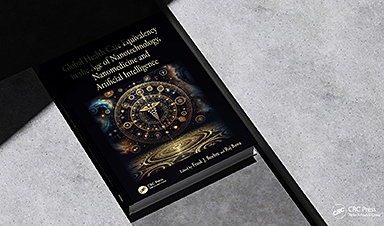
GHCE Concept
From the preface of the book Global Health Care Equivalency in the Age of Nanotechnology, Nanomedicine and Artificial Intelligence, Edited by Frank Boehm: Since the publication of my first book (Nanomedical Device and Systems [...]

Novartis, Ionis drug failure spurs questions
Pelacarsen didn’t protect heart health despite lowering levels of a protein particle, “Lp(a),” in a large clinical trial — a result with important implications for cardiovascular drug research. Dive Brief: An RNA drug from [...]

New injectable treatment helps the brain rebuild after stroke
Biomedical engineers at Duke University have created an injectable biomaterial that may help the brain recover from damage left behind by an ischemic stroke. In experiments with mice, the material transformed the cavity created [...]

Scientists Discover a Hidden “Immune Organ” Inside the Skull
Researchers discovered lymph node-like immune hubs inside skull bone marrow that appear to act as rapid-response centers for the brain. For decades, the brain was thought to operate largely apart from the immune system. [...]

Engineered tRNAs and lipid nanoparticles target nonsense mutation cystic fibrosis
Researchers have developed a potential new approach for treating a form of cystic fibrosis caused by so-called nonsense mutations, combining chemically modified transfer RNAs with lipid nanoparticles designed to deliver the therapy directly to [...]
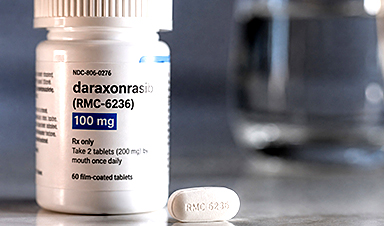
New pancreatic cancer drug carries a $39,800 monthly list price
A groundbreaking treatment for one of the most common forms of pancreatic cancer has been approved in pill form by the FDA. Revolution Medicines’ oral tablet daraxonrasib, branded as Rasonque, reduced the risk of [...]

Researchers Have Discovered a New Way To Reduce Chronic Nerve Pain
A cancer-linked protein called BRAF may help drive chronic nerve pain, and existing cancer drugs targeting it reduced pain sensitivity in preclinical models. Chronic nerve pain can persist long after an injury and often [...]