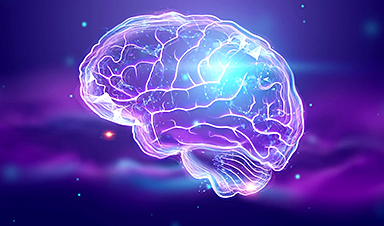
A long-running study following thousands of older adults suggests that a relatively brief period of targeted brain training may have effects that last decades.
Starting in the late 1990s, close to 3,000 older adults enrolled in a research project designed to test whether structured brain training could improve memory and thinking skills. Two decades after the study began, many of those participants were still showing lasting benefits.
A recent follow-up from the Advanced Cognitive Training for Independent and Vital Elderly, or ACTIVE, study found that people who completed cognitive speed training, along with additional booster sessions one and three years later, had a significantly lower risk of developing dementia. Over a 20-year period, their likelihood of receiving a dementia diagnosis was reduced by 25 percent.
According to the research team, this is among the first findings from a large randomized, controlled trial to show that any type of intervention, including cognitive training, brain games, physical activity, dietary changes, or medication, can reduce the occurrence of Alzheimer's disease and related dementias. The results were published in the journal Alzheimer's & Dementia: Translational Research and Clinical Interventions.
Long-Term Benefits Beyond Expectations
Earlier analyses of the ACTIVE study had already shown that participants maintained cognitive gains five and 10 years after completing training. However, the persistence of these effects over such a long period surprised even the researchers involved.
Michael Marsiske, Ph.D., one of the study's six principal investigators and a professor and interim co-chair in the Department of Clinical and Health Psychology at the University of Florida College of Public Health and Health Professions, said the findings exceeded what the team originally expected.
"Participants who had the greatest advantage had a maximum of 18 training sessions over three years. It seemed implausible that we might still see benefits two decades later," Marsiske said. "Our initial findings had shown benefits of several training arms up to 10 years after training, with participants reporting fewer impairment in tasks of daily living and experiencing fewer motor vehicle crashes. Adding in these 20-year findings strongly suggests that engagement in cognitive training does no harm and may confer substantial benefit."
Why Speed Training Stood Out
Researchers believe the long-lasting impact of the speed-focused training may be linked to how the program adapts to each individual, adjusting difficulty as participants improve.
The ACTIVE study, supported by the National Institute on Aging and the National Institute of Nursing Research, was conducted across multiple sites and included 2,832 older adults. Participants were randomly assigned to one of three training groups focused on memory, reasoning, or speed of processing, with each group completing 10 sessions.
Training sessions typically lasted a little over an hour and were spread out over roughly six weeks. Some individuals were also randomly chosen to receive additional training sessions about one year and nearly three years after the initial program, while a control group did not receive any training at all.
After five years, participants in all trained groups retained benefits. Participants reported less difficulty performing tasks such as cooking, taking medication, and managing finances than their peers in the control group. Ten years on, researchers found that participants who received training in reasoning and speed of processing maintained cognitive improvements.
For the 20-year follow-up — those still living were now mostly in their 90s — the investigators reviewed participants' medical records to determine how many had been diagnosed with dementia. Those in the speed training group had cut their risk of dementia by one-quarter compared with participants in the control group.
How the Training Works
The speed training requires participants to process visual information on a computer screen and make quick decisions. As participants' speed and accuracy improved, the training got progressively more difficult. Speed training may cause physical changes to the brain, leading to new and stronger connections between brain networks. The speed training used in the study is now available through the company BrainHQ.
For those interested in incorporating cognitive training into their own health practice, it's never too late to begin, said Marsiske, who is also the leader of the Data Management and Statistics Core of the 1Florida Alzheimer's Disease Research Center.
"At enrollment, our participants ranged in age from 65 to 94 years," he said. "We found no substantial reduction of training benefit with age, suggesting that training can be started at any time."
The ACTIVE study has inspired the investigators to launch follow-up trials, develop new interventions, and explore how older adults may benefit from pairing cognitive training with other lifestyle habits such as physical exercise, nutrition, and hypertension management.
"We think this study encourages us, and the field, to continue incorporating cognitive training into multicomponent intervention programs for older adults," Marsiske said.
Reference: "Impact of cognitive training on claims-based diagnosed dementia over 20 years: evidence from the ACTIVE study" by Norma B. Coe, Katherine E. M. Miller, Chuxuan Sun, Elizabeth Taggert, Alden L. Gross, Richard N. Jones, Cynthia Felix, Marilyn S. Albert, George W. Rebok, Michael Marsiske, Karlene K. Ball and Sherry L. Willis, 09 February 2026, Alzheimer's & Dementia: Translational Research & Clinical Interventions.
DOI: 10.1002/trc2.70197

News

What is ‘American Covid’ and how bad is it?
Cases of so-called ‘American Covid’ are on the rise in the UK. The strain is officially called XFG, or ‘Stratus’, and is the most common variant in North America, hence the name. It might soon [...]
Researcher at Russian plague laboratory dies of ‘unknown’ infection
Russian authorities have imposed "anti-epidemic measures" after a laboratory worker at an institute in Siberia dedicated to studying the plague and other infectious diseases died of a mysterious illness. The researcher, a 28-year-old female [...]

GHCE Concept
From the preface of the book Global Health Care Equivalency in the Age of Nanotechnology, Nanomedicine and Artificial Intelligence, Edited by Frank Boehm: Since the publication of my first book (Nanomedical Device and Systems [...]

A Surprising Brain Signal Could Explain Why Eating Less Protein Extends Lifespan
A new paper suggests that limiting protein intake triggers a coordinated response throughout the body that may help explain how protein restriction affects healthy aging. Animals respond to protein restriction, or reduced protein in [...]

Back and shoulder surgery is often worse than useless
Millions of operations should be scrapped SIX IN TEN Britons have surgery at some point. So do lots of Americans, at a cost of perhaps $500bn a year, a third of all spending on [...]
Cocaine plays with mind, hijacks brain circuit, drives increasingly rigid and repetitive behavior
Researchers have found that cocaine hijacks brain circuit, which to drive increasingly rigid and repetitive behavior. The brain circuit that normally participates in selecting natural mouth and face movements, but which becomes disproportionately engaged [...]
Injectable nanodevices could provide effective treatment for drug-resistant glioblastoma
The brain cancer glioblastoma is one of the most aggressive and treatment-resistant cancers known to medicine, carrying a median survival of just 12-15 months, even with the best available care. Now, researchers at the [...]
New Treatment Cuts “Bad” Cholesterol in Half for a Full Year
A single infusion of an experimental CRISPR-Cas9 therapy was reported to safely lower LDL cholesterol by 52.5% and triglycerides by 47.8%, as measured 12 months after treatment. What if one infusion could keep cholesterol [...]

Too Much RNA Can Drain a Cell’s Energy, Scientists Discover
A virus may cripple a cell’s power supply simply by producing too much of a molecule the cell needs to survive. New research from the Texas A&M College of Veterinary Medicine and Biomedical Sciences [...]
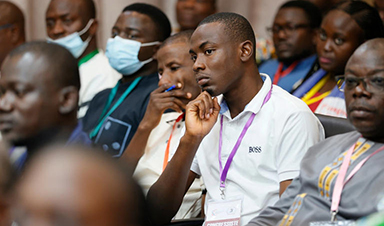
West African scientists warn of weakening health systems and urge stronger outbreak detection
LOME, Togo (AP) — West African laboratory scientists called on governments Friday to strengthen capacity to detect disease outbreaks to avoid another major outbreak, saying health systems across the region are becoming weaker. Participants [...]

A Little-Known Protein Could Point to a New Way To Treat Alzheimer’s
A study suggests that increasing SORLA protein levels could help treat Alzheimer’s disease and other disorders involving tau protein. Increasing SORLA, a protein with a protective role in the brain, helped mice withstand damage [...]
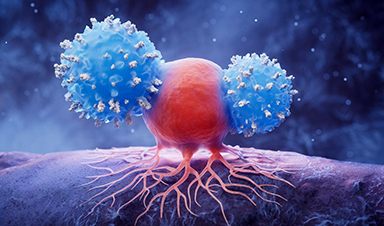
Cancer’s Hidden Antioxidant Shield Helps It Escape the Immune System
Blocking an antioxidant protein that tumors use to suppress immune attacks improved cancer immunotherapy responses in mice. Cancer cells can release antioxidants that interfere with the immune cells trying to kill them. Researchers have [...]

Scientists Find a Berry Compound That Helps Muscle Cells Burn Fat
Pterostilbene, a compound found naturally in some foods, affects how skeletal muscles process fats by stabilizing a protein called PPARδ and increasing its signaling activity. Pterostilbene, a natural compound found in blueberries, grapes, and [...]
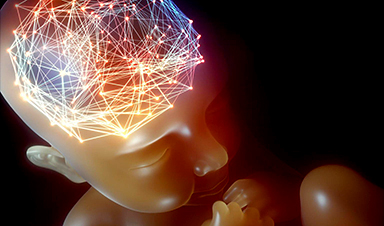
Two Hidden Forces Help Build the Human Brain Before Birth
Scientists have uncovered two surprising forces that help guide how the human brain forms before birth. Before birth, the human brain is shaped in large part by an unusual class of stem cells known [...]
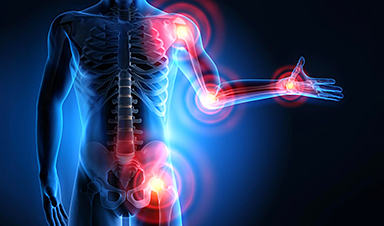
Researchers Uncover a Hidden Trigger Behind Chronic Inflammation
The findings offer new insights that could help guide the development of future therapies. A protein called human resistin may help flip on one of the immune system’s most powerful inflammatory switches. Researchers at [...]

Scientists Have Uncovered Previously Hidden Microbial Activity on Human Skin
The most abundant microbes on your skin may not be the ones doing most of the work. Human skin supports vast communities of bacteria, fungi, and viruses that can influence its protective barrier, immune [...]