New research reveals how smell and hearing interact in the brain to drive social behavior, using mouse maternal instincts as a model.
Imagine you’re at a dinner party, but you can’t smell the food cooking or hear the dinner bell. Sounds like a dream, right? What if it wasn’t?
“When we experience the world and interact with people, we use all our senses,” Cold Spring Harbor Laboratory Professor Stephen Shea says. “That’s true for animals and humans.” However, that’s not always the case in developmental disorders like autism. These conditions can affect how the brain processes incoming information, making it difficult to interpret the social cues that drive conversations, dates, and other interpersonal activities.
Exactly how such signals mix and influence each other in the brain isn’t well understood. To shed light on the subject, Shea and graduate student Alexandra Nowlan traced how smell and hearing interact in mouse brains during a maternal behavior called pup retrieval. This activity isn’t limited to mothers. It can also be learned by surrogates. Think stepmoms and babysitters.
 Neural pathways, stained neon green above, carry smell signals through the mouse brain from the basal amygdala to the auditory cortex. Credit: Shea lab/Cold Spring Harbor Laboratory
The Role of the Basal Amygdala in Sensory Processing
In mice and humans, the BA is involved in learning and processing social and emotional signals. During pup retrieval, the team found that BA neurons carry smell signals to the brain’s hearing center, the auditory cortex (AC). There, they merge with incoming sound signals and influence the animal’s response to future sounds—like pups’ cries. Amazingly, when Shea’s team blocked maternal mice from accessing smell signals, their pup retrieval response almost completely broke down.
“We think what’s reaching the AC is being filtered through social-emotional signals from BA neurons,” Shea explains. “That processing can be impaired in autism and neurodegenerative conditions. We think many parts of the brain participate in this behavior and that it’s very richly controlled.”

Shea’s lab is now exploring how these brain regions connect and interact with one another. Their work may lead to a better understanding of how autism can affect a person’s ability to interpret social cues. But that’s just the beginning.
“The idea that we found a neural circuit that may allow emotional processes to directly interact with perception is very exciting to me,” Shea says. He’s not alone there. His research might yet provide answers to one of humanity’s oldest questions. How do our senses inform the ways we connect with one another and experience the world?

News
Antibody recycling, FcRn and the next generation of biologics
FcRn plays a central role in regulating the half-life of IgG antibodies and albumin, making it a critical target in both antibody engineering and autoimmune disease therapy. This article explores the biology of FcRn, [...]
Ebola kills 2,300 in three months with no vaccine available for Congo’s deadliest ever outbreak
It’s Congo’s 17th outbreak, with a toll that has eclipsed that of the country’s 2018-2020 outbreak when 2,299 deaths out of 3,481 cases were recorded. The latest data shows 101 new cases and 33 [...]
Beyond an Agency: How AI, Creativity and Commercialization Are Converging Into a New Growth Model
At a moment when AI is forcing a fundamental rethink of how work gets done, the life sciences industry is grappling with a deeper question: what role should human creativity play in an increasingly [...]
New $60 Blood Test Detects Lung Cancer Without Costly DNA Sequencing
A simple blood test that detects chemical changes in DNA identified more than 90% of stage 2-4 lung cancers in an early study, without relying on costly DNA sequencing. Researchers at Tel Aviv University and collaborating [...]
Reducing drug development failures with human-relevant models and AI
Professor Joseph C. Wu of Stanford University explains how stem cells, human-relevant models and AI are helping researchers predict which drug candidates are most likely to succeed before clinical trials. Researchers now have access [...]
Half of vaccines are binned – ‘fridge-free’ versions could change that
Vaccines that do not need to be kept cool in a fridge have been successfully trialed in patients for the first time, say UK scientists. Currently, most vaccines need to be refrigerated or frozen [...]

Mushroom Mystery: The Fungus That Makes People See Tiny Humans
A mushroom sold in markets and served in restaurants in Southwest China has an unusual warning attached to it: cook it thoroughly, or you may start seeing tiny people. For decades, people have reported [...]
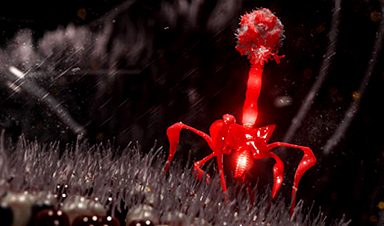
Artificial intelligence used to design brand new viruses
Artificial Intelligence has been used to design brand new viruses that are fully functional and can replicate in the laboratory, say US researchers. It is the first time whole genomes have been successfully designed [...]
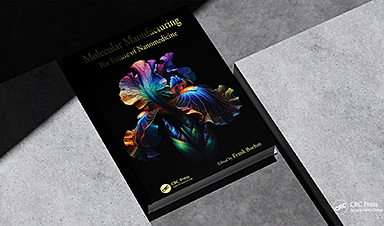
Molecular Manufacturing: The Future of Nanomedicine – New book from NanoappsMedical Inc.
This book explores the revolutionary potential of atomically precise manufacturing technologies to transform global healthcare, as well as practically every other sector across society. This forward-thinking volume examines how envisaged Factory@Home systems might enable the cost-effective [...]
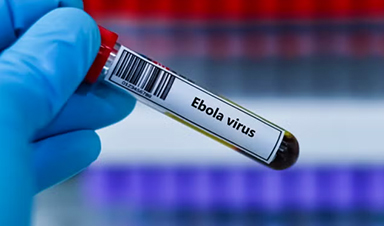
Moderna kicks off Phase I Ebola trial as Africa readies itself for research
If the Phase I trial is successful, Moderna plans to quickly initiate Phase II and Phase III trials of its Ebola vaccine. Moderna has initiated a Phase I trial of its mRNA Ebola vaccine [...]
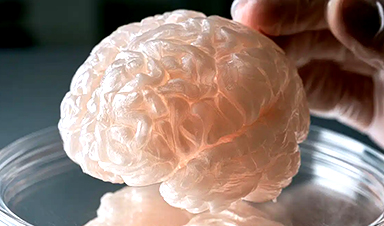
3D Human Brain Tissue Model Replicates Alzheimer’s Pathology
Summary: Researchers introduced a highly reproducible three-dimensional human brain tissue model capable of replicating complex neurodegenerative processes in Alzheimer’s disease. Developed over nine years using human stem cells, the self-organizing tissue spheroids integrate functional neurons, [...]
A Common Sugar May Loosen Cancer Cells and Help Them Spread
Chemotherapy may kill most ovarian cancer cells, but the few that survive can turn dangerously active. By releasing fructose, they may help nearby tumor cells break free and spread. Researchers at The Wistar Institute [...]
COVID-19 can wake up dormant viruses in the body, large study confirms
Virus reactivations by SARS-CoV-2 could worsen initial symptoms and increase risk of Long Covid. Early in the COVID-19 pandemic, scientists noticed that a SARS-CoV-2 infection can “wake up” other, dormant viruses already present in [...]
Scientists Discover the Brain May Enter a New Biological Phase Between 50 and 75
A single-cell study reveals major changes in immune cells, genome organization, and gene regulation within the aging human hippocampus, offering important insights into brain aging and dementias associated with age. Between roughly ages 50 [...]
Our books now available worldwide!
Online Sellers other than Amazon, Routledge, and IOPP Indigo Global Health Care Equivalency in the Age of Nanotechnology, Nanomedicine and Artifcial Intelligence Global Health Care Equivalency In The Age Of Nanotechnology, Nanomedicine And Artificial [...]
Unzipping the Code of Life: Scientists Pinpoint Where DNA First Opens
Researchers mapped where DNA first opens and how a helicase gate may release one strand as genome copying begins. Before a cell can divide, it must open its tightly wound DNA and begin copying the entire [...]