Researchers have succeeded in communicating with brain-injured patients who are unconscious. They see enormous potential in this for future treatments.
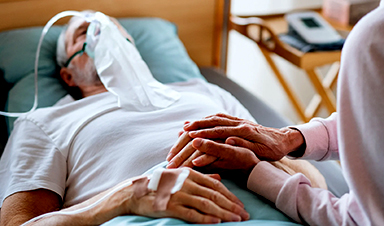
Patients who lie motionless in bed after a severe brain injury and do not respond to any response are medically considered unconscious. But some of these people may perceive much more of the environment than assumed – and can even communicate.
At least that's what studies by neurologist Jan Claassen from Columbia University in New York show. Together with his colleagues, he developed a brain-computer interface that made it possible to get in touch with the supposedly unconscious people.
"Research has shown that many patients with acute brain injury who appear to be in a coma actually have some level of consciousness, even though they can't speak or move their hands or eyes," says Claassen.
In recent years, scientists have already developed brain-computer interfaces for paraplegics, for example, who can use them to control devices. To do this, a computer chip must be implanted in the surface of their brains in order to convert thoughts into command signals. However, this approach is unsuitable for unconscious patients with a severe brain injury.
Claassen is one of the pioneers who have researched the so-called hidden consciousness. As early as 2019, he used the usual EEG technology and AI to examine the brain waves of unconscious, brain-injured patients. In 15 percent, he discovered signs that there was still consciousness.
These patients were not able to carry out the request to blink their eyes or move their toes. However, activity could be seen in the EEG recordings of their brain waves that indicated that they had tried to follow the prompt and move their muscles.
Medicine speaks of cognitive-motor dissociation (TMD). The brain regions for thinking and action planning are still active, but the signals no longer reach the motor centers. It was shown that patients with TMD have a higher probability of regaining consciousness.
Routine TMD diagnostics are not yet available, but could one day help to estimate the chances of recovery of a brain-injured patient. "We have shown that recognizing hidden states of consciousness has enormous potential for controlling patient care," says Claassen.
Unconscious patients regulate a beep
In the current study, Claassen has now gone one step further by giving patients with a hidden consciousness the opportunity to actually respond to a request. To do this, he used EEG wires, which are routinely attached to the head of an unconscious patient anyway for monitoring.
A beep was played to the patients via headphones. And a voice asked her to control the height of the beep by opening and closing her hands. As in the previous experiments, the patients had the impulse to move their hands.
The brain waves measured in the process were forwarded to a computer, which converted signals accordingly – and increased or lowered the height of the beep. In this way, the patients learned to control the computer – by remembering whether they wanted to close or open their hands, and thus changed the beep.
The researchers now want to further develop the possibilities of communication. "Our goal is to refine the system so that the supposedly unconscious patients can tell their doctors and relatives how they are doing, whether they are in pain or hungry."
If this succeeds, it could fundamentally change the treatment of severely brain-injured people. For many patients who were previously considered unreachable, a direct communication channel to the outside world could be created for the first time.

News – Curated by Amanda Scott, Alias Group Creative
Follow her on Bluesky
After only a short training, people in a coma managed to send targeted signals
Researchers have succeeded in communicating with brain-injured patients who are unconscious. They see enormous potential in this for future treatments. Patients who lie motionless in bed after a severe brain injury and do not [...]
MIT Scientists Reprogram Immune Cells Inside the Body To Destroy Cancer
Natural killer cells reprogrammed inside mice eliminated lymphoma tumors and helped damaged livers heal, though whether this approach could help people with cancer or autoimmune disease remains unknown. To make a cancer treatment from [...]
Melanoma mRNA Vaccine Shows Promise in Preventing Disease Recurrence
Key takeaways: Phase 3 trial finds personalized intismeran plus pembrolizumab may better prevent high-risk melanoma recurrence after surgery The trial enrolled 1,137 patients and builds on phase 2 results showing about half the recurrence [...]
Scientists Discover a Powerful New Weapon Against a Dangerous Gut Infection
The promise of an experimental treatment for C. difficile gut infections lies partly in the bacteria it leaves alive, according to early laboratory and mouse research. Broad-spectrum antibiotics can disrupt the gut’s microbial community, [...]
Your Bones May Hold a Hidden Clue to Blood Cancer Survival
For people with blood cancers called myelodysplastic syndromes, osteoporosis may hold an overlooked clue to survival, a three-year observational study suggests. In blood cancers that develop in the bone marrow, an important clue to [...]

Researchers Discover What Reading for Pleasure May Be Doing to Your Brain
Reading for pleasure may offer surprising benefits for the brain, with research linking the habit to better mental health, stronger cognitive abilities, and a lower risk of dementia. Reading for pleasure may do far [...]
Scientists Discover a Hidden Trigger That Keeps Inflammation Alive
Inflammation persists after proteins detach from immune receptors, revealing a potential target for autoimmune treatments. Since a Nobel Prize-winning discovery in the 1990s identified molecules called Toll-like Receptors as the guardians of the human [...]
A Virus Gives Itself Away the Moment It Attacks
Researchers have found the trigger behind a powerful bacterial defense against viruses. Viruses that prey on bacteria could become an increasingly important tool for treating bacterial infections, particularly as antibiotic resistance makes some infections [...]
Scientists Discover Aspirin May Slash Dementia Risk by 70% – but Only for Certain People
Aspirin was linked to a sharply lower dementia risk in some older adults, and their genes may hold the clue. A Monash University analysis found that older adults with a particular genetic profile had [...]
Inflammation May Awaken Dormant Cancer Cells Years After Treatment
The body’s response to inflammation may disturb cancer cells that have been lying silent for years, giving them an opportunity to grow again. Researchers at the Francis Crick Institute have found that gut inflammation [...]
Where do nanoparticles go once they enter the body?
New international best practice guidance, co-written at ANSTO, sets out how to measure where nanoparticles like titanium dioxide end up in the body and how long they remain. The guidance has been shared by [...]
Long-Acting HIV Shots Could Solve a Major Treatment Challenge for Young People
A major African trial suggests that changing how HIV treatment is delivered could significantly improve viral suppression in adolescents. Young people with HIV were more likely to keep the virus suppressed when they received [...]

WHO Factsheets – The top 10 causes of death
In 2023, the 10 leading causes of death accounted for 33 million deaths, or 54% of the total 61 million deaths worldwide. The top global causes of death, in order of total number of lives lost, [...]
Aging Cells May Be Hiding From the Immune System – Scientists Think They Know How
Your immune system is supposed to clear out damaged cells. Researchers may have found how some of them hide and linger as the body ages. Researchers led by Cedars-Sinai Health Sciences University have identified [...]
Your Voice May Reveal How Fast Your Brain Is Aging
Researchers have developed a machine-learning “speech clock” that estimates age from subtle patterns in how people speak and what they say. It is possible that people’s voices may contain certain signals of aging that [...]
Optogenetics Pioneers Win 2026 Nobel Prize in Physiology or Medicine
The 2026 Nobel Prize in Physiology or Medicine has been awarded to Peter Hegemann, Georg Nagel, and Karl Deisseroth for the development of optogenetics, a revolutionary technology that uses light to control individual neurons [...]