Consciousness may emerge not from code, but from the way living brains physically compute.
Discussions about consciousness often stall between two deeply rooted viewpoints. One is computational functionalism, which holds that cognition can be fully explained as abstract information processing. According to this view, if a system has the right functional organization (regardless of the material it runs on), consciousness should emerge. The opposing view, biological naturalism, argues that consciousness cannot be separated from the unique features of living brains and bodies. From this perspective, biology is not just a carrier of cognition, it is a core part of what cognition is. Both positions capture important truths, but their ongoing standoff suggests that an essential element is missing.
A Third Perspective on How Brains Compute
In our new paper, we propose an alternative framework called biological computationalism. The term is intentionally provocative, but also meant to clarify the debate. Our central argument is that the standard model of computation is either broken or poorly aligned with how real brains function. For many years, it has been tempting to assume that brains compute in much the same way traditional computers do, as if cognition were software running on neural hardware. However, brains do not operate like von Neumann machines, and forcing that analogy leads to strained metaphors and fragile explanations. To seriously understand how brains compute, and what it would take to create minds in other substrates, we need to expand our definition of what computation actually means.
Biological computation, as we define it, has three key characteristics.
Hybrid Computation in the Living Brain
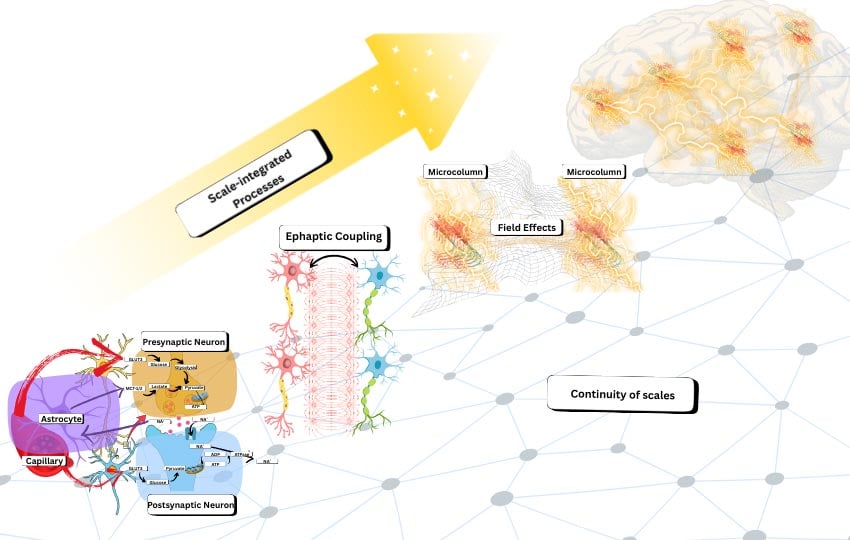
First, biological computation is hybrid. It blends discrete events with continuous processes. Neurons fire spikes, synapses release neurotransmitters, and neural networks shift between event-like states. At the same time, these events unfold within constantly changing physical environments that include voltage fields, chemical gradients, ionic diffusion, and time-varying conductances. The brain is neither purely digital nor simply analog. Instead, it operates as a layered system in which continuous dynamics influence discrete events, and discrete events reshape the surrounding continuous processes through ongoing feedback.
Why Brain Computation Cannot Be Separated by Scale
Second, biological computation is scale-inseparable. In conventional computing, it is usually possible to draw a clear boundary between software and hardware, or between a functional description and its physical implementation. In the brain, that boundary does not exist. There is no clean point where one can say, here is the algorithm, and over there is the physical machinery that carries it out. Instead, causal interactions span many levels at once, from ion channels to dendrites to neural circuits to whole-brain dynamics. These levels do not behave like neatly stacked modules. In biological systems, altering the so-called implementation also alters the computation itself, because the two are tightly intertwined.
Energy Constraints Shape Intelligence
Third, biological computation is metabolically grounded. The brain operates under strict energy limits, and those limits influence its organization at every level. This is not a minor engineering detail. Energy constraints affect what the brain can represent, how it learns, which patterns remain stable, and how information is coordinated and routed. From this perspective, the tight coupling across scales is not unnecessary complexity. It is an energy optimization strategy that supports flexible and resilient intelligence under severe metabolic constraints.
When the Algorithm Is the Physical System
Together, these three features lead to a conclusion that may feel unsettling to anyone used to classical ideas about computation. In the brain, computation is not abstract symbol manipulation. It is not simply a matter of moving representations according to formal rules while treating the physical medium as "mere implementation." In biological computation, the algorithm is the substrate. The physical organization does not just enable computation, it constitutes it. Brains do not merely run programs. They are specific kinds of physical processes that compute by unfolding through time.
Limits of Current AI Models
This perspective also exposes a limitation in how contemporary artificial intelligence is often described. Even highly capable AI systems primarily simulate functions. They learn mappings from inputs to outputs, sometimes with impressive generalization, but the underlying computation remains a digital procedure running on hardware designed for a very different style of processing. Brains, in contrast, carry out computation in physical time. Continuous fields, ion flows, dendritic integration, local oscillatory coupling, and emergent electromagnetic interactions are not just biological "details" that can be ignored when extracting an abstract algorithm. In our view, these processes are the computational primitives of the brain. They are what allow real-time integration, robustness, and adaptive control.
Not Biology Only, But Biology Like Computation
This does not mean we believe consciousness is exclusive to carbon-based life. We are not making a "biology or nothing" claim. Our argument is more precise. If consciousness (or mind-like cognition) depends on this particular kind of computation, then it may require biological-style computational organization, even when implemented in new substrates. The critical question is not whether a system is literally biological, but whether it instantiates the right kind of hybrid, scale-inseparable, metabolically (or more generally energetically) grounded computation.
Rethinking the Goal of Synthetic Minds
This shift has major implications for efforts to build synthetic minds. If brain computation cannot be separated from its physical realization, then simply scaling up digital AI may not be enough. This is not because digital systems cannot become more capable, but because capability alone does not capture what matters. The deeper risk is that we may be optimizing the wrong target by refining algorithms while leaving the underlying computational framework unchanged. Biological computationalism suggests that creating truly mind-like systems may require new kinds of physical machines, ones in which computation is not neatly divided into software and hardware, but spread across levels, dynamically linked, and shaped by real-time physical and energy constraints.
So if the goal is something like synthetic consciousness, the central question may not be, "What algorithm should we run?" Instead, it may be, "What kind of physical system must exist for that algorithm to be inseparable from its own dynamics?" What features are required, including hybrid event-field interactions, multi-scale coupling without clean interfaces, and energetic constraints that shape inference and learning, so that computation is not an abstract layer added on top, but an intrinsic property of the system itself?
That is the shift biological computationalism calls for. It moves the challenge away from finding the right program and toward identifying the right kind of computing matter.
Reference: "On biological and artificial consciousness: A case for biological computationalism" by Borjan Milinkovic and Jaan Aru, 17 December 2025, Neuroscience & Biobehavioral Reviews.
DOI: 10.1016/j.neubiorev.2025.106524

News
Nanotube injector transfers cytoplasmic contents and organelles between living cells safely
Cells are not isolated units; they continuously exchange proteins, genetic material, and even entire organelles with their neighbors. Intercellular transfer influences how tissues develop, respond to stress, and repair damage. In certain cancers, for [...]
CEO of America’s largest public hospital system is ready to replace radiologists with AI
The chief executive of America’s largest public hospital system says he is prepared to start replacing radiologists with artificial intelligence in some circumstances, once the regulatory landscape catches up. Mitchell H. Katz, MD, president [...]
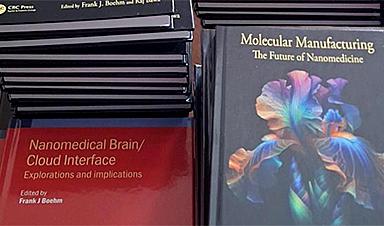
Our books now available worldwide!
Online Sellers other than Amazon, Routledge, and IOPP Indigo Global Health Care Equivalency in the Age of Nanotechnology, Nanomedicine and Artifcial Intelligence Global Health Care Equivalency In The Age Of Nanotechnology, Nanomedicine And Artificial [...]
Study finds higher heart disease risk in long COVID patients
People with long COVID are at increased risk of developing cardiovascular disease, according to a new study from Karolinska Institutet published in eClinicalMedicine. The results show that the risk of conditions such as cardiac arrhythmias [...]
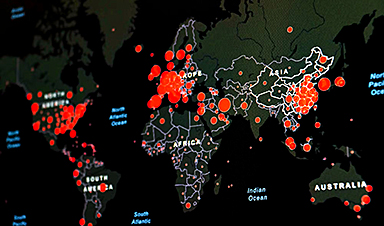
The Corona variant Cicada is here – we know that
Online and on social media, reports are piling up about a new Sars-Cov-2 variant that is currently on the rise: BA.3.2, also known as Cicada. That's what it's all about: The Omicron variant BA.3.2, [...]

A Simple Blood Test Could Predict Dementia Risk 25 Years Early
A single blood marker may quietly signal dementia risk decades in advance. Scientists at the University of California, San Diego, have identified a blood signal that could forecast dementia risk decades before symptoms begin. Their [...]
Sperm Get Lost in Space and Scientists Finally Know Why
Having a baby in space may be far more complicated than expected, as new research shows sperm struggle to find their way in microgravity. Starting a family beyond Earth could be more complicated than [...]
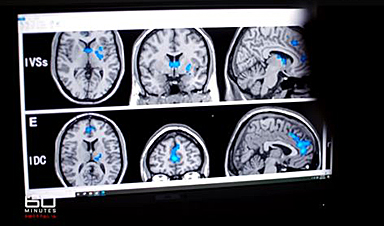
Digital Dementia – Brain fog and disassociation from being chronically online
New medical evidence, featured on 60 Minutes Australia, indicates excessive screen time is causing "digital dementia" in young Australians, with brain scans showing physical shrinkage and damage. Experts warn that high device usage (6-8 hours [...]
A new, highly mutated COVID variant called ‘Cicada’ is spreading in the US.
BA.3.2, a heavily mutated new COVID-19 variant which may be better able to escape immunity from vaccines or prior infection, is now spreading in the United States. Although COVID cases are currently low nationally, [...]
Molecular Manufacturing: The Future of Nanomedicine – New book from NanoappsMedical Inc.
This book explores the revolutionary potential of atomically precise manufacturing technologies to transform global healthcare, as well as practically every other sector across society. This forward-thinking volume examines how envisaged Factory@Home systems might enable the cost-effective [...]

Ancient bacteria strain discovered in ice cave is resistant to some modern antibiotics
In the depths of Scarisoara cave in Romania sits one of the world’s biggest underground glaciers, a monumental slab of ice the size of roughly 40 Olympic swimming pools that began to form around [...]

Scientists Identify “Good” Bacteria That May Prevent Long COVID
According to the WHO, about 6% of people worldwide who get COVID-19, roughly 400 million people, later develop a long-lasting form of the illness. That shows the condition remains a significant public health challenge. In [...]
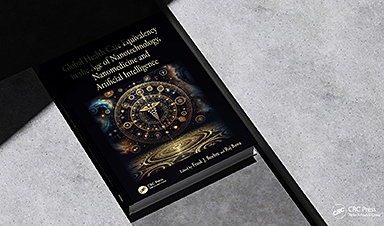
New book from Nanoappsmedical Inc. – Global Health Care Equivalency
A new book by Frank Boehm, NanoappsMedical Inc. Founder. This groundbreaking volume explores the vision of a Global Health Care Equivalency (GHCE) system powered by artificial intelligence and quantum computing technologies, operating on secure [...]
RNA Recycling Extends Lifespan
Summary: Researchers discovered a biological “trash disposal” mechanism that directly controls how fast we age. While circular RNA has long been known to accumulate in cells as we get older, this study proves for the [...]
Cancer’s Deadly Paradox: How Tumors Break Their Own DNA To Keep Growing
Cancer’s strongest gene switches push DNA into damaging overdrive, creating repeated breaks and repairs that may fuel tumor evolution while exposing possible therapeutic weak spots. A new study indicates that cancer can harm its own genetic [...]
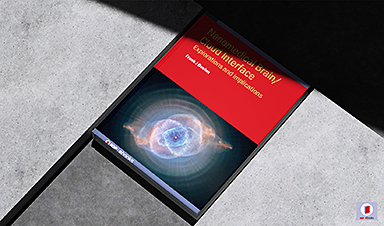
NanoMedical Brain/Cloud Interface – Explorations and Implications. A new book from Frank Boehm
New book from Frank Boehm, NanoappsMedical Inc Founder: This book explores the future hypothetical possibility that the cerebral cortex of the human brain might be seamlessly, safely, and securely connected with the Cloud via [...]