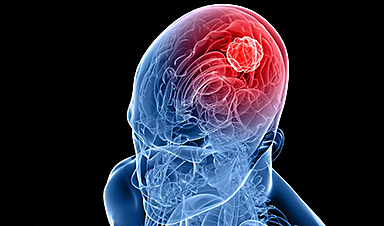
Researchers have identified a molecule that disrupts a critical gene in glioblastoma.
Scientists at the UVA Comprehensive Cancer Center say they have found a small molecule that can shut down a gene tied to glioblastoma, a discovery that could eventually point to a new way to treat this aggressive brain cancer.
The finding comes from the lab of Hui Li, PhD, who previously identified the "oncogene" that helps drive glioblastoma. In a new study published in Science Translational Medicine, Li reports that the newly identified compound blocked the gene's activity in both cell samples and laboratory mice. In the mouse experiments, the molecule worked without causing harmful side effects.
The research is still at an early stage, and the team emphasizes that much more work is needed before the approach could be considered for patients. Even so, Li says the results hint at something especially important for glioblastoma: slowing a tumor that spreads by infiltrating healthy brain tissue rather than staying in one clearly defined mass.
"Glioblastoma is a devastating disease. Essentially, no effective therapy exists," said Li, of the University of Virginia School of Medicine's Department of Pathology. "What's novel here is that we're targeting a protein that GBM cells uniquely depend on, and we can do it with a small molecule that has clear in vivo activity. To our knowledge, this pathway hasn't been therapeutically exploited before."

About Glioblastoma
Glioblastoma grows quickly and is almost always fatal. After diagnosis, average survival is about 15 months, and more than 14,000 Americans are diagnosed each year. Doctors often begin with surgery, but the cancer spreads through brain tissue in a way that makes complete removal extremely difficult.
Li hopes this line of work can help fill that gap by going after a specific genetic driver. In 2020, his team pinpointed the oncogene, a cancer-causing gene, behind glioblastoma. The gene, AVIL, normally helps cells maintain their size and shape, but the researchers found it can be pushed into an overactive state by a variety of factors, setting the stage for cancer cells to form and spread.
Earlier experiments showed that blocking AVIL activity could wipe out glioblastoma cells in laboratory mice without harming healthy cells. The problem was practicality: the method used to prove that point in the lab was not suitable for people. That challenge is what sent the researchers searching for a molecule that could interrupt the gene's harmful effects in a drug-like way.
Finding a Promising Molecule
Their pursuit has confirmed the role of AVIL in glioblastoma. The researchers found that the protein the gene produces is hardly found in the healthy human brain but is abundant in patients with glioblastoma.
The scientists used a technique called "high-throughput screening" to quickly and efficiently evaluate many compounds for their potential to block AVIL activity. The molecule they have found appears to affect only tumor cells, sparing healthy brain tissue. Further, the molecule can cross the brain's protective barrier that keeps out many potential treatments for neurological diseases.
Before the compound could become available for patients, much additional research will need to be done to optimize the molecule for use in people. If all goes according to plan, the resulting drug would then be tested extensively in human volunteers before the federal Food and Drug Administration decides whether it is sufficiently safe and effective to be offered as a treatment.
While there is much more work to be done, Li and his colleagues are excited by the promise of their latest findings.
"GBM patients desperately need better options. Standard therapy hasn't fundamentally changed in decades, and survival remains dismal," he said. "Our goal is to bring an entirely new mechanism of action into the clinic — one that targets a core vulnerability in glioblastoma biology."
Reference: "A first-in-class small-molecule inhibitor targeting AVIL exhibits safety and antitumor efficacy in preclinical models of glioblastoma" by Zhongqiu Xie, Pawel Ł. Janczyk, Robert Cornelison, Sarah Lynch, Martyna Glowczyk-Gluc, Becky Leifer, Yiwei Wang, Philip Hahn, Johnathon D. Dooley, Adelaide Fierti, Xinrui Shi, Yiyu Zhang, Tingxuan Li, Qiong Wang, Zhi Zhang, Laine Marrah, Angela Koehler, James W. Mandell, Michael Hilinski and Hui Li, 28 January 2026, Science Translational Medicine.
DOI: 10.1126/scitranslmed.adt1211
The research was supported by the National Institutes of Health, grants R01CA240601 and R01CA269594, and by the Ben & Catherine Ivy Foundation.
Li has founded a company, AVIL Therapeutics, to develop AVIL inhibitors. He and Xie also have obtained a patent related to the approach.

News
Too Much RNA Can Drain a Cell’s Energy, Scientists Discover
A virus may cripple a cell’s power supply simply by producing too much of a molecule the cell needs to survive. New research from the Texas A&M College of Veterinary Medicine and Biomedical Sciences [...]

West African scientists warn of weakening health systems and urge stronger outbreak detection
LOME, Togo (AP) — West African laboratory scientists called on governments Friday to strengthen capacity to detect disease outbreaks to avoid another major outbreak, saying health systems across the region are becoming weaker. Participants [...]

A Little-Known Protein Could Point to a New Way To Treat Alzheimer’s
A study suggests that increasing SORLA protein levels could help treat Alzheimer’s disease and other disorders involving tau protein. Increasing SORLA, a protein with a protective role in the brain, helped mice withstand damage [...]
Cancer’s Hidden Antioxidant Shield Helps It Escape the Immune System
Blocking an antioxidant protein that tumors use to suppress immune attacks improved cancer immunotherapy responses in mice. Cancer cells can release antioxidants that interfere with the immune cells trying to kill them. Researchers have [...]

Scientists Find a Berry Compound That Helps Muscle Cells Burn Fat
Pterostilbene, a compound found naturally in some foods, affects how skeletal muscles process fats by stabilizing a protein called PPARδ and increasing its signaling activity. Pterostilbene, a natural compound found in blueberries, grapes, and [...]
Two Hidden Forces Help Build the Human Brain Before Birth
Scientists have uncovered two surprising forces that help guide how the human brain forms before birth. Before birth, the human brain is shaped in large part by an unusual class of stem cells known [...]
Researchers Uncover a Hidden Trigger Behind Chronic Inflammation
The findings offer new insights that could help guide the development of future therapies. A protein called human resistin may help flip on one of the immune system’s most powerful inflammatory switches. Researchers at [...]
Scientists Have Uncovered Previously Hidden Microbial Activity on Human Skin
The most abundant microbes on your skin may not be the ones doing most of the work. Human skin supports vast communities of bacteria, fungi, and viruses that can influence its protective barrier, immune [...]
Brazilian Tree Compounds Fight COVID-19 on Multiple Fronts
Scientists found compounds in a Brazilian tree that hit SARS-CoV-2 on multiple fronts, revealing a promising new lead in the search for COVID-19 treatments. Researchers have found that galloylquinic acids extracted from the leaves [...]
Cutting Two Amino Acids Slowed Prostate Cancer in Mice
A newly identified link between amino acid metabolism and cholesterol production may help prostate tumors adapt to hormone therapy. Prostate cancer can find ways around treatments designed to deprive tumors of the hormones they [...]

Largest-Ever Physics Survey Raises New Doubts About Our Model of the Universe
Physicists around the world remain deeply divided on key mysteries of the universe, from dark matter to quantum gravity. The standard cosmological model failed to gain majority support, and no leading theory dominated the [...]

Scientists Just Overturned a 100-Year-Old Belief About Bacteria in the Lungs
New findings raise questions about the role of microbes living in the lungs. More than 35 trillion bacteria live throughout the human body, forming microbiomes in the gut, mouth, lungs, skin, and urogenital tract. [...]

GHCE Concept
From the preface of the book Global Health Care Equivalency in the Age of Nanotechnology, Nanomedicine and Artificial Intelligence, Edited by Frank Boehm: Since the publication of my first book (Nanomedical Device and Systems [...]
Novartis, Ionis drug failure spurs questions
Pelacarsen didn’t protect heart health despite lowering levels of a protein particle, “Lp(a),” in a large clinical trial — a result with important implications for cardiovascular drug research. Dive Brief: An RNA drug from [...]
New injectable treatment helps the brain rebuild after stroke
Biomedical engineers at Duke University have created an injectable biomaterial that may help the brain recover from damage left behind by an ischemic stroke. In experiments with mice, the material transformed the cavity created [...]
Scientists Discover a Hidden “Immune Organ” Inside the Skull
Researchers discovered lymph node-like immune hubs inside skull bone marrow that appear to act as rapid-response centers for the brain. For decades, the brain was thought to operate largely apart from the immune system. [...]