Nearly 30 years after rye pollen molecules were shown to slow tumor growth in animals, scientists have finally determined their exact three-dimensional structures.
Nearly 30 years ago, researchers noticed something surprising in rye pollen: two naturally occurring molecules seemed to slow tumor growth in animal studies. The finding drew interest, but the science hit a wall because no one could pin down a crucial detail that determines how a compound behaves in the body: its exact three dimensional shape.
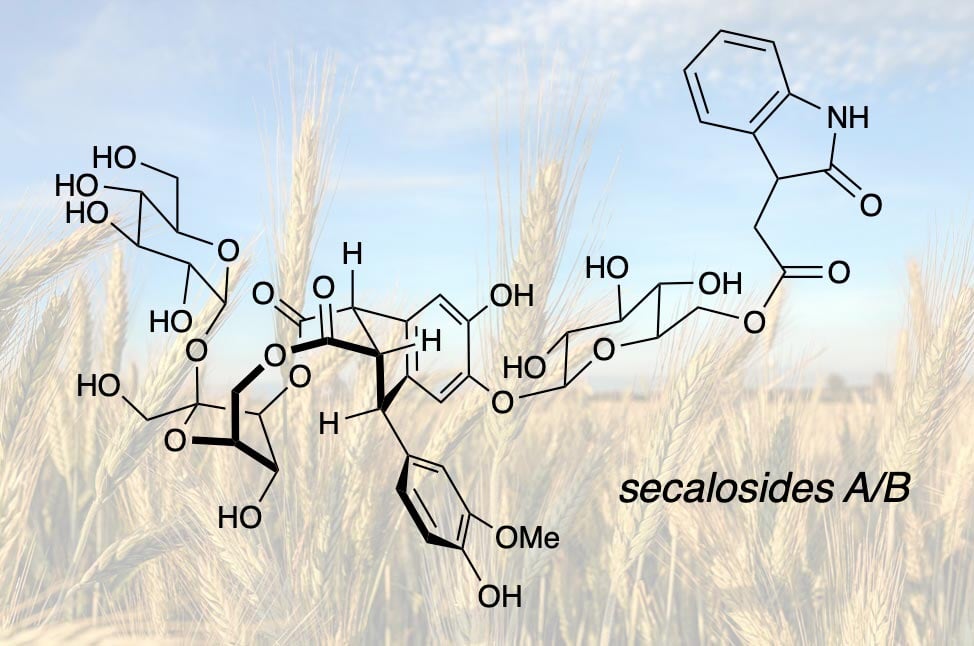
Chemists at Northwestern University now report that they have solved that long running structural puzzle. By assembling the molecules step by step in the lab, the team confirmed the true 3D structures of secalosides A and B, giving researchers a reliable starting point for the next phase of work.
That "blueprint" matters because biology is shape driven. Once scientists know how a molecule is arranged in space, they can begin testing how it might interact with immune cells and other biological targets, and they can design close variants to see which features are important. In this case, it could help clarify whether specific components of rye pollen, a staple cereal crop grown for its grain, might eventually inspire new ideas for cancer treatment.
The study was recently published in the Journal of the American Chemical Society.
"In preliminary studies, other researchers found that rye pollen could help different animal models clear tumors through some unknown, non-toxic mechanism," said Northwestern's Karl A. Scheidt, who led the study. "Now that we confirmed the structure of these molecules, we can find the active ingredient — or what part of the molecule is doing the work. This is an exciting starting point to make better versions of these molecules that could possibly inform approaches to cancer therapy."
Scheidt is a professor of chemistry at Northwestern's Weinberg College of Arts and Sciences and a professor of pharmacology (by courtesy) at Northwestern University Feinberg School of Medicine. He also is a member of the Chemistry of Life Processes Institute and of the Robert H. Lurie Comprehensive Cancer Center of Northwestern University.
Nature as inspiration for medicine
Nature has repeatedly provided starting points for major medical advances, even when the raw materials were not ready to be used as drugs in their original form. Many familiar medicines trace back to compounds first found in plants and microbes, which scientists later refined to make them safer, more effective, or easier for the body to use.
Morphine, a long used treatment for severe pain, comes from the opium poppy. Taxol, a key cancer therapy, was first obtained from the Pacific yew tree. Statins, widely taken to lower cholesterol and reduce heart disease risk, were developed from molecules discovered in fungi.
"Natural products aren't necessarily effective drugs on their own, but they are great leads," Scheidt said. "We can find inspiration in natural products and use chemistry to make better versions that are orally available, survive the metabolism and hit the right targets."
Eventually, rye pollen potentially could join these ranks. Many consumers around the world already ingest rye pollen extract in supplement form to protect prostate health. But scientists haven't yet optimized it for use as a pharmaceutical drug. Understanding how it works required knowing the molecules' precise three-dimensional shape — information that proved elusive.
A molecular mystery
Using traditional techniques, such as advanced nuclear magnetic resonance spectroscopy, scientists could not fully reveal the orientation of the molecules' key parts. As a result, two competing structural models persisted for decades.
Those two proposed structures had the same atoms, same connections and same overall shape. But a central part of the molecules are mirror images of each other. That subtle distinction can change how the molecule fits into a biological target and determine whether a molecule is biologically active or inert.
"It's like your hands," Scheidt said. "They are mirror images of each other, but you need a different glove for each. If you had two left-handed gloves, it wouldn't work because your hands can't be superimposed on top of one another."
Building from scratch
To settle the question once and for all, the Northwestern team turned to total synthesis, or the step-by-step process of constructing a natural molecule in the laboratory. The approach was incredibly complicated and challenging. At their cores, secalosides A and B contain an extremely rare and highly strained feature: a tightly compressed, 10-membered ring that is notoriously difficult to build.
Scheidt and his team devised a clever workaround. They first built a larger, more flexible ring and then triggered a reaction that snapped it into a smaller, strained shape in a single step. After synthesizing both competing structural versions of the secalosides, the scientists compared them to samples isolated from rye pollen. Only one version matched perfectly, finally revealing the true molecular structure.
"We've demonstrated we can make the core of this natural product," Scheidt said. "Now, we're trying to find potential collaborators in immunology who could help us translate this to a possible clinical endpoint."
Reference: "Synthesis and Structural Confirmation of Secalosides A and B" by Yunchan Nam, Anthony T. Tam, Troy E. Reynolds, Diego N. Rojas, Jonathan A. Brekan, Sneha Sil and Karl A. Scheidt, 23 December 2025, Journal of the American Chemical Society.
DOI: 10.1021/jacs.5c18864

News
Cancer’s Hidden Antioxidant Shield Helps It Escape the Immune System
Blocking an antioxidant protein that tumors use to suppress immune attacks improved cancer immunotherapy responses in mice. Cancer cells can release antioxidants that interfere with the immune cells trying to kill them. Researchers have [...]
Scientists Find a Berry Compound That Helps Muscle Cells Burn Fat
Pterostilbene, a compound found naturally in some foods, affects how skeletal muscles process fats by stabilizing a protein called PPARδ and increasing its signaling activity. Pterostilbene, a natural compound found in blueberries, grapes, and [...]
Two Hidden Forces Help Build the Human Brain Before Birth
Scientists have uncovered two surprising forces that help guide how the human brain forms before birth. Before birth, the human brain is shaped in large part by an unusual class of stem cells known [...]

Researchers Uncover a Hidden Trigger Behind Chronic Inflammation
The findings offer new insights that could help guide the development of future therapies. A protein called human resistin may help flip on one of the immune system’s most powerful inflammatory switches. Researchers at [...]
Scientists Have Uncovered Previously Hidden Microbial Activity on Human Skin
The most abundant microbes on your skin may not be the ones doing most of the work. Human skin supports vast communities of bacteria, fungi, and viruses that can influence its protective barrier, immune [...]
Brazilian Tree Compounds Fight COVID-19 on Multiple Fronts
Scientists found compounds in a Brazilian tree that hit SARS-CoV-2 on multiple fronts, revealing a promising new lead in the search for COVID-19 treatments. Researchers have found that galloylquinic acids extracted from the leaves [...]
Cutting Two Amino Acids Slowed Prostate Cancer in Mice
A newly identified link between amino acid metabolism and cholesterol production may help prostate tumors adapt to hormone therapy. Prostate cancer can find ways around treatments designed to deprive tumors of the hormones they [...]
Largest-Ever Physics Survey Raises New Doubts About Our Model of the Universe
Physicists around the world remain deeply divided on key mysteries of the universe, from dark matter to quantum gravity. The standard cosmological model failed to gain majority support, and no leading theory dominated the [...]

Scientists Just Overturned a 100-Year-Old Belief About Bacteria in the Lungs
New findings raise questions about the role of microbes living in the lungs. More than 35 trillion bacteria live throughout the human body, forming microbiomes in the gut, mouth, lungs, skin, and urogenital tract. [...]

GHCE Concept
From the preface of the book Global Health Care Equivalency in the Age of Nanotechnology, Nanomedicine and Artificial Intelligence, Edited by Frank Boehm: Since the publication of my first book (Nanomedical Device and Systems [...]
Novartis, Ionis drug failure spurs questions
Pelacarsen didn’t protect heart health despite lowering levels of a protein particle, “Lp(a),” in a large clinical trial — a result with important implications for cardiovascular drug research. Dive Brief: An RNA drug from [...]
New injectable treatment helps the brain rebuild after stroke
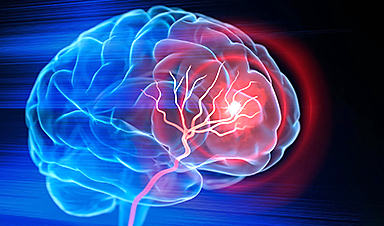
Biomedical engineers at Duke University have created an injectable biomaterial that may help the brain recover from damage left behind by an ischemic stroke. In experiments with mice, the material transformed the cavity created [...]
Scientists Discover a Hidden “Immune Organ” Inside the Skull
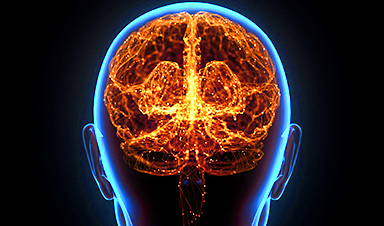
Researchers discovered lymph node-like immune hubs inside skull bone marrow that appear to act as rapid-response centers for the brain. For decades, the brain was thought to operate largely apart from the immune system. [...]

Engineered tRNAs and lipid nanoparticles target nonsense mutation cystic fibrosis
Researchers have developed a potential new approach for treating a form of cystic fibrosis caused by so-called nonsense mutations, combining chemically modified transfer RNAs with lipid nanoparticles designed to deliver the therapy directly to [...]
New pancreatic cancer drug carries a $39,800 monthly list price
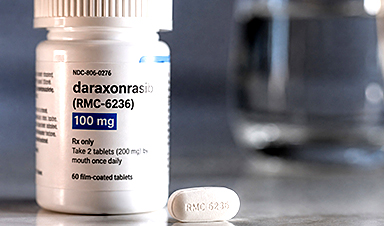
A groundbreaking treatment for one of the most common forms of pancreatic cancer has been approved in pill form by the FDA. Revolution Medicines’ oral tablet daraxonrasib, branded as Rasonque, reduced the risk of [...]
Researchers Have Discovered a New Way To Reduce Chronic Nerve Pain
A cancer-linked protein called BRAF may help drive chronic nerve pain, and existing cancer drugs targeting it reduced pain sensitivity in preclinical models. Chronic nerve pain can persist long after an injury and often [...]