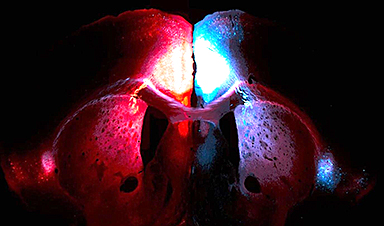
EPFL scientists report that briefly switching on three “reprogramming” genes in a small set of memory-trace neurons restored memory in aged mice and in mouse models of Alzheimer’s disease to level of healthy young animals.
Age-related memory decline and neurodegenerative diseases like Alzheimer’s are often thought of as irreversible. But the brain is not static; neurons continually adjust the strength of their connections, a property called “synaptic plasticity”, and this flexibility is the basis of memory and learning.
But aging and Alzheimer’s disrupt many cell processes that support synaptic plasticity. A key question is whether and how the affected cells can be helped to sustain their plasticity.
Memories are thought to rely on sparse groups of neurons called “engrams”, which become active during learning and reactivated during recall, forming part of the brain’s “memory trace”. In aged brains and animal models of Alzheimer’s disease, engrams can malfunction, and memory recall suffers.
A team led by Johannes Gräff at EPFL’s Brain Mind Institute asked whether rejuvenating these engram neurons could recover memory after decline has already begun? In a study published in Neuron, the team reports that “partial reprogramming” of engram neurons restores memory performance in multiple mouse settings. The approach uses a short, controlled pulse of three genes, Oct4, Sox2 and Klf4 referred together as “OSK”.
Previous studies have shown that carefully timed expression of these factors can reset several aging-related features in cells. Here, the team targeted OSK specifically at the engram neurons that are active during learning, rather than broadly across the entire brain.
Tagging and controlling OSK
Working on mice, the researchers used gene therapy vectors (adeno-associated viruses) delivered by precise brain injections. They combined two elements: a system that adds a fluorescent tag to neurons that are activated by learning, and a switch that briefly turns OSK on during a defined time window.
The team used their approach in brain areas known to support different kinds of memory: the dentate gyrus of the hippocampus, which is important for learning and recent recall, and the medial prefrontal cortex, which contributes to remote recall two weeks later.
Back to a younger state
In aged mice, briefly activating OSK in learning-related hippocampal engram neurons restored memory, essentially bringing performance back to levels seen in young controls. When the same approach was applied to prefrontal cortex engrams, it also recovered remote memories formed weeks earlier.
The reprogrammed engram neurons also showed signs of improved health. They maintained their neuronal identity and displayed molecular features associated with a younger state, including changes in nuclear structure linked to aging.
The team then tested mouse models of Alzheimer’s disease. In a spatial-learning task, the mice showed inefficient navigation and impaired memory strategies. Reprogramming dentate gyrus engrams improved learning strategies during training, while targeting prefrontal engrams restored long-term spatial memory.
Further analysis revealed that Alzheimer’s-related changes in gene activity and neuronal firing within engram cells were partly reversed by turning OSK on.
A proof of concept
The study stands as a proof of concept for restoring function in a specific group of memory-related neurons to improve memory performance, even after cognitive decline has begun. By limiting OSK expression to a small number of neurons and a short time window, the approach captures beneficial effects while reducing the risk of disrupting cell functions.
Other contributors
- EPFL Laboratory of Neuroepigenetics
- Synapsy Center for Mental Health Research
Funding
Synapsis/Dementia Research Switzerland Foundation
State Secretariat for Education, Research, and Innovation SERI
Swiss National Science Foundation (SNSF)
European Molecular Biology Organization (EMBO)
References
Gabriel Berdugo-Vega, Cesar Sierra, Simone Astori, Veronika Calati, Jules Orsat, Marianne Julie Scoglio, Carmen Sandi, Johannes Gräff. Cognitive rejuvenation through partial reprogramming of engram cells. Neuron 10 February 2026. DOI: 10.1016/j.neuron.2025.11.028

News
Too Much RNA Can Drain a Cell’s Energy, Scientists Discover
A virus may cripple a cell’s power supply simply by producing too much of a molecule the cell needs to survive. New research from the Texas A&M College of Veterinary Medicine and Biomedical Sciences [...]

West African scientists warn of weakening health systems and urge stronger outbreak detection
LOME, Togo (AP) — West African laboratory scientists called on governments Friday to strengthen capacity to detect disease outbreaks to avoid another major outbreak, saying health systems across the region are becoming weaker. Participants [...]

A Little-Known Protein Could Point to a New Way To Treat Alzheimer’s
A study suggests that increasing SORLA protein levels could help treat Alzheimer’s disease and other disorders involving tau protein. Increasing SORLA, a protein with a protective role in the brain, helped mice withstand damage [...]
Cancer’s Hidden Antioxidant Shield Helps It Escape the Immune System
Blocking an antioxidant protein that tumors use to suppress immune attacks improved cancer immunotherapy responses in mice. Cancer cells can release antioxidants that interfere with the immune cells trying to kill them. Researchers have [...]

Scientists Find a Berry Compound That Helps Muscle Cells Burn Fat
Pterostilbene, a compound found naturally in some foods, affects how skeletal muscles process fats by stabilizing a protein called PPARδ and increasing its signaling activity. Pterostilbene, a natural compound found in blueberries, grapes, and [...]
Two Hidden Forces Help Build the Human Brain Before Birth
Scientists have uncovered two surprising forces that help guide how the human brain forms before birth. Before birth, the human brain is shaped in large part by an unusual class of stem cells known [...]
Researchers Uncover a Hidden Trigger Behind Chronic Inflammation
The findings offer new insights that could help guide the development of future therapies. A protein called human resistin may help flip on one of the immune system’s most powerful inflammatory switches. Researchers at [...]
Scientists Have Uncovered Previously Hidden Microbial Activity on Human Skin
The most abundant microbes on your skin may not be the ones doing most of the work. Human skin supports vast communities of bacteria, fungi, and viruses that can influence its protective barrier, immune [...]
Brazilian Tree Compounds Fight COVID-19 on Multiple Fronts
Scientists found compounds in a Brazilian tree that hit SARS-CoV-2 on multiple fronts, revealing a promising new lead in the search for COVID-19 treatments. Researchers have found that galloylquinic acids extracted from the leaves [...]
Cutting Two Amino Acids Slowed Prostate Cancer in Mice
A newly identified link between amino acid metabolism and cholesterol production may help prostate tumors adapt to hormone therapy. Prostate cancer can find ways around treatments designed to deprive tumors of the hormones they [...]

Largest-Ever Physics Survey Raises New Doubts About Our Model of the Universe
Physicists around the world remain deeply divided on key mysteries of the universe, from dark matter to quantum gravity. The standard cosmological model failed to gain majority support, and no leading theory dominated the [...]

Scientists Just Overturned a 100-Year-Old Belief About Bacteria in the Lungs
New findings raise questions about the role of microbes living in the lungs. More than 35 trillion bacteria live throughout the human body, forming microbiomes in the gut, mouth, lungs, skin, and urogenital tract. [...]
GHCE Concept
From the preface of the book Global Health Care Equivalency in the Age of Nanotechnology, Nanomedicine and Artificial Intelligence, Edited by Frank Boehm: Since the publication of my first book (Nanomedical Device and Systems [...]

Novartis, Ionis drug failure spurs questions
Pelacarsen didn’t protect heart health despite lowering levels of a protein particle, “Lp(a),” in a large clinical trial — a result with important implications for cardiovascular drug research. Dive Brief: An RNA drug from [...]
New injectable treatment helps the brain rebuild after stroke
Biomedical engineers at Duke University have created an injectable biomaterial that may help the brain recover from damage left behind by an ischemic stroke. In experiments with mice, the material transformed the cavity created [...]
Scientists Discover a Hidden “Immune Organ” Inside the Skull
Researchers discovered lymph node-like immune hubs inside skull bone marrow that appear to act as rapid-response centers for the brain. For decades, the brain was thought to operate largely apart from the immune system. [...]