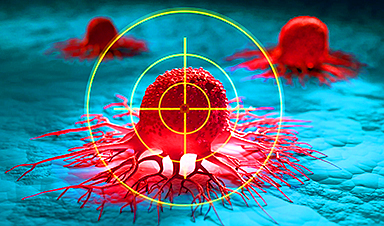
Researchers tested new CAR designs in NK-92 cells and found the modified cells killed tumor cells more effectively, showing stronger anti-cancer activity.
Researchers at the Ribeirão Preto Blood Center and the Center for Cell-Based Therapy (CTC) are exploring a key question in cancer immunotherapy: how to “wire” engineered natural killer (NK) cells so they respond faster and hit harder when they encounter a tumor.
Using the NK-92 cell line, the team tested new chimeric antigen receptor (CAR) designs that include specific costimulatory domains, such as 2B4 and DAP12. These domains act like internal activation circuits, shaping how strongly an NK cell ramps up its attack once the CAR recognizes a target.
In the experiments, adding 2B4 and DAP12 helped put the cells in a more aggressive state, making them “ready to attack” and improving their ability to destroy tumors. The results were published in Frontiers in Immunology.
The CTC is one of the Research, Innovation, and Dissemination Centers (RIDCs) funded by FAPESP. It operates within the Ribeirão Preto Blood Center and is affiliated with the general and teaching hospital (“Hospital das Clínicas”) of the Ribeirão Preto Medical School at the University of São Paulo (FMRP-USP).
Advancing CAR-NK Cell Design
CAR-based therapies have already changed outcomes for some cancers, especially hematological tumors, but most of what scientists know about the best internal signaling components comes from CAR-T cells. NK cells work differently, relying on a separate set of activation pathways, so translating CAR-T “recipes” to CAR-NK cells is not straightforward.
This study highlights how fine-tuning the costimulatory signals inside CAR-NK cells could make these therapies more potent and more consistent.
The researchers also explored a practical way to manage that power: temporary pharmacological control using dasatinib. Rather than permanently altering the cells, dasatinib was used as a short-term tool to modulate activation.
According to the Ribeirão Preto Blood Center Press Office, animal models showed that CAR-NK cells built with 2B4-DAP12 and pretreated with dasatinib achieved better tumor control than traditional versions. Together, the findings point toward CAR-NK treatments that are not only stronger, but also more controllable, which is a major goal for next-generation cell therapies.
DOI: 10.3389/fimmu.2025.1675877
Funding: São Paulo Research Foundation

News
Scientists Rewire Natural Killer Cells To Attack Cancer Faster and Harder
Researchers tested new CAR designs in NK-92 cells and found the modified cells killed tumor cells more effectively, showing stronger anti-cancer activity. Researchers at the Ribeirão Preto Blood Center and the Center for Cell-Based [...]
New “Cellular” Target Could Transform How We Treat Alzheimer’s Disease
A new study from researchers highlights an unexpected player in Alzheimer’s disease: aging astrocytes. Senescent astrocytes have been identified as a major contributor to Alzheimer’s progression. The cells lose protective functions and fuel inflammation, particularly in [...]

Treating a Common Dental Infection… Effects That Extend Far Beyond the Mouth
Successful root canal treatment may help lower inflammation associated with heart disease and improve blood sugar and cholesterol levels. Treating an infected tooth with a successful root canal procedure may do more than relieve [...]
Microplastics found in prostate tumors in small study
In a new study, researchers found microplastics deep inside prostate cancer tumors, raising more questions about the role the ubiquitous pollutants play in public health. The findings — which come from a small study of 10 [...]

All blue-eyed people have this one thing in common
All Blue-Eyed People Have This One Thing In Common Blue Eyes Aren’t Random—Research Traces Them Back to One Prehistoric Human It sounds like a myth at first — something you’d hear in a folklore [...]
Scientists reveal how exercise protects the brain from Alzheimer’s
Researchers at UC San Francisco have identified a biological process that may explain why exercise sharpens thinking and memory. Their findings suggest that physical activity strengthens the brain's built in defense system, helping protect [...]
NanoMedical Brain/Cloud Interface – Explorations and Implications. A new book from Frank Boehm
New book from Frank Boehm, NanoappsMedical Inc Founder: This book explores the future hypothetical possibility that the cerebral cortex of the human brain might be seamlessly, safely, and securely connected with the Cloud via [...]
Deadly Pancreatic Cancer Found To “Wire Itself” Into the Body’s Nerves
A newly discovered link between pancreatic cancer and neural signaling reveals a promising drug target that slows tumor growth by blocking glutamate uptake. Pancreatic cancer is among the most deadly cancers, and scientists are [...]
This Simple Brain Exercise May Protect Against Dementia for 20 Years
A long-running study following thousands of older adults suggests that a relatively brief period of targeted brain training may have effects that last decades. Starting in the late 1990s, close to 3,000 older adults [...]
Scientists Crack a 50-Year Tissue Mystery With Major Cancer Implications
Researchers have resolved a 50-year-old scientific mystery by identifying the molecular mechanism that allows tissues to regenerate after severe damage. The discovery could help guide future treatments aimed at reducing the risk of cancer [...]

This New Blood Test Can Detect Cancer Before Tumors Appear
A new CRISPR-powered light sensor can detect the faintest whispers of cancer in a single drop of blood. Scientists have created an advanced light-based sensor capable of identifying extremely small amounts of cancer biomarkers [...]
Blindness Breakthrough? This Snail Regrows Eyes in 30 Days
A snail that regrows its eyes may hold the genetic clues to restoring human sight. Human eyes are intricate organs that cannot regrow once damaged. Surprisingly, they share key structural features with the eyes [...]
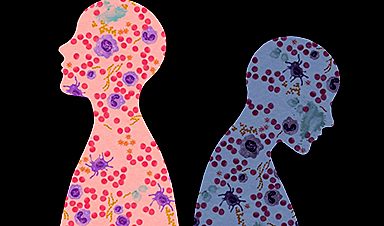
This Is Why the Same Virus Hits People So Differently
Scientists have mapped how genetics and life experiences leave lasting epigenetic marks on immune cells. The discovery helps explain why people respond so differently to the same infections and could lead to more personalized [...]
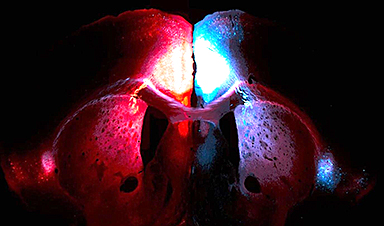
Rejuvenating neurons restores learning and memory in mice
EPFL scientists report that briefly switching on three “reprogramming” genes in a small set of memory-trace neurons restored memory in aged mice and in mouse models of Alzheimer’s disease to level of healthy young [...]
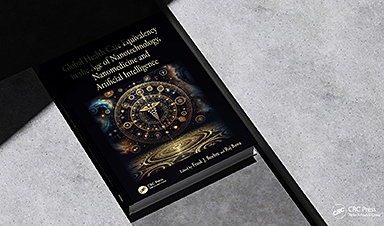
New book from Nanoappsmedical Inc. – Global Health Care Equivalency
A new book by Frank Boehm, NanoappsMedical Inc. Founder. This groundbreaking volume explores the vision of a Global Health Care Equivalency (GHCE) system powered by artificial intelligence and quantum computing technologies, operating on secure [...]
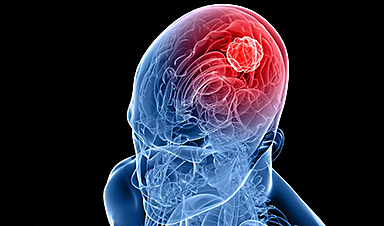
New Molecule Blocks Deadliest Brain Cancer at Its Genetic Root
Researchers have identified a molecule that disrupts a critical gene in glioblastoma. Scientists at the UVA Comprehensive Cancer Center say they have found a small molecule that can shut down a gene tied to glioblastoma, a [...]