Blue Eyes Aren't Random—Research Traces Them Back to One Prehistoric Human
It sounds like a myth at first — something you'd hear in a folklore tale rather than a genetics lab. Imagine millions of people, scattered across continents and centuries, all connected by a single genetic event. Not a migration. Not a war. Not a dynasty. Just a subtle shift in DNA that changed the color of their eyes.
Yet modern science suggests exactly that.
The Ancient Spark of Blue
For most of human history, brown eyes were the norm. High levels of melanin — the pigment responsible for coloring our skin, hair, and eyes — produced darker shades that dominated early populations. Then, sometime between 6,000 and 10,000 years ago, something changed.
A tiny mutation occurred in a region of DNA that controls melanin production in the iris. This wasn't a dramatic transformation, but more like a dimmer switch being gently turned down. Instead of producing rich brown pigmentation, the eyes developed lighter shades — blue, gray, even green.
Genetic research led by Hans Eiberg at the University of Copenhagen identified the key mechanism behind this shift. The mutation affects a regulatory area near the OCA2 gene — specifically within a neighboring gene called HERC2. Rather than creating a new pigment, the mutation simply reduces melanin production in the iris.
The result? Blue eyes.
One Mutation, Many Generations
What makes this discovery remarkable is not just the mutation itself — but its consistency. Blue-eyed individuals from vastly different regions share the same genetic haplotype. That means the DNA sequence surrounding this mutation is nearly identical across populations.
Researchers such as John Hawks of the University of Wisconsin–Madison have pointed out that this shared marker strongly suggests a single origin. The mutation appears to have happened once — in one individual — and was passed down through generations.
Unlike many genetic traits that evolve multiple times independently, this one seems to trace back to a single ancestor. Somewhere in prehistoric Eurasia, a child was born with eyes unlike any seen before. That child survived, had descendants, and unknowingly began a global lineage.
Why Blue? The Science Behind the Shade
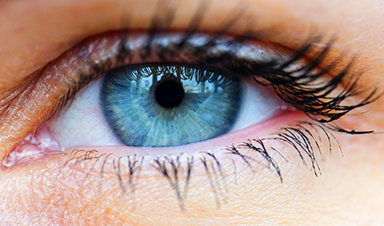
Interestingly, blue eyes don't actually contain blue pigment. The color results from the way light scatters in the iris when melanin levels are low — a phenomenon similar to why the sky appears blue. Less pigment allows shorter wavelengths of light to reflect outward, creating the blue appearance.
Because the mutation is relatively recent in evolutionary terms, there hasn't been enough time for major genetic reshuffling around it. That's why scientists can still detect its original signature thousands of years later.
As populations migrated, mixed, and formed new societies, the trait spread — particularly throughout Europe and parts of Western Asia. Environmental factors, genetic drift, and social selection may have influenced how common it became, but its origin remains singular.
More Than a Color
Eye color often feels personal. We read emotion, trust, and identity in someone's gaze. Artists and poets have long attached symbolism to blue eyes — mystery, calm, depth. But behind that symbolism lies a quiet biological story.
A mutation.
A survival.
A lineage that continues today.
What appears to be a simple cosmetic difference is actually a genetic echo from thousands of years ago.
Conclusion
The story of blue eyes is a reminder that humanity is more interconnected than we tend to realize. Beneath languages, borders, and cultures, our DNA carries shared chapters of an ancient narrative. The blue-eyed trait — born from a single mutation in one individual long ago — now links millions of people across the world.
In the end, when we look into someone's blue eyes, we're not just seeing a color. We're witnessing a fragment of human history — a subtle, living connection to an ancestor whose legacy still shines through generations.

News
Optogenetics Pioneers Win 2026 Nobel Prize in Physiology or Medicine
The 2026 Nobel Prize in Physiology or Medicine has been awarded to Peter Hegemann, Georg Nagel, and Karl Deisseroth for the development of optogenetics, a revolutionary technology that uses light to control individual neurons [...]

Molecular Manufacturing: The Future of Nanomedicine – From NanoappsMedical Inc.
This book explores the revolutionary potential of atomically precise manufacturing technologies to transform global healthcare, as well as practically every other sector across society. This forward-thinking volume examines how envisaged Factory@Home systems might enable the cost-effective [...]

What is ‘American Covid’ and how bad is it?
Cases of so-called ‘American Covid’ are on the rise in the UK. The strain is officially called XFG, or ‘Stratus’, and is the most common variant in North America, hence the name. It might soon [...]
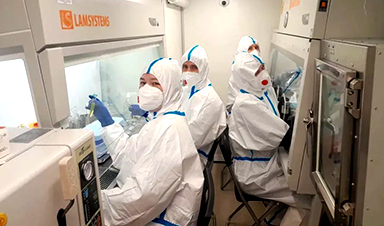
Researcher at Russian plague laboratory dies of ‘unknown’ infection
Russian authorities have imposed "anti-epidemic measures" after a laboratory worker at an institute in Siberia dedicated to studying the plague and other infectious diseases died of a mysterious illness. The researcher, a 28-year-old female [...]

GHCE Concept
From the preface of the book Global Health Care Equivalency in the Age of Nanotechnology, Nanomedicine and Artificial Intelligence, Edited by Frank Boehm: Since the publication of my first book (Nanomedical Device and Systems [...]

A Surprising Brain Signal Could Explain Why Eating Less Protein Extends Lifespan
A new paper suggests that limiting protein intake triggers a coordinated response throughout the body that may help explain how protein restriction affects healthy aging. Animals respond to protein restriction, or reduced protein in [...]

Back and shoulder surgery is often worse than useless
Millions of operations should be scrapped SIX IN TEN Britons have surgery at some point. So do lots of Americans, at a cost of perhaps $500bn a year, a third of all spending on [...]
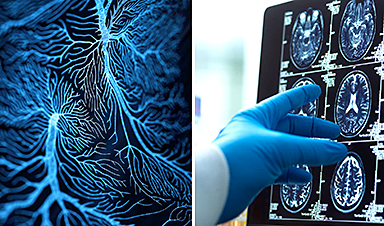
Cocaine plays with mind, hijacks brain circuit, drives increasingly rigid and repetitive behavior
Researchers have found that cocaine hijacks brain circuit, which to drive increasingly rigid and repetitive behavior. The brain circuit that normally participates in selecting natural mouth and face movements, but which becomes disproportionately engaged [...]
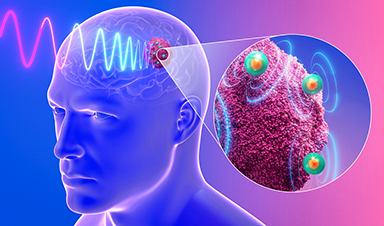
Injectable nanodevices could provide effective treatment for drug-resistant glioblastoma
The brain cancer glioblastoma is one of the most aggressive and treatment-resistant cancers known to medicine, carrying a median survival of just 12-15 months, even with the best available care. Now, researchers at the [...]
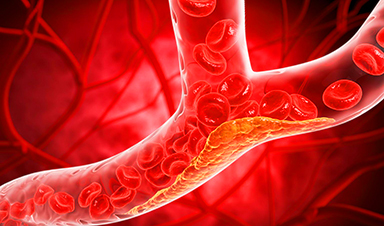
New Treatment Cuts “Bad” Cholesterol in Half for a Full Year
A single infusion of an experimental CRISPR-Cas9 therapy was reported to safely lower LDL cholesterol by 52.5% and triglycerides by 47.8%, as measured 12 months after treatment. What if one infusion could keep cholesterol [...]
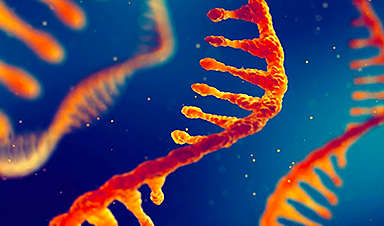
Too Much RNA Can Drain a Cell’s Energy, Scientists Discover
A virus may cripple a cell’s power supply simply by producing too much of a molecule the cell needs to survive. New research from the Texas A&M College of Veterinary Medicine and Biomedical Sciences [...]

West African scientists warn of weakening health systems and urge stronger outbreak detection
LOME, Togo (AP) — West African laboratory scientists called on governments Friday to strengthen capacity to detect disease outbreaks to avoid another major outbreak, saying health systems across the region are becoming weaker. Participants [...]

A Little-Known Protein Could Point to a New Way To Treat Alzheimer’s
A study suggests that increasing SORLA protein levels could help treat Alzheimer’s disease and other disorders involving tau protein. Increasing SORLA, a protein with a protective role in the brain, helped mice withstand damage [...]
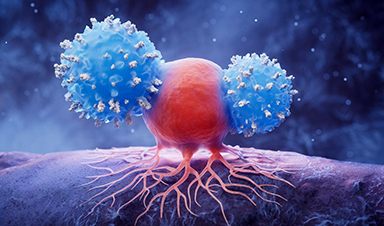
Cancer’s Hidden Antioxidant Shield Helps It Escape the Immune System
Blocking an antioxidant protein that tumors use to suppress immune attacks improved cancer immunotherapy responses in mice. Cancer cells can release antioxidants that interfere with the immune cells trying to kill them. Researchers have [...]

Scientists Find a Berry Compound That Helps Muscle Cells Burn Fat
Pterostilbene, a compound found naturally in some foods, affects how skeletal muscles process fats by stabilizing a protein called PPARδ and increasing its signaling activity. Pterostilbene, a natural compound found in blueberries, grapes, and [...]
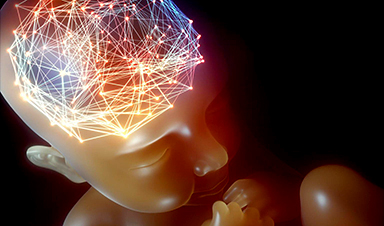
Two Hidden Forces Help Build the Human Brain Before Birth
Scientists have uncovered two surprising forces that help guide how the human brain forms before birth. Before birth, the human brain is shaped in large part by an unusual class of stem cells known [...]