Researchers at UC San Francisco have identified a biological process that may explain why exercise sharpens thinking and memory. Their findings suggest that physical activity strengthens the brain’s built in defense system, helping protect it from age related damage.
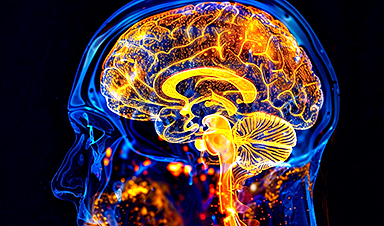
As people grow older, the blood-brain barrier becomes more fragile. This tightly packed network of blood vessels normally shields the brain from harmful substances circulating in the bloodstream. Over time, however, it can become leaky, allowing damaging compounds to enter brain tissue. The result is inflammation, which is linked to cognitive decline and is commonly seen in disorders such as Alzheimer’s disease.
Several years ago, the research team discovered that exercising mice produced higher levels of an enzyme called GPLD1 in their livers. GPLD1 appeared to rejuvenate the brain, but there was a mystery. The enzyme itself cannot cross into the brain, leaving scientists unsure how it delivered its cognitive benefits.
The new research provides an answer.
How GPLD1 Reduces Brain Inflammation
The scientists found that GPLD1 influences another protein known as TNAP. As mice age, TNAP builds up in the cells that form the blood-brain barrier. This buildup weakens the barrier and increases leakiness. When mice exercise, their livers release GPLD1 into the bloodstream. The enzyme travels to the blood vessels surrounding the brain and removes TNAP from the surface of those cells, helping restore the barrier’s integrity.
“This discovery shows just how relevant the body is for understanding how the brain declines with age,” said Saul Villeda, PhD, associate director of the UCSF Bakar Aging Research Institute.
Villeda is the senior author of the paper, which was published in the journal Cell on Feb. 18.
Pinpointing TNAP’s Role in Cognitive Decline
To determine how GPLD1 exerts its effects, the team focused on what the enzyme does best. GPLD1 cuts specific proteins from the surface of cells. Researchers searched for tissues containing proteins that could serve as targets and suspected that some of these proteins might accumulate with age.
Cells in the blood-brain barrier stood out because they carried several possible GPLD1 targets. When the scientists tested these proteins in the lab, only one was trimmed by GPLD1: TNAP.
Further experiments confirmed TNAP’s importance. Young mice genetically modified to produce excess TNAP in the blood-brain barrier showed memory and cognitive problems similar to those seen in older animals.
When researchers reduced TNAP levels in 2-year-old mice — which are the equivalent of 70 human years — the blood-brain barrier became less permeable, inflammation decreased, and the animals performed better on memory tests.
“We were able to tap into this mechanism late in life, for the mice, and it still worked,” said Gregor Bieri, PhD, a postdoctoral scholar in Villeda’s lab and co-first author of the study.
Implications for Alzheimer’s and Brain Aging
The findings suggest that developing medications capable of trimming proteins such as TNAP could offer a new strategy to restore the blood brain barrier, even after it has been weakened by aging.
“We’re uncovering biology that Alzheimer’s research has largely overlooked,” Villeda said. “It may open new therapeutic possibilities beyond the traditional strategies that focus almost exclusively on the brain.”
Authors: Other UCSF authors are Karishma Pratt, PhD; Yasuhiro Fuseya, MD, PhD; Turan Aghayev, MD; Juliana Sucharov; Alana Horowitz, PhD; Amber Philp, PhD; Karla Fonseca-Valencia, degree; Rebecca Chu; Mason Phan; Laura Remesal, PhD; Andrew Yang, PhD; and Kaitlin Casaletto, PhD. For all authors, see the paper.
Funding: The study was supported in part by National Institutes of Health (AG081038, AG086042, AG082414, AG077770, AG067740, P30 DK063720); Simons Foundation; Bakar Family Foundation; Cure Alzheimer’s Fund; Hillblom Foundation; Glenn Foundation; JSPS; Japanese Biochemistry Postdoctoral Fellowship; Multiple Sclerosis Foundation; Frontiers in Medical Research; American Federation for Aging Research; National Science Foundation; Bakar Aging Research Institute; Marc and Lynne Benioff.

News
Popular Vitamin B3 Supplements May Help Cancer Cells Survive, Scientists Warn
A new study raises important questions about widely used NAD+ supplements, suggesting that compounds often taken to boost energy and support healthy aging may have unintended consequences in cancer treatment. Millions of Americans take [...]
Scientists Discover Cancer Tumors Are “Addicted” to This Common Antioxidant
Cancer cells may be exploiting a common antioxidant as fuel, revealing a potential weakness that future therapies could target. Cancer cells may be tapping into an unexpected energy source: an antioxidant long associated with [...]
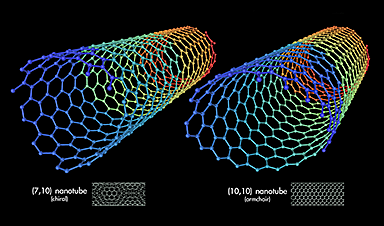
Nanotube injector transfers cytoplasmic contents and organelles between living cells safely
Cells are not isolated units; they continuously exchange proteins, genetic material, and even entire organelles with their neighbors. Intercellular transfer influences how tissues develop, respond to stress, and repair damage. In certain cancers, for [...]
CEO of America’s largest public hospital system is ready to replace radiologists with AI
The chief executive of America’s largest public hospital system says he is prepared to start replacing radiologists with artificial intelligence in some circumstances, once the regulatory landscape catches up. Mitchell H. Katz, MD, president [...]
Our books now available worldwide!
Online Sellers other than Amazon, Routledge, and IOPP Indigo Global Health Care Equivalency in the Age of Nanotechnology, Nanomedicine and Artifcial Intelligence Global Health Care Equivalency In The Age Of Nanotechnology, Nanomedicine And Artificial [...]

Study finds higher heart disease risk in long COVID patients
People with long COVID are at increased risk of developing cardiovascular disease, according to a new study from Karolinska Institutet published in eClinicalMedicine. The results show that the risk of conditions such as cardiac arrhythmias [...]
The Corona variant Cicada is here – we know that
Online and on social media, reports are piling up about a new Sars-Cov-2 variant that is currently on the rise: BA.3.2, also known as Cicada. That's what it's all about: The Omicron variant BA.3.2, [...]
A Simple Blood Test Could Predict Dementia Risk 25 Years Early
A single blood marker may quietly signal dementia risk decades in advance. Scientists at the University of California, San Diego, have identified a blood signal that could forecast dementia risk decades before symptoms begin. Their [...]
Sperm Get Lost in Space and Scientists Finally Know Why
Having a baby in space may be far more complicated than expected, as new research shows sperm struggle to find their way in microgravity. Starting a family beyond Earth could be more complicated than [...]
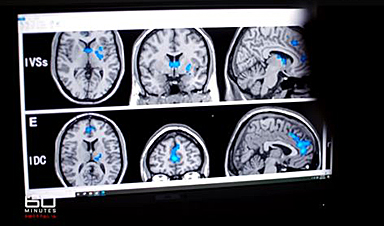
Digital Dementia – Brain fog and disassociation from being chronically online
New medical evidence, featured on 60 Minutes Australia, indicates excessive screen time is causing "digital dementia" in young Australians, with brain scans showing physical shrinkage and damage. Experts warn that high device usage (6-8 hours [...]
A new, highly mutated COVID variant called ‘Cicada’ is spreading in the US.
BA.3.2, a heavily mutated new COVID-19 variant which may be better able to escape immunity from vaccines or prior infection, is now spreading in the United States. Although COVID cases are currently low nationally, [...]
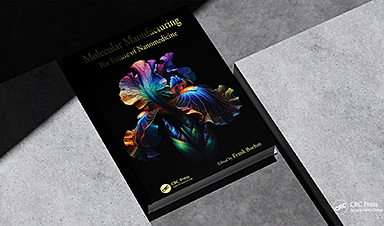
Molecular Manufacturing: The Future of Nanomedicine – New book from NanoappsMedical Inc.
This book explores the revolutionary potential of atomically precise manufacturing technologies to transform global healthcare, as well as practically every other sector across society. This forward-thinking volume examines how envisaged Factory@Home systems might enable the cost-effective [...]

Ancient bacteria strain discovered in ice cave is resistant to some modern antibiotics
In the depths of Scarisoara cave in Romania sits one of the world’s biggest underground glaciers, a monumental slab of ice the size of roughly 40 Olympic swimming pools that began to form around [...]

Scientists Identify “Good” Bacteria That May Prevent Long COVID
According to the WHO, about 6% of people worldwide who get COVID-19, roughly 400 million people, later develop a long-lasting form of the illness. That shows the condition remains a significant public health challenge. In [...]
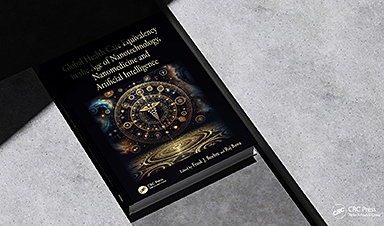
New book from Nanoappsmedical Inc. – Global Health Care Equivalency
A new book by Frank Boehm, NanoappsMedical Inc. Founder. This groundbreaking volume explores the vision of a Global Health Care Equivalency (GHCE) system powered by artificial intelligence and quantum computing technologies, operating on secure [...]
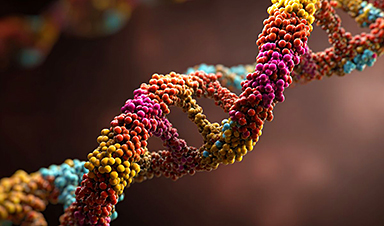
RNA Recycling Extends Lifespan
Summary: Researchers discovered a biological “trash disposal” mechanism that directly controls how fast we age. While circular RNA has long been known to accumulate in cells as we get older, this study proves for the [...]