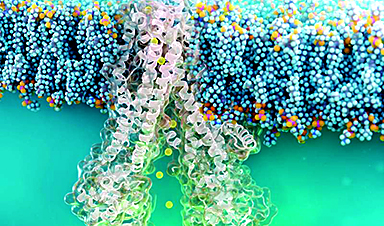
A tiny antibody component could fundamentally transform the treatment of cystic fibrosis: For the first time, researchers have succeeded in developing a so-called nanobody that penetrates directly into human cells and can repair the chloride channel most commonly affected in cystic fibrosis. The innovative therapeutic approach was developed in collaboration between teams from Charité—Universitätsmedizin Berlin and the Leibniz-Forschungsinstitut für Molekulare Pharmakologie (FMP). The results have now been published in the journal Nature Chemical Biology.
The clinical picture of cystic fibrosis—also known as CF—is caused by genetic defects in the so-called CFTR channel. This channel regulates water and salt transport in the lung mucosa and ensures the production of sufficiently fluid mucus. In about 90% of cystic fibrosis patients, a mutation known as F508del is present in the CFTR channel, meaning that a single amino acid is missing at position 508 in its protein chain. This change causes CFTR to fold incorrectly and break down prematurely inside the cell, rather than functioning as a channel in the cell membrane of the airways.
As a result, patients have thick mucus in their lungs, and pathogens can no longer be effectively cleared. The consequence is chronic infection and inflammation of the airways, leading to a progressive loss of lung function—in the worst-case scenario, this necessitates a lung transplant.
Prof. Marcus Mall, Director of the Department of Pediatric Respiratory Medicine, Immunology and Critical Care Medicine at Charité, has, together with his team, made a significant contribution in recent years to noticeably improving the treatment of cystic fibrosis through therapy with three small-molecule drugs (CFTR modulators): With the help of the so-called triple therapy consisting of elexacaftor, tezacaftor, and ivacaftor (ETI), the function of the CFTR channel can be increased to about 50% of the normal level. However, chronic inflammation and infection of the lungs often persist, and there are also patients for whom this therapy is ineffective or who cannot tolerate it.
An antibody as a repair aid
There may be additional treatment options for this group in the future: The team led by chemist Prof. Christian Hackenberger at the Leibniz-FMP has developed a new molecule in the lab that stabilizes the misfolded CFTR directly inside the cell. This is a nanobody—a tiny but stable antibody component that can bind precisely to defined surfaces of proteins. It is chemically modified with a “transport signal,” known as cell-penetrating peptides, which help it penetrate directly into the lung’s mucosal cells. There, the nanobody binds to the defective channel protein and helps it adopt the correct shape.
The researchers were able to demonstrate that the nanobody remained bound to the mutated CFTR channel in cells derived from cystic fibrosis patients for at least 24 hours. It did not damage the cells in the process. Functional studies also confirmed that the corrected channel once again transported chloride across the cell membrane.
Combination of triple therapy and nanobody
In combination with the established ETI triple therapy, the nanobody demonstrates a pronounced synergistic effect in these cell cultures: While the ETI agents restored the function of the defective CFTR channel by about half on average, the channel activity could be increased to nearly 90% of normal levels through the additional administration of the nanobody.
The study thus demonstrates that exogenously administered cell-penetrating nanobodies can stabilize disease-relevant, misfolded proteins inside cells and restore their function. “In addition to the preclinical proof of concept for repairing the CFTR channel, this is the first example of a functional cell-permeable antibody: Until now, cell-permeable nanobodies have primarily been used to visualize intracellular target structures or for the targeted killing of cells,” says Hackenberger.
“Since the nanobodies bind directly in the region of the F508del mutation, they enable even more targeted treatment of the maturation defect in CFTR channels,” says Mall.
“This new mechanism of action allows CFTR function to be corrected significantly better in combination with existing CFTR modulators. Our results suggest that this new approach may even enable complete normalization of CFTR function. This would be another breakthrough for the treatment of cystic fibrosis.” This work opens up new possibilities for further improving the treatment of cystic fibrosis—while also laying the groundwork for broader therapeutic applications.
However, key questions must still be resolved before the approach can be applied clinically to cystic fibrosis, such as developing a suitable formulation for inhalation and ensuring efficient penetration of the viscous CF mucus. Furthermore, it remains unclear how the nanobody acts within the body and how the immune system reacts to nanobody treatment. These challenges are currently being addressed within Collaborative Research Center 1449 “Dynamic Hydrogels at Biointerfaces,” within the framework of which the current results were also generated.
The approach of intracellular nanobody therapy could also be helpful beyond cystic fibrosis for other rare genetic diseases in which protein misfolding plays a role and for which there are currently few effective treatments.
Publication details
Luise Franz et al, A cell-permeable nanobody to restore F508del cystic fibrosis transmembrane conductance regulator activity, Nature Chemical Biology (2026). DOI: 10.1038/s41589-026-02199-w
Journal information: Nature Chemical Biology

News – Curated by Amanda Scott, Alias Group Creative
Follow her on Bluesky
Scientists Discover Aspirin May Slash Dementia Risk by 70% – but Only for Certain People
Aspirin was linked to a sharply lower dementia risk in some older adults, and their genes may hold the clue. A Monash University analysis found that older adults with a particular genetic profile had [...]
Inflammation May Awaken Dormant Cancer Cells Years After Treatment
The body’s response to inflammation may disturb cancer cells that have been lying silent for years, giving them an opportunity to grow again. Researchers at the Francis Crick Institute have found that gut inflammation [...]

Where do nanoparticles go once they enter the body?
New international best practice guidance, co-written at ANSTO, sets out how to measure where nanoparticles like titanium dioxide end up in the body and how long they remain. The guidance has been shared by [...]
Long-Acting HIV Shots Could Solve a Major Treatment Challenge for Young People
A major African trial suggests that changing how HIV treatment is delivered could significantly improve viral suppression in adolescents. Young people with HIV were more likely to keep the virus suppressed when they received [...]

WHO Factsheets – The top 10 causes of death
In 2023, the 10 leading causes of death accounted for 33 million deaths, or 54% of the total 61 million deaths worldwide. The top global causes of death, in order of total number of lives lost, [...]
Aging Cells May Be Hiding From the Immune System – Scientists Think They Know How
Your immune system is supposed to clear out damaged cells. Researchers may have found how some of them hide and linger as the body ages. Researchers led by Cedars-Sinai Health Sciences University have identified [...]

Your Voice May Reveal How Fast Your Brain Is Aging
Researchers have developed a machine-learning “speech clock” that estimates age from subtle patterns in how people speak and what they say. It is possible that people’s voices may contain certain signals of aging that [...]
Optogenetics Pioneers Win 2026 Nobel Prize in Physiology or Medicine
The 2026 Nobel Prize in Physiology or Medicine has been awarded to Peter Hegemann, Georg Nagel, and Karl Deisseroth for the development of optogenetics, a revolutionary technology that uses light to control individual neurons [...]
Molecular Manufacturing: The Future of Nanomedicine – From NanoappsMedical Inc.
This book explores the revolutionary potential of atomically precise manufacturing technologies to transform global healthcare, as well as practically every other sector across society. This forward-thinking volume examines how envisaged Factory@Home systems might enable the cost-effective [...]
What is ‘American Covid’ and how bad is it?
Cases of so-called ‘American Covid’ are on the rise in the UK. The strain is officially called XFG, or ‘Stratus’, and is the most common variant in North America, hence the name. It might soon [...]
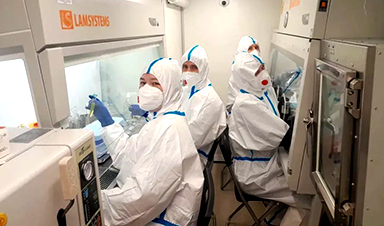
Researcher at Russian plague laboratory dies of ‘unknown’ infection
Russian authorities have imposed "anti-epidemic measures" after a laboratory worker at an institute in Siberia dedicated to studying the plague and other infectious diseases died of a mysterious illness. The researcher, a 28-year-old female [...]
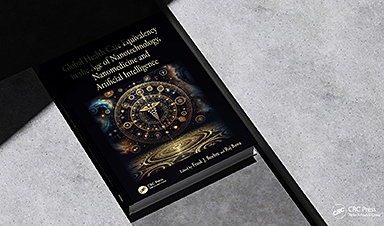
GHCE Concept
From the preface of the book Global Health Care Equivalency in the Age of Nanotechnology, Nanomedicine and Artificial Intelligence, Edited by Frank Boehm: Since the publication of my first book (Nanomedical Device and Systems [...]

A Surprising Brain Signal Could Explain Why Eating Less Protein Extends Lifespan
A new paper suggests that limiting protein intake triggers a coordinated response throughout the body that may help explain how protein restriction affects healthy aging. Animals respond to protein restriction, or reduced protein in [...]

Back and shoulder surgery is often worse than useless
Millions of operations should be scrapped SIX IN TEN Britons have surgery at some point. So do lots of Americans, at a cost of perhaps $500bn a year, a third of all spending on [...]
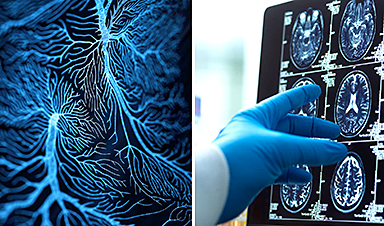
Cocaine plays with mind, hijacks brain circuit, drives increasingly rigid and repetitive behavior
Researchers have found that cocaine hijacks brain circuit, which to drive increasingly rigid and repetitive behavior. The brain circuit that normally participates in selecting natural mouth and face movements, but which becomes disproportionately engaged [...]
Injectable nanodevices could provide effective treatment for drug-resistant glioblastoma
The brain cancer glioblastoma is one of the most aggressive and treatment-resistant cancers known to medicine, carrying a median survival of just 12-15 months, even with the best available care. Now, researchers at the [...]