Neurobots—xenobots with neurons—show self-organized nervous systems and enhanced behaviors, revealing new insights into how biology builds functional structures.
In 2020, researchers at Tufts University developed tiny living structures known as xenobots using frog cells. These microscopic organisms could move through water, repair themselves, and even gather loose cells to form new xenobots.
Scientists at Tufts and the Wyss Institute have now pushed this work further by introducing nerve cells into these biological machines. The upgraded versions, called neurobots, can take on different shapes and display new patterns of movement. The findings were recently published in Advanced Science.
Led by Michael Levin, Vannevar Bush Professor of Biology, and Haleh Fotowat of the Wyss Institute, the research is part of a broader effort to understand how groups of cells organize themselves into complex structures under unfamiliar conditions. This knowledge could support advances in synthetic biology and regenerative medicine. Studying neurobots may reveal the underlying rules that guide how nervous systems form, which could eventually help scientists design new biological structures or repair damaged tissues.
Building Living Systems from Frog Cells
The team began with cells taken from early embryos of the African clawed frog, Xenopus laevis. When precursor skin cells from these embryos are isolated and placed in a dish, they naturally assemble into small, round structures covered in tiny hair-like projections called cilia.
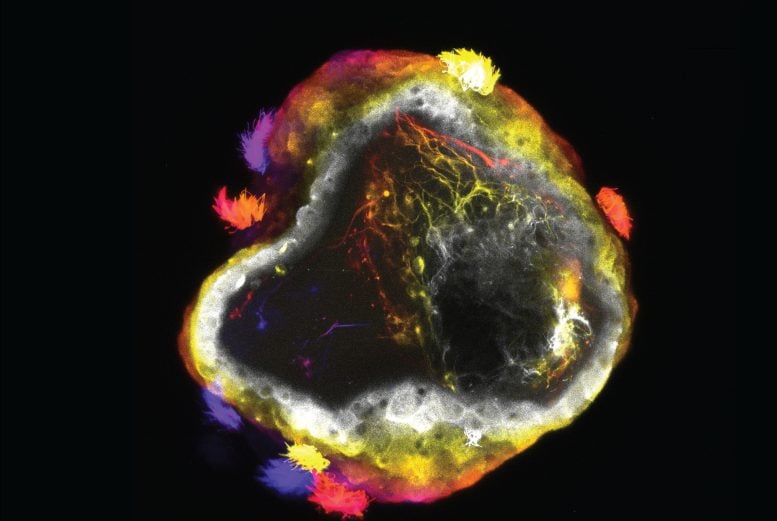
The coordinated motion of these cilia allows xenobots, a type of biobot, to swim through water. They are entirely biological and are created without scaffolds or genetic modification. These organisms can heal themselves and survive for about 9 to 10 days using nutrients stored in the original embryonic cells. Researchers had already studied their structure and behavior and wanted to see how adding neurons would change them, especially since these systems have no evolutionary history shaping their neural organization.
Adding Neurons: Creating Neurobots
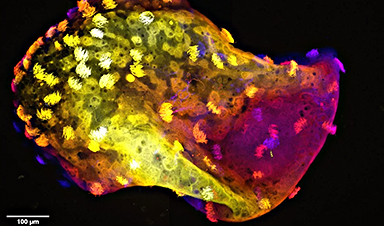
To produce neurobots, scientists inserted clusters of neural precursor cells, which later develop into neurons, into the center of forming biobots. This was done during a brief stage when the spherical structures were still developing. The implanted cells matured and extended branching structures known as axons and dendrites throughout the interior and toward the surface.
“We wanted to find out what would happen if we provided these biobots with the raw materials needed to build a nervous system,” said Levin, director of the Allen Discovery Center at Tufts. He explained that neurobots offer a new way to study how neurons organize themselves and influence movement. “This approach is different because you now have a system with a biological body that can exhibit behavior,” said Levin.
Fotowat said the work also aims to uncover the basic principles behind how nervous systems form. “I’ve tried to understand neuronal behavior in existing animals like zebrafish and how they give rise to behavior, but neurobots are about reverse engineering. Can we build a nervous system from the start? What happens if you put neurons in a completely novel context? What are the basic, innate rules for them to organize and form networks?”
Neural Activity and Structural Changes
Microscopy showed that neurons within the neurobots developed key features found in natural nervous systems, including axons and dendrites. Researchers also detected protein markers linked to synapses, where neurons communicate. Using calcium imaging, they confirmed that these neurons were electrically active and functioning within simple neural networks.
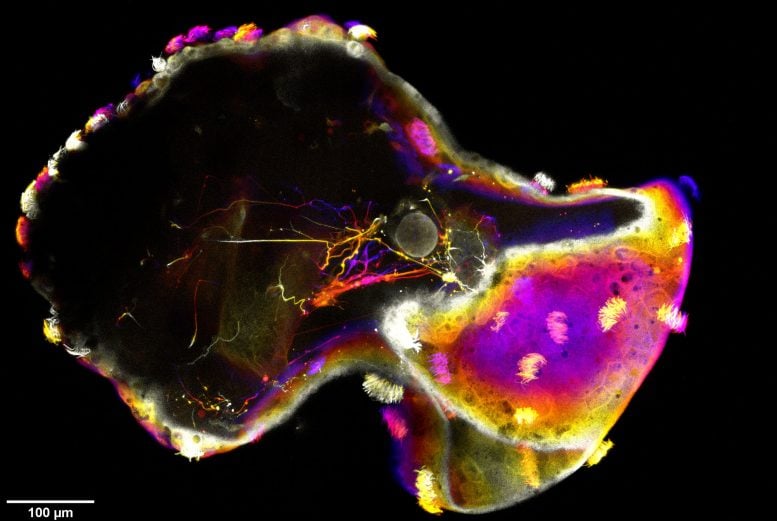
The addition of neurons led to noticeable changes. Neurobots were generally larger and more elongated than their non-neural counterparts. Their movement also became more complex. While both types could swim, neurobots were more active and displayed repeating movement patterns instead of simple paths.
To examine how neural activity influenced behavior, scientists exposed the neurobots to pentylenetetrazole, a drug known to affect brain activity and trigger seizures. The drug altered the movement of neurobots differently than it did in non-neural biobots, suggesting that the newly formed neural networks were actively shaping behavior. This result shows that even simple, self-organized neural systems can affect how these living constructs move.
Unexpected Genetic Activity and Future Possibilities
“If you’re trying to build something new with biology, we first have to learn how cells themselves solve problems,” said Fotowat.
Researchers also observed unexpected gene activity. In addition to genes linked to major brain receptors, they found activation of genes involved in visual processing, including those associated with light-sensitive cells found in eyes. This raises the possibility that neurobots could eventually respond to light.
“We don’t know, but my hypothesis is that these neurobots are up-regulating parts of the genome that could be useful for novel functions down the line,” said Levin. “If they lived longer, would they then also develop photoreceptors? It’s a fascinating question that we are actively studying.”
Reference: “Engineered Living Systems With Self-Organizing Neural Networks: From Anatomy to Behavior and Gene Expression” by Haleh Fotowat, Laurie O’Neill, Léo Pio-Lopez, Megan M. Sperry, Patrick Erickson, Tiffany Lin and Michael Levin, 20 February 2026, Advanced Science.
DOI: 10.1002/advs.202508967
This study was funded by the U.S. Department of Defense, the John Templeton Foundation, and Northpond Ventures.

News – Curated by Amanda Scott, Alias Group Creative
Follow her on Bluesky
Your Bones May Hold a Hidden Clue to Blood Cancer Survival
For people with blood cancers called myelodysplastic syndromes, osteoporosis may hold an overlooked clue to survival, a three-year observational study suggests. In blood cancers that develop in the bone marrow, an important clue to [...]

Researchers Discover What Reading for Pleasure May Be Doing to Your Brain
Reading for pleasure may offer surprising benefits for the brain, with research linking the habit to better mental health, stronger cognitive abilities, and a lower risk of dementia. Reading for pleasure may do far [...]
Scientists Discover a Hidden Trigger That Keeps Inflammation Alive
Inflammation persists after proteins detach from immune receptors, revealing a potential target for autoimmune treatments. Since a Nobel Prize-winning discovery in the 1990s identified molecules called Toll-like Receptors as the guardians of the human [...]
A Virus Gives Itself Away the Moment It Attacks
Researchers have found the trigger behind a powerful bacterial defense against viruses. Viruses that prey on bacteria could become an increasingly important tool for treating bacterial infections, particularly as antibiotic resistance makes some infections [...]

Scientists Discover Aspirin May Slash Dementia Risk by 70% – but Only for Certain People
Aspirin was linked to a sharply lower dementia risk in some older adults, and their genes may hold the clue. A Monash University analysis found that older adults with a particular genetic profile had [...]
Inflammation May Awaken Dormant Cancer Cells Years After Treatment
The body’s response to inflammation may disturb cancer cells that have been lying silent for years, giving them an opportunity to grow again. Researchers at the Francis Crick Institute have found that gut inflammation [...]
Where do nanoparticles go once they enter the body?
New international best practice guidance, co-written at ANSTO, sets out how to measure where nanoparticles like titanium dioxide end up in the body and how long they remain. The guidance has been shared by [...]
Long-Acting HIV Shots Could Solve a Major Treatment Challenge for Young People
A major African trial suggests that changing how HIV treatment is delivered could significantly improve viral suppression in adolescents. Young people with HIV were more likely to keep the virus suppressed when they received [...]

WHO Factsheets – The top 10 causes of death
In 2023, the 10 leading causes of death accounted for 33 million deaths, or 54% of the total 61 million deaths worldwide. The top global causes of death, in order of total number of lives lost, [...]
Aging Cells May Be Hiding From the Immune System – Scientists Think They Know How
Your immune system is supposed to clear out damaged cells. Researchers may have found how some of them hide and linger as the body ages. Researchers led by Cedars-Sinai Health Sciences University have identified [...]

Your Voice May Reveal How Fast Your Brain Is Aging
Researchers have developed a machine-learning “speech clock” that estimates age from subtle patterns in how people speak and what they say. It is possible that people’s voices may contain certain signals of aging that [...]

Optogenetics Pioneers Win 2026 Nobel Prize in Physiology or Medicine
The 2026 Nobel Prize in Physiology or Medicine has been awarded to Peter Hegemann, Georg Nagel, and Karl Deisseroth for the development of optogenetics, a revolutionary technology that uses light to control individual neurons [...]
Molecular Manufacturing: The Future of Nanomedicine – From NanoappsMedical Inc.
This book explores the revolutionary potential of atomically precise manufacturing technologies to transform global healthcare, as well as practically every other sector across society. This forward-thinking volume examines how envisaged Factory@Home systems might enable the cost-effective [...]

What is ‘American Covid’ and how bad is it?
Cases of so-called ‘American Covid’ are on the rise in the UK. The strain is officially called XFG, or ‘Stratus’, and is the most common variant in North America, hence the name. It might soon [...]
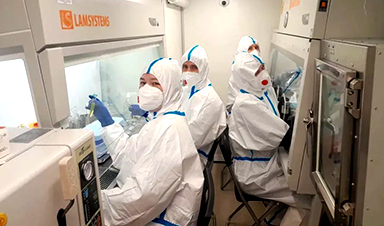
Researcher at Russian plague laboratory dies of ‘unknown’ infection
Russian authorities have imposed "anti-epidemic measures" after a laboratory worker at an institute in Siberia dedicated to studying the plague and other infectious diseases died of a mysterious illness. The researcher, a 28-year-old female [...]

GHCE Concept
From the preface of the book Global Health Care Equivalency in the Age of Nanotechnology, Nanomedicine and Artificial Intelligence, Edited by Frank Boehm: Since the publication of my first book (Nanomedical Device and Systems [...]