KAIST scientists have created a fast-acting, stable powder hemostat that stops bleeding in one second and could significantly improve survival in combat and emergency medicine.
Severe blood loss remains the primary cause of death from combat injuries. To address this challenge, a research team at KAIST that included an active duty Army Major set out to develop a faster and more reliable way to stop bleeding.
Their work led to a next-generation powder-type hemostatic agent that can halt bleeding within one second when sprayed directly onto a wound, offering a potential breakthrough for saving lives on the battlefield.
A spray-on solution in seconds
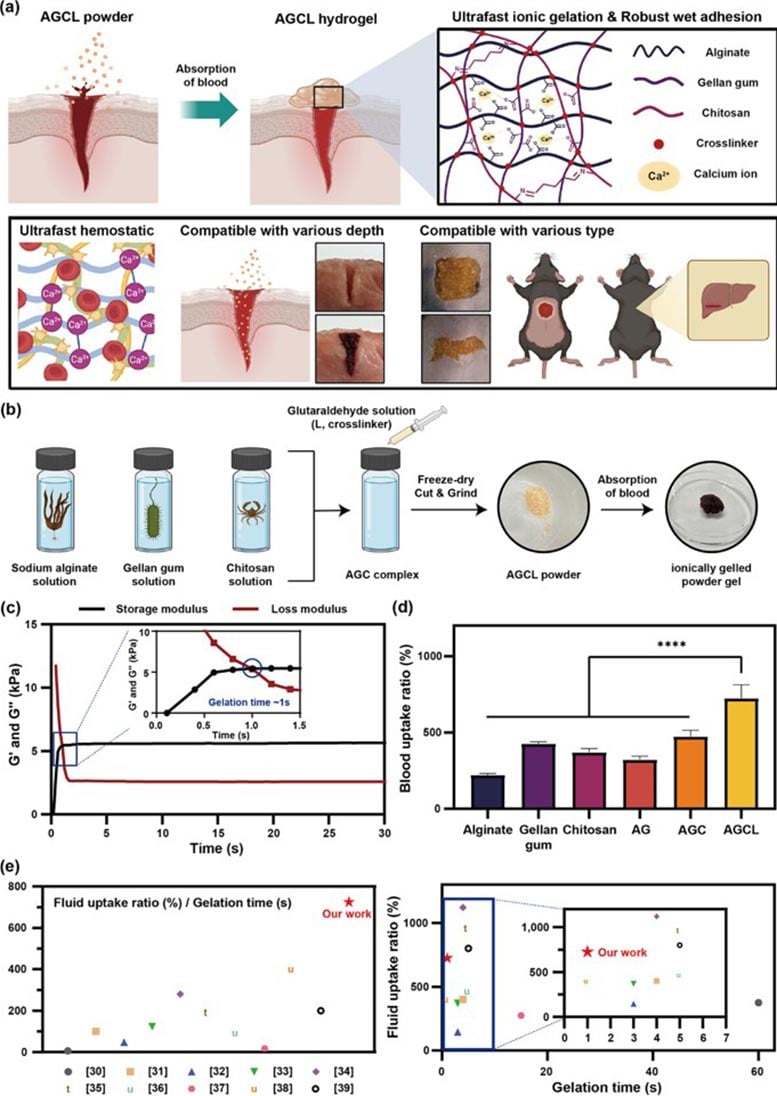
On December 29th, KAIST announced that a joint team led by Professor Steve Park of the Department of Materials Science and Engineering and Professor Sangyong Jon of the Department of Biological Sciences had created a powder based hemostatic agent that rapidly forms a strong hydrogel barrier. When applied to an injured area, the material transforms within about one second, sealing the wound almost immediately.
The researchers designed the technology with real combat conditions in mind, and the direct involvement of an Army Major helped ensure its practical readiness. The agent hardens instantly even in harsh environments such as battlefields and disaster zones, and its stability during storage allows it to be deployed quickly for emergency treatment.
Why existing hemostats fall short
Traditional patch-type hemostatic products commonly used in medicine struggle to treat deep or irregular wounds because of their flat shape. These materials are also sensitive to heat and moisture, which limits how easily they can be stored and used in demanding settings.
To overcome these limitations, the KAIST team developed the hemostatic agent in a powder form that can be applied to wounds of many shapes and sizes, including those that are deep or uneven. A single formulation can be used across a wide range of injury types, improving flexibility in emergency care.
Existing powder hemostatic agents had limits in hemostatic capability as they functioned by physically absorbing blood to form a barrier. To solve this problem, the research team focused on the ionic reactions within the blood.
The 'AGCL powder' developed this time has a structure that combines biocompatible natural materials such as Alginate and Gellan Gum (which react with calcium for ultra-fast gelation and physical sealing) and Chitosan (which bonds with blood components to enhance chemical and biological hemostasis). It reacts with cations such as calcium in the blood to turn into a gel state in one second, instantly sealing the wound.
Strength, safety, and regeneration
Furthermore, by forming a three-dimensional structure inside the powder, it can absorb blood amounting to more than 7 times its own weight (725%). Due to this, it quickly blocks blood flow even in high-pressure and excessive bleeding situations, and showed superior sealing performance compared to commercial hemostatic agents with a high adhesive strength of over '40kPa', a level of pressure that can withstand being pressed strongly by hand.
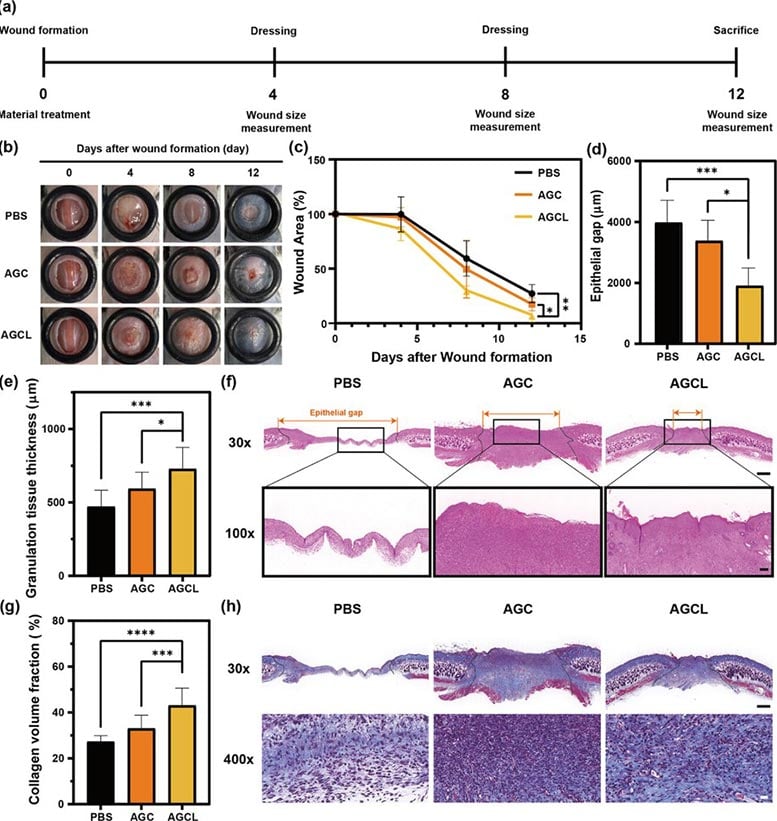
AGCL powder is composed entirely of naturally derived materials, showing a hemolysis rate of less than 3%, a cell viability rate of over 99%, and an antibacterial effect of 99.9%, making it safe even when in contact with blood. In animal experiments, excellent tissue regeneration effects such as rapid wound recovery and promotion of blood vessel and collagen regeneration were confirmed.
Proven performance under stress
In surgical liver injury experiments, the amount of bleeding and hemostasis time were significantly reduced compared to commercial hemostatic agents, and liver function recovered to normal levels two weeks after surgery. No abnormal findings were observed in systemic toxicity evaluations.
In particular, this hemostatic agent maintains its performance for two years even in room temperature and high humidity environments, possessing the advantage of being ready for immediate use in harsh environments such as military operation sites or disaster areas.
From defense research to civilian care
Although this research is an advanced new material technology developed with national defense purposes in mind, it has great potential for application throughout emergency medicine, including disaster sites, developing countries, and medically underserved areas.
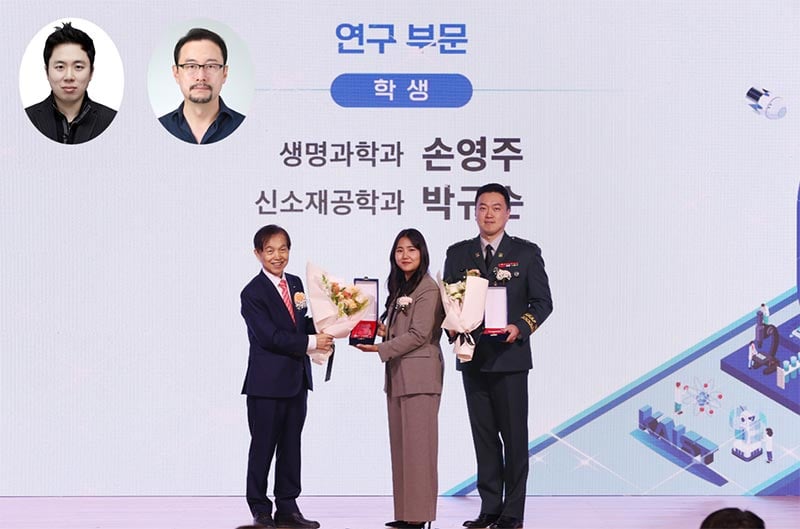
It is evaluated as a representative spin-off case where national defense science and technology expanded to the private sector, as it is capable of everything from emergency treatment on the battlefield to internal surgical hemostasis.
Spin-off case: Expanding or transferring national defense science and technology for use in the private sector. Examples include computers, GPS, microwave ovens, etc.
This study was recognized for its scientific innovation and national defense utility simultaneously, winning the 2025 KAIST Q-Day President's Award and the Minister of National Defense Award at the 2024 KAIST-KNDU National Defense Academic Conference.
Ph.D candidate Kyusoon Park (Army Major), who participated in the research, stated, "The core of modern warfare is minimizing the loss of human life," and added, "I started the research with a sense of mission to save even one more soldier." He continued, "I hope this technology will be used as a life-saving technology in both national defense and private medical fields."
Reference: "An Ionic Gelation Powder for Ultrafast Hemostasis and Accelerated Wound Healing" by Youngju Son, Kyusoon Pak, Taehoon Lee, Monica Celine Prayogo, Jinyoung Choi, Sukkyung Kang, Minjoo Kang, Byungkook Oh, Sang Yu Sun, Sanha Kim, Sung Gap Im, Sangyong Jon and Steve Park, 28 October 2025, Advanced Functional Materials.
DOI: 10.1002/adfm.202523910
Support of the National Research Foundation of Korea (NRF).

News
Scientists Rewire Natural Killer Cells To Attack Cancer Faster and Harder
Researchers tested new CAR designs in NK-92 cells and found the modified cells killed tumor cells more effectively, showing stronger anti-cancer activity. Researchers at the Ribeirão Preto Blood Center and the Center for Cell-Based [...]
New “Cellular” Target Could Transform How We Treat Alzheimer’s Disease
A new study from researchers highlights an unexpected player in Alzheimer’s disease: aging astrocytes. Senescent astrocytes have been identified as a major contributor to Alzheimer’s progression. The cells lose protective functions and fuel inflammation, particularly in [...]

Treating a Common Dental Infection… Effects That Extend Far Beyond the Mouth
Successful root canal treatment may help lower inflammation associated with heart disease and improve blood sugar and cholesterol levels. Treating an infected tooth with a successful root canal procedure may do more than relieve [...]
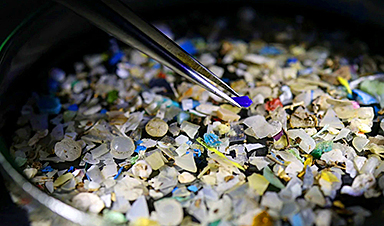
Microplastics found in prostate tumors in small study
In a new study, researchers found microplastics deep inside prostate cancer tumors, raising more questions about the role the ubiquitous pollutants play in public health. The findings — which come from a small study of 10 [...]

All blue-eyed people have this one thing in common
All Blue-Eyed People Have This One Thing In Common Blue Eyes Aren’t Random—Research Traces Them Back to One Prehistoric Human It sounds like a myth at first — something you’d hear in a folklore [...]
Scientists reveal how exercise protects the brain from Alzheimer’s
Researchers at UC San Francisco have identified a biological process that may explain why exercise sharpens thinking and memory. Their findings suggest that physical activity strengthens the brain's built in defense system, helping protect [...]
NanoMedical Brain/Cloud Interface – Explorations and Implications. A new book from Frank Boehm
New book from Frank Boehm, NanoappsMedical Inc Founder: This book explores the future hypothetical possibility that the cerebral cortex of the human brain might be seamlessly, safely, and securely connected with the Cloud via [...]
Deadly Pancreatic Cancer Found To “Wire Itself” Into the Body’s Nerves
A newly discovered link between pancreatic cancer and neural signaling reveals a promising drug target that slows tumor growth by blocking glutamate uptake. Pancreatic cancer is among the most deadly cancers, and scientists are [...]
This Simple Brain Exercise May Protect Against Dementia for 20 Years
A long-running study following thousands of older adults suggests that a relatively brief period of targeted brain training may have effects that last decades. Starting in the late 1990s, close to 3,000 older adults [...]
Scientists Crack a 50-Year Tissue Mystery With Major Cancer Implications
Researchers have resolved a 50-year-old scientific mystery by identifying the molecular mechanism that allows tissues to regenerate after severe damage. The discovery could help guide future treatments aimed at reducing the risk of cancer [...]

This New Blood Test Can Detect Cancer Before Tumors Appear
A new CRISPR-powered light sensor can detect the faintest whispers of cancer in a single drop of blood. Scientists have created an advanced light-based sensor capable of identifying extremely small amounts of cancer biomarkers [...]

Blindness Breakthrough? This Snail Regrows Eyes in 30 Days
A snail that regrows its eyes may hold the genetic clues to restoring human sight. Human eyes are intricate organs that cannot regrow once damaged. Surprisingly, they share key structural features with the eyes [...]
This Is Why the Same Virus Hits People So Differently
Scientists have mapped how genetics and life experiences leave lasting epigenetic marks on immune cells. The discovery helps explain why people respond so differently to the same infections and could lead to more personalized [...]
Rejuvenating neurons restores learning and memory in mice
EPFL scientists report that briefly switching on three “reprogramming” genes in a small set of memory-trace neurons restored memory in aged mice and in mouse models of Alzheimer’s disease to level of healthy young [...]
New book from Nanoappsmedical Inc. – Global Health Care Equivalency
A new book by Frank Boehm, NanoappsMedical Inc. Founder. This groundbreaking volume explores the vision of a Global Health Care Equivalency (GHCE) system powered by artificial intelligence and quantum computing technologies, operating on secure [...]
New Molecule Blocks Deadliest Brain Cancer at Its Genetic Root
Researchers have identified a molecule that disrupts a critical gene in glioblastoma. Scientists at the UVA Comprehensive Cancer Center say they have found a small molecule that can shut down a gene tied to glioblastoma, a [...]