By monitoring the body's molecular response to a viral attack, the new method developed by Flatiron Institute researchers and their colleagues can diagnose even asymptomatic patients with 98.4 percent accuracy.
By inspecting the body's immune response at a molecular level, a research team has developed a new way to test patients for COVID-19. Their method can potentially catch infections a matter of hours after exposure — far earlier than current COVID-19 tests can detect the virus — with near-perfect accuracy. The team describes their innovation, which is still in the early stages of development, in the February 27 issue of the journal Cell Reports Methods.
Most existing COVID-19 tests "rely on the same principle, which is that you have accumulated a detectable amount of viral material, for example, in your nose," says study lead author Frank Zhang, who worked on the project as a Flatiron research fellow at the Flatiron Institute's Center for Computational Biology (CCB) in New York City. "That poses a challenge when it's early in the infection time window and you haven't accumulated a lot of viral material, or you're asymptomatic."
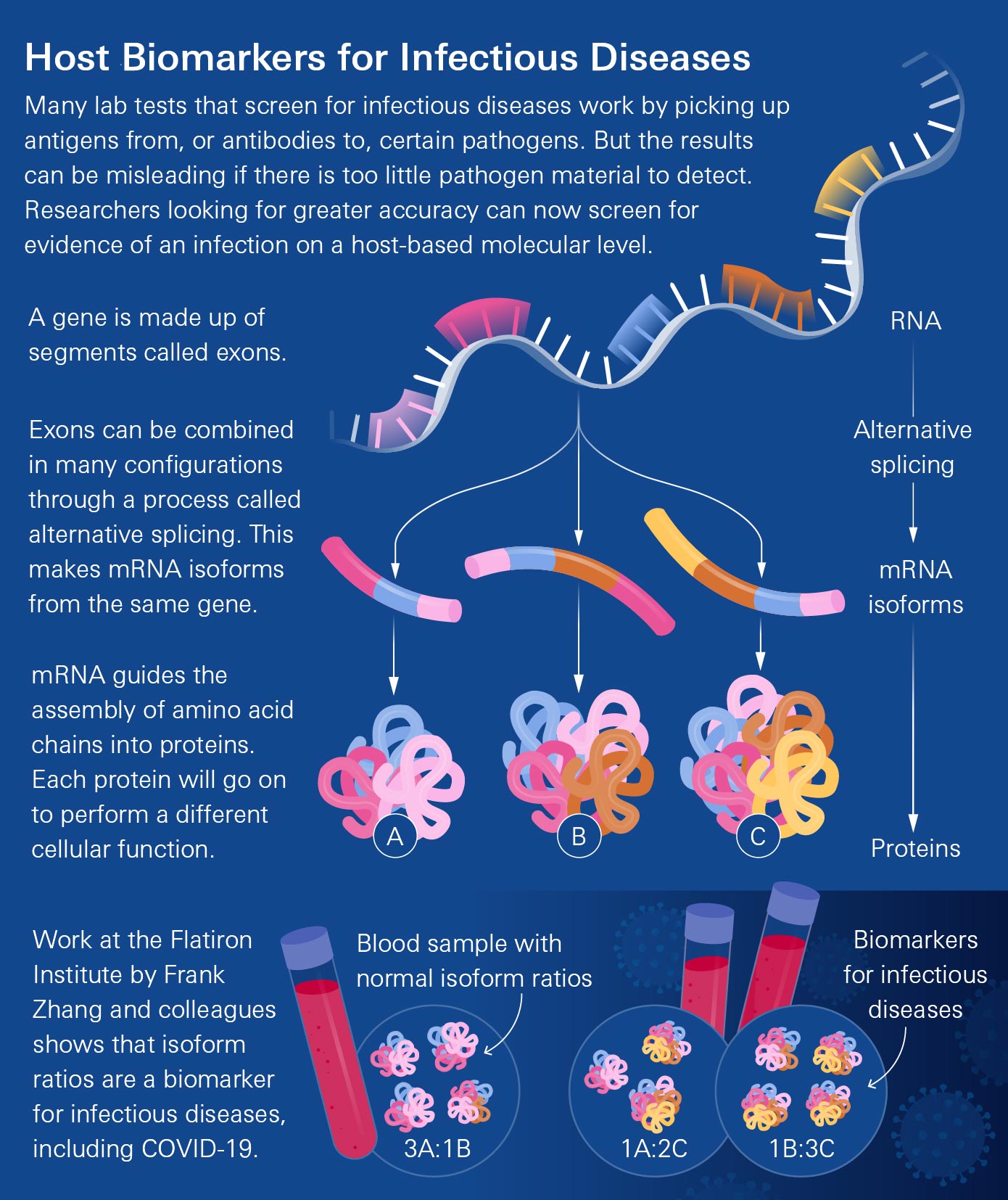
An infographic explaining a new method for diagnosing patients with COVID-19. Credit: Lucy Reading-Ikkanda/Simons Foundation
When put to the test using real-world blood samples, the new method yielded an impressive 98.4 percent accuracy rating. That's especially impressive as the approach works just as well on asymptomatic patients, for whom rapid antigen tests can be less than 60 percent accurate. "It was really surprising that it worked so well," says Zhang, now an assistant professor at Cedars-Sinai Medical Center in Los Angeles. "It's a promising alternative and complementary approach to conventional PCR tests."
The new approach isn't ready for prime time yet, Zhang says. He and his colleagues only tested blood samples rather than the nasal samples that are more common and convenient for diagnosing COVID-19. Also, they need to make sure they can distinguish between the body's reaction to COVID-19 and its response to infections caused by other viruses, such as colds.
The researchers say they're optimistic, though, as other research groups have already made progress on tests that look solely at which genes turn on. Those same tests could easily add the mRNA analysis developed in the new study, thereby producing even better results, Zhang says. "Anything they can do, we can probably explore and join forces on," including catching cases within hours of initial exposure.

News
Too Much RNA Can Drain a Cell’s Energy, Scientists Discover
A virus may cripple a cell’s power supply simply by producing too much of a molecule the cell needs to survive. New research from the Texas A&M College of Veterinary Medicine and Biomedical Sciences [...]
West African scientists warn of weakening health systems and urge stronger outbreak detection
LOME, Togo (AP) — West African laboratory scientists called on governments Friday to strengthen capacity to detect disease outbreaks to avoid another major outbreak, saying health systems across the region are becoming weaker. Participants [...]

A Little-Known Protein Could Point to a New Way To Treat Alzheimer’s
A study suggests that increasing SORLA protein levels could help treat Alzheimer’s disease and other disorders involving tau protein. Increasing SORLA, a protein with a protective role in the brain, helped mice withstand damage [...]
Cancer’s Hidden Antioxidant Shield Helps It Escape the Immune System
Blocking an antioxidant protein that tumors use to suppress immune attacks improved cancer immunotherapy responses in mice. Cancer cells can release antioxidants that interfere with the immune cells trying to kill them. Researchers have [...]

Scientists Find a Berry Compound That Helps Muscle Cells Burn Fat
Pterostilbene, a compound found naturally in some foods, affects how skeletal muscles process fats by stabilizing a protein called PPARδ and increasing its signaling activity. Pterostilbene, a natural compound found in blueberries, grapes, and [...]
Two Hidden Forces Help Build the Human Brain Before Birth
Scientists have uncovered two surprising forces that help guide how the human brain forms before birth. Before birth, the human brain is shaped in large part by an unusual class of stem cells known [...]
Researchers Uncover a Hidden Trigger Behind Chronic Inflammation
The findings offer new insights that could help guide the development of future therapies. A protein called human resistin may help flip on one of the immune system’s most powerful inflammatory switches. Researchers at [...]
Scientists Have Uncovered Previously Hidden Microbial Activity on Human Skin
The most abundant microbes on your skin may not be the ones doing most of the work. Human skin supports vast communities of bacteria, fungi, and viruses that can influence its protective barrier, immune [...]
Brazilian Tree Compounds Fight COVID-19 on Multiple Fronts
Scientists found compounds in a Brazilian tree that hit SARS-CoV-2 on multiple fronts, revealing a promising new lead in the search for COVID-19 treatments. Researchers have found that galloylquinic acids extracted from the leaves [...]
Cutting Two Amino Acids Slowed Prostate Cancer in Mice
A newly identified link between amino acid metabolism and cholesterol production may help prostate tumors adapt to hormone therapy. Prostate cancer can find ways around treatments designed to deprive tumors of the hormones they [...]
Largest-Ever Physics Survey Raises New Doubts About Our Model of the Universe
Physicists around the world remain deeply divided on key mysteries of the universe, from dark matter to quantum gravity. The standard cosmological model failed to gain majority support, and no leading theory dominated the [...]
Scientists Just Overturned a 100-Year-Old Belief About Bacteria in the Lungs
New findings raise questions about the role of microbes living in the lungs. More than 35 trillion bacteria live throughout the human body, forming microbiomes in the gut, mouth, lungs, skin, and urogenital tract. [...]
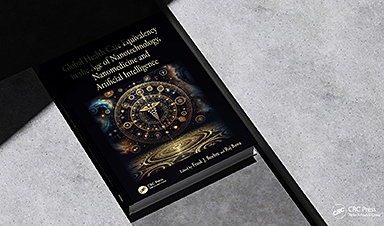
GHCE Concept
From the preface of the book Global Health Care Equivalency in the Age of Nanotechnology, Nanomedicine and Artificial Intelligence, Edited by Frank Boehm: Since the publication of my first book (Nanomedical Device and Systems [...]
Novartis, Ionis drug failure spurs questions
Pelacarsen didn’t protect heart health despite lowering levels of a protein particle, “Lp(a),” in a large clinical trial — a result with important implications for cardiovascular drug research. Dive Brief: An RNA drug from [...]
New injectable treatment helps the brain rebuild after stroke
Biomedical engineers at Duke University have created an injectable biomaterial that may help the brain recover from damage left behind by an ischemic stroke. In experiments with mice, the material transformed the cavity created [...]
Scientists Discover a Hidden “Immune Organ” Inside the Skull
Researchers discovered lymph node-like immune hubs inside skull bone marrow that appear to act as rapid-response centers for the brain. For decades, the brain was thought to operate largely apart from the immune system. [...]