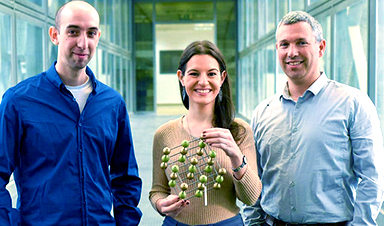
In recent years scientists have worked to create materials that can repair themselves, in order to deal with the swift degradation of devices we use at home. A discovery by Dr. Yehonadav Bekenstein and his team at the Technion could pave the way there.
One of the characteristics of living organisms is that they are capable of self-preservation. For example, when the skin is injured the body knows how to heal the wound by itself. One of the more exciting fields of research today is focusing on the attempt to reduce the gap between animate and inanimate. Groups of scientists and startups around the world are working to develop self-healing materials. Success in this effort is expected to spark a revolution in the realm of industrial manufacturing and could have major environmental ramifications.
Last week, a team from the Technion headed by Dr. Yehonadav Bekenstein, announced that it has developed semiconductor nanocrystals that can heal themselves. Their report was published in the journal of Advanced Functional Materials.
In today’s world, we have to replace our consumer electronics frequently, typically once every few years. The reason, in most cases, is reduced performance due to materials fatigue – a phenomenon that the manufacturers try to conceal. “They claim, for example, that their product is long-lasting and that the need to upgrade to newer products is to support newer software versions,” says Dr. Bekenstein.
But the malfunctioning of materials is unavoidable since every device suffers from degradation as a result of defects that accumulate during use over time. Aside from the frustration of having to go out to buy new devices every few years, the phenomenon also generates a heavy environmental footprint, since the recycling industry is struggling to handle the capacity of things we throw away.
“They still don’t know what to do with them, because the materials that are used in making the devices have already become defective,” says Bekenstein. “Of the items we throw away, 90 percent are sent to a landfill, even if we put them in recycling bins.” It’s no wonder, then, that manufacture of devices that can spontaneously repair their own defects is considered one of the most important goals in the world of materials engineering.
Prof. Dan Oron, a researcher in the Department of Molecular Chemistry and Materials Sciences at the Weizmann Institute of Science in Rehovot explains that, “every material used for making devices becomes damaged when it performs the operation for which it is used over time – the capacity of batteries declines, the transparency of the window lessens – all because of microscopic damage to the materials. How wonderful it would be if we could perform a simple process that would enable the material to repair itself, as is the case in biological systems. Solid materials for the most part cannot do that, but there are families of materials that are able to improve themselves through physical and chemical processes – whether due to an external stimulus or a spontaneous process. It never works perfectly, but it does slow the ageing of the materials.”
In recent years there has been progress in the field of developing soft materials that repair themselves; indeed, polymers that do that have already been produced. Perhaps we can expect that in the not-so-distant future it will be possible to manufacture clothes that patch themselves or renew their colors after many launderings.
Now scientists are hoping to devise a way to get semiconductors to repair themselves too. Despite their modest name, semiconductors are among the most important materials discoveries in the history of mankind. These are materials that neither conduct nor insulate electricity but can be altered in such a way that they can play both parts. They, therefore, serve as an infrastructure for virtually all of our modern electronic devices. The transmission or non-transmission of electricity are the basis for all digitization – zero or one. Silicon, for example, is a semiconductor, and the industry based on processing it to devices is flourishing”. “Semiconductors have changed the world because all the processors are made from them,” Bekenstein says. “The information revolution originates there – it all begins with an understanding of materials.”
The Technion’s new study was carried out by means of a family of semiconductors called halide perovskites. About five years ago researchers discovered that if a perovskite solar cell damaged due to use is left in the dark, under certain circumstances its operation returns to a level that’s almost identical to the way it functioned immediately after leaving the assembly line. This discovery led to the theory that these may be materials that can repair themselves.
Oron explains that halide perovskites are solid crystals, inside of which there is a constant movement of atoms that carry an electric charge (ions) – a characteristic not usually found in solid materials. “That’s the basis for the process of self-healing,” he says. “Defects are created in the crystal, but over time the ions find their way back and in that way the defects disappear.”
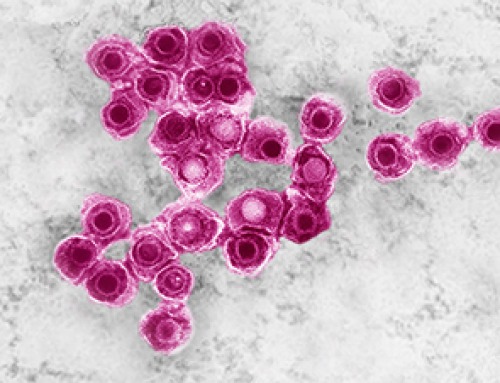
The process of repairing the crystal therefore takes place naturally, since it “wants” to rearrange itself into its initial, basic form, when the atoms inside the crystal are at their lowest energy state. In their new study, Bekenstein and doctoral students Sasha Khalfin and Noam Veber engineered nanoparticles of perovskites. In past studies, nanometric layers were created by abrading an ordinary-sized crystal, but the team discovered the right conditions under which a chemical reaction creates nucleation and the growth of nanocrystals. “We grew these crystals, which are on the verge of being the smallest crystals nature can create, in the lab, one to ten thousand of a human hair width” explains Bekenstein.
Nanocrystals are very convenient to use in research because an electron microscope dispatching a high-energy, focused beam can penetrate them and the transmitted electrons form an image, which is instructive when it comes to learning about the structure of the material. With large crystals that is impossible. The researchers sat for hundreds of hours in front of the electron microscope, trying to identify the processes that affect the structure of the crystal, in order to examine its self-healing abilities. “We observe the crystals day after day,” says Khalfin. “Once I sat for six straight hours.”
The team also filmed dozens of video clips and analyzed them with a computer, thus creating a picture of the dynamic that takes place in the nanocrystal. They discovered that the focused electron beam creates holes on the surface of the crystal, because the beam removes atoms from the material. After the holes are created, they migrate toward the center of the crystal. “We saw the holes being created and then pushed away from the edges, so that the margins always remained complete,” Bekenstein says.
As a result of this surprising observation, the researchers re-engineered the crystal. While during the first stage of the experiment they added organic molecules to the crystal while it was still growing, which attached onto its surface and stopped the growth so that it remained the size of a nanoparticle – during the second stage the team removed the organic layer on top in order to understand why the margins remained intact. Then Khalfin also identified an opposite phenomenon: Instead of the hole that was created moving to the center of the crystal, it seemed to be gradually pushed out to the sides, until in the end it was expelled from the crystal, which then returned to its original, whole state.
Bekenstein says that this marks the first-time scientists have been able to observe the healing process of a substance at the atomic level. “We managed to cause it, to understand what it comes from and then to control it, in other words, to understand what we have to put on the surface in order for it to happen,” he explains. “There are all kinds of defects that affect materials, and in this case, it was a most serious defect – a hole, in other words, part of the material was missing. We discovered that the perovskite crystal can return to its complete state if we rearrange things so the hole moves outward.”
This discovery constitutes an important step in understanding the mechanisms that enable perovskite nanoparticles to heal themselves, and is paving the way to the inclusion of such materials in electronic and solar devices. “We realized that the organic molecules are important when it comes to shaping the material, but they interrupt its process of self-repair,” Bekestein notes. “Now we can engineer devices that will exploit that situation.”
What is still unknown is the maximum distance to which a hole in a crystal can migrate and as a result, reach its edge and disappear from it. “In this case, it was a very short distance since we’re talking about a nanocrystal, but it’s not clear if that will happen with a big crystal. The science of self-healing has been understood, and now we have to engineer larger materials in which such a process will also take place,” he adds.
Perovskite materials have been known to science for over 100 years, but only in recent years has it become clear that lead-based halide perovskites have unique electro-optic characteristics. For his part, Prof. Oron says that this family of materials has been causing a revolution in solar cells in recent years. The solar cells now being used in rooftop panels are based on silicon, but about a decade ago scientists began to try to create solar cells from halide perovskites.
“At first the cells attained a level of efficiency of 4 percent and now it already reaches 25 percent,” says Oron. “On the other hand, standard silicon solar cells reach 23 percent efficiency in the laboratory and 16 to 18 percent in solar panels.” He says such rapid progress is “unprecedented in the world of solar cells.”
In addition to their great efficiency, the perovskite cells are created in a relatively simple process from a solution, in contrast to silicon cells, which are crystallized at high temperatures in a process that requires a great deal of energy. Oron says that it takes three years of activity on the part of a silicon solar cell, to restore the energy that was invested in creating it in the first place, and therefore the perovskite cells are “an opening to a revolution in the creation of cheap and simple cells [for use in solar panels].”
The professor does note that the use of perovskite cells can be problematic; for instance, they contain lead and perovskite materials that dissolve in water. Therefore, their use is limited at present. “But in terms of technology, it’s a breakthrough. Many startups are involved in it.”
Oron says that a few years ago, a research group headed by Prof. David Cahen at the Weizmann Institute damaged a relatively large perovskite crystal with a laser beam, and then kept track of the process whereby the damage was repaired. “In the most recent study, Bekenstein did the same thing, but created the damage with an electron microscope, which enabled him to actually see both the damage and the dynamic of the repair. That made it possible to see the movement of atoms inside the crystal itself, which opened a new window to understanding the self-healing processes,” says Oron.
Oron says that he believes that the day will come when perovskites will become part of the leading technology used to produce solar cells and perhaps electronics and electro-optics as well.
The Technion researchers point to two additional advantages of the perovskite materials they have developed. As opposed to materials from the previous generation, the new perovskites do not contain toxic lead and should be recyclable.
“Today it’s hard to recycle used electronic devices, because the material itself is damaged over time,” Bekenstein notes. “Due to our invention we’ll be able to recycle material so that it will assume its complete shape, the same as on the day it was manufactured, and then reuse it.” These materials may be of great importance in places where it is impossible to replace defective materials – for example, in the solar panels that help to power satellites in space.
Bekenstein cites a story in Tractate Ta’anit in the Talmud about Abba Hilkiah, the grandson of Honi the Circle Maker, whom the sages sent for so that he would pray for rain. He went with the emissaries and arrived at a field of thorns. The rabbi lifted his robe. The others asked why he did that, and Hilkiah said: “Wounds in the body can be healed, but the tears in clothing can’t be mended.”
“Maybe that’s about to change,” smiles Bekenstein. “In effect, what man wants is for his creations to resemble those of God. The ancient Greeks already tried to achieve that by means of the statues they created, but even if those works looked like living creatures, they couldn’t repair or heal themselves as God’s creations could. We’re a long way from that, but within nanoparticles, we have been able to imitate the self-repair of material.”

News
Half of vaccines are binned – ‘fridge-free’ versions could change that
Vaccines that do not need to be kept cool in a fridge have been successfully trialed in patients for the first time, say UK scientists. Currently, most vaccines need to be refrigerated or frozen [...]

Mushroom Mystery: The Fungus That Makes People See Tiny Humans
A mushroom sold in markets and served in restaurants in Southwest China has an unusual warning attached to it: cook it thoroughly, or you may start seeing tiny people. For decades, people have reported [...]

Artificial intelligence used to design brand new viruses
Artificial Intelligence has been used to design brand new viruses that are fully functional and can replicate in the laboratory, say US researchers. It is the first time whole genomes have been successfully designed [...]
Molecular Manufacturing: The Future of Nanomedicine – New book from NanoappsMedical Inc.
This book explores the revolutionary potential of atomically precise manufacturing technologies to transform global healthcare, as well as practically every other sector across society. This forward-thinking volume examines how envisaged Factory@Home systems might enable the cost-effective [...]

Moderna kicks off Phase I Ebola trial as Africa readies itself for research
If the Phase I trial is successful, Moderna plans to quickly initiate Phase II and Phase III trials of its Ebola vaccine. Moderna has initiated a Phase I trial of its mRNA Ebola vaccine [...]
3D Human Brain Tissue Model Replicates Alzheimer’s Pathology
Summary: Researchers introduced a highly reproducible three-dimensional human brain tissue model capable of replicating complex neurodegenerative processes in Alzheimer’s disease. Developed over nine years using human stem cells, the self-organizing tissue spheroids integrate functional neurons, [...]
A Common Sugar May Loosen Cancer Cells and Help Them Spread
Chemotherapy may kill most ovarian cancer cells, but the few that survive can turn dangerously active. By releasing fructose, they may help nearby tumor cells break free and spread. Researchers at The Wistar Institute [...]
COVID-19 can wake up dormant viruses in the body, large study confirms
Virus reactivations by SARS-CoV-2 could worsen initial symptoms and increase risk of Long Covid. Early in the COVID-19 pandemic, scientists noticed that a SARS-CoV-2 infection can “wake up” other, dormant viruses already present in [...]
Scientists Discover the Brain May Enter a New Biological Phase Between 50 and 75
A single-cell study reveals major changes in immune cells, genome organization, and gene regulation within the aging human hippocampus, offering important insights into brain aging and dementias associated with age. Between roughly ages 50 [...]
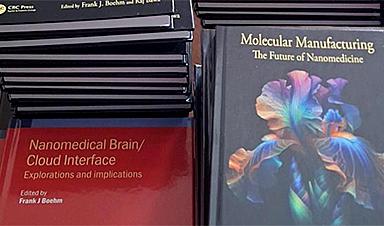
Our books now available worldwide!
Online Sellers other than Amazon, Routledge, and IOPP Indigo Global Health Care Equivalency in the Age of Nanotechnology, Nanomedicine and Artifcial Intelligence Global Health Care Equivalency In The Age Of Nanotechnology, Nanomedicine And Artificial [...]
Unzipping the Code of Life: Scientists Pinpoint Where DNA First Opens
Researchers mapped where DNA first opens and how a helicase gate may release one strand as genome copying begins. Before a cell can divide, it must open its tightly wound DNA and begin copying the entire [...]
Scientists Tested an 8-Hour Eating Window and Found a Surprising Brain Benefit
Limiting the daily eating window may provide brain benefits beyond those associated with weight loss. Eating within a shorter daily window may provide cognitive benefits beyond those associated with weight loss alone, according to [...]
Focused Ultrasound Opens Blood-Brain Barrier to Treat Brain Cancer
Summary: A new study demonstrates that primary brain tumors (gliomas) are particularly receptive to targeted drug delivery using focused ultrasound (FUS) combined with microbubbles. The team developed a high-resolution MRI protocol to track blood-brain barrier [...]

AI’s promise and practical limits in drug discovery
AI tools are becoming increasingly common in early drug discovery, allowing scientists to analyse data and navigate large volumes of research. However, according to Dr Raminderpal Singh, turning that potential into consistent scientific workflows [...]

GHCE Concept
From the preface of the book Global Health Care Equivalency in the Age of Nanotechnology, Nanomedicine and Artificial Intelligence, Edited by Frank Boehm: Since the publication of my first book (Nanomedical Device and Systems [...]

Healthcare Headlines: Challenges and Advances in 2026
Health-related updates reveal financial adjustments by Universal Health Services due to Medicaid reimbursement uncertainties, significant pollution-linked health concerns from French-British oil firm Perenco in Congo, drug trial setbacks, potential restructuring at major medical firms, [...]