Elias Quijano, PhD; Diana Martinez-Saucedo, PhD; Zaira Ianniello, PhD; and Natasha Pinto-Medici, PhD, there are 25 other contributors, most from Yale’s Department of Therapeutic Radiology and from the departments of genetics, molecular biophysics and biochemistry, biomedical engineering, pathology, and medical oncology and three from the University of Illinois Urbana-Champaign.
Specifically, animal models of three types of “cold” tumors that are usually resistant to standard treatments and the best immunotherapies—pancreatic cancer, medulloblastoma (a type of brain cancer), and melanoma (skin cancer)—had significant responses to the precision treatment, that homed in on cancerous cells, largely avoiding healthy tissue. Results:
• In the animal model for pancreatic ductal adenocarcinoma the treatment significantly reduced the size of the tumors and extended survival by boosting the presence of CD8+ T cells that attack cancer cells.
• The medulloblastoma animal models responded similarly. The treatment made it past the blood-brain barrier to reach and shrink the tumors and extended survival, without triggering an immune reaction that can be caused by collateral treatment of healthy tissue.
• Pronounced suppressed tumor growth and an absence of severe side effects or toxicities were noted in the animal models with melanoma.
Researchers used computer modeling to modify the antibody, enabling it to bind to RNA, and also “humanized” it so the body wouldn’t attack it as an invader, a step toward possible clinical use.
“This work lays the foundation for translating RNA-based therapies into the clinic. By achieving targeted delivery to tumor cells without systemic toxicity, we open the possibility of developing treatments that are not only tumor-specific but also adaptable to the immunologic context of each patient’s cancer,” says Luisa Escobar-Hoyos, PhD, senior author and a YSM associate professor of therapeutic radiology and molecular biophysics and biochemistry.
“With further development, this platform could support personalized immuno-RNA therapies and move toward first-in-human clinical trials.”
Quijano, E., et al. (2025). Systemic administration of an RNA binding and cell-penetrating antibody targets therapeutic RNA to multiple mouse models of cancer. Science Translational Medicine. doi.org/10.1126/scitranslmed.adk1868.

News
Cutting Two Amino Acids Slowed Prostate Cancer in Mice
A newly identified link between amino acid metabolism and cholesterol production may help prostate tumors adapt to hormone therapy. Prostate cancer can find ways around treatments designed to deprive tumors of the hormones they [...]

Largest-Ever Physics Survey Raises New Doubts About Our Model of the Universe
Physicists around the world remain deeply divided on key mysteries of the universe, from dark matter to quantum gravity. The standard cosmological model failed to gain majority support, and no leading theory dominated the [...]

Scientists Just Overturned a 100-Year-Old Belief About Bacteria in the Lungs
New findings raise questions about the role of microbes living in the lungs. More than 35 trillion bacteria live throughout the human body, forming microbiomes in the gut, mouth, lungs, skin, and urogenital tract. [...]

GHCE Concept
From the preface of the book Global Health Care Equivalency in the Age of Nanotechnology, Nanomedicine and Artificial Intelligence, Edited by Frank Boehm: Since the publication of my first book (Nanomedical Device and Systems [...]

Novartis, Ionis drug failure spurs questions
Pelacarsen didn’t protect heart health despite lowering levels of a protein particle, “Lp(a),” in a large clinical trial — a result with important implications for cardiovascular drug research. Dive Brief: An RNA drug from [...]

New injectable treatment helps the brain rebuild after stroke
Biomedical engineers at Duke University have created an injectable biomaterial that may help the brain recover from damage left behind by an ischemic stroke. In experiments with mice, the material transformed the cavity created [...]

Scientists Discover a Hidden “Immune Organ” Inside the Skull
Researchers discovered lymph node-like immune hubs inside skull bone marrow that appear to act as rapid-response centers for the brain. For decades, the brain was thought to operate largely apart from the immune system. [...]

Engineered tRNAs and lipid nanoparticles target nonsense mutation cystic fibrosis
Researchers have developed a potential new approach for treating a form of cystic fibrosis caused by so-called nonsense mutations, combining chemically modified transfer RNAs with lipid nanoparticles designed to deliver the therapy directly to [...]
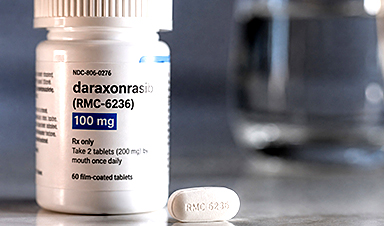
New pancreatic cancer drug carries a $39,800 monthly list price
A groundbreaking treatment for one of the most common forms of pancreatic cancer has been approved in pill form by the FDA. Revolution Medicines’ oral tablet daraxonrasib, branded as Rasonque, reduced the risk of [...]
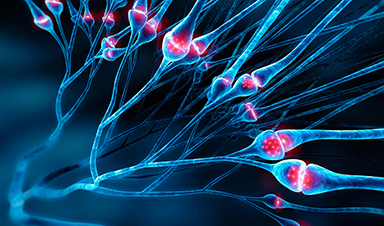
Researchers Have Discovered a New Way To Reduce Chronic Nerve Pain
A cancer-linked protein called BRAF may help drive chronic nerve pain, and existing cancer drugs targeting it reduced pain sensitivity in preclinical models. Chronic nerve pain can persist long after an injury and often [...]
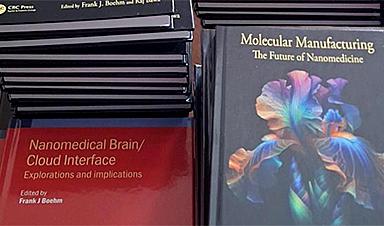
Our books now available worldwide!
Online Sellers other than Amazon, Routledge, and IOPP Indigo Global Health Care Equivalency in the Age of Nanotechnology, Nanomedicine and Artifcial Intelligence Global Health Care Equivalency In The Age Of Nanotechnology, Nanomedicine And Artificial [...]

Quantum-Enabled Regenerative Health: Reimagining Wellness, Precision Health and Longevity Medicine
Introduction Healthcare is approaching a frontier where the quantum portfolio could influence not only how disease is diagnosed and treated, but how health itself is measured, modeled, predicted and preserved. Quantum computing, quantum simulation, [...]

FDA Clears First-of-Its-Kind Nonmedication Treatment for PTSD
The FDA has cleared a system that uses brain activity data to personalize magnetic stimulation for PTSD, adding a new nonmedication treatment option. Every day in the United States, approximately 17.5 veterans die by suicide, [...]
FDA approves breakthrough drug to treat advanced pancreatic cancer
The Food and Drug Administration (FDA) approved on Wednesday a drug that could extend the survival of those with metastatic pancreatic cancer. The drug, called daraxonrasib, will be sold under the brand name Rasonque [...]

AI Decodes a Hidden DNA Signal Linked to Disease-Causing Mutations
Machine learning identifies the likely “initiator” and enables new predictions about DNA mutations that can cause disease. Every human cell depends on tens of thousands of genes being switched on at the right time [...]

Pope Leo Urges Global Response to Congo’s Deadliest Ebola Outbreak
Pope Leo called for international action to address the Ebola outbreak in the Democratic Republic of Congo. The epidemic has claimed over 2,500 lives and is the nation's largest recorded outbreak. The Pope emphasized [...]