- For 400 million years, a leading hypothesis claims, Earth was an "RNA World," meaning that life must've first replicated from RNA before the arrival of proteins and DNA.
- Unfortunately, scientists have failed to find evidence of this "first replicator" or recreate the replication process in the lab under the conditions that conceivably would have been present on the planet billions of years ago.
- In a new study, using three-letter "triplet" RNA, scientists induced RNA replication by preventing the RNA double helix from zipping together.
Where did we all come from? It's a question that has lit fires of curiosity in philosophers, theologians, and more recently (at least, historically speaking) scientists for millennia. While the the older guard of high thought used stories or metaphors to derive life's origin story, scientists instead learn about the inner workings of life's smallest building blocks in an attempt to understand how they first formed life billions of years ago.
This long scientific exploration has led most evolutionary biologists to the conclusion that, for at least 400 million years, Earth was an "RNA World." The hypothesis suggests that life first took form due to self-replicating RNA, before the evolutionary arrival of DNA or even proteins.
But there's a couple problems.
First, there's no trace of this "first replicator" in known biology. And second, scientists have failed to convincingly replicate RNA in an environment similar to early Earth. While scientists are very much still on the hunt for evidence that validates the first of these two issues, a team from University College of London (UCL) is closing in on solving the second problem.
Published in the journal Nature Chemistry, a team of UCL scientists (along with experts from the MRC Laboratory of Molecular Biology in Cambridge) used three-letter "triplet" RNA building blocks subjected to acid and heat in water. This separated the RNA double-helix—the structure that makes replication so difficult—and scientists froze the solution.
What occurred next is possibly an intimate glimpse of how life first formed on Earth—between the liquid gaps of the ice crystals, these building blocks coated the RNA strands and prevented them from zipping back together. After the scientists thawed the solution and and made adjustments to pH and temperature, the RNA replicated again and again. Eventually, the strand was so long that these structures could perform biological functions.
"The triplet or three-letter building blocks of RNA we used, called trinucleotides, do not occur in biology today, but they allow for much easier replication. The earliest forms of life are likely to have been quite different from any life that we know about," James Attwater, lead author of the study from UCL, said in a press statement. "The changing conditions we engineered can occur naturally, for instance with night and day cycles of temperature, or in geothermal environments where hot rocks meet a cold atmosphere."
UCL has long been involved in constructing the play-by-play of life's origins on Earth. In 2017, for example, a study analyzed the chemistry that provided Earth with the very nucleotides necessary to construct the first RNA structures. This new study now attempts to understand, in a lab setting, how those ancient RNA first began replication, a process that's essential to understanding the foundation of life.
"Life is separated from pure chemistry by information, a molecular memory encoded in the genetic material that is transmitted from one generation to the next," Philipp Holliger, the senior author of the study from MRC Laboratory of Molecular Biology, said in a press statement. "For this process to occur, the information must be copied, i.e. replicated, to be passed on."
Currently, the researchers have only been able to replicate roughly 17 percent of the RNA strand (roughly 30 out of 180 letters), but the team says there's no reason they won't achieve complete replication with improved enzyme efficiency. The researchers also note that this reaction can't occur in saltwater (the salt disrupts the freezing process), but geothermal freshwater lakes or ponds would be the perfect chemical setting for RNA replication to take hold.
Although many questions remain, Earth's ancient RNA World could have actually had the capacity for self-replication. It's an intriguing step forward, but the scientific journey continues.

News
Cutting Two Amino Acids Slowed Prostate Cancer in Mice
A newly identified link between amino acid metabolism and cholesterol production may help prostate tumors adapt to hormone therapy. Prostate cancer can find ways around treatments designed to deprive tumors of the hormones they [...]
Largest-Ever Physics Survey Raises New Doubts About Our Model of the Universe
Physicists around the world remain deeply divided on key mysteries of the universe, from dark matter to quantum gravity. The standard cosmological model failed to gain majority support, and no leading theory dominated the [...]

Scientists Just Overturned a 100-Year-Old Belief About Bacteria in the Lungs
New findings raise questions about the role of microbes living in the lungs. More than 35 trillion bacteria live throughout the human body, forming microbiomes in the gut, mouth, lungs, skin, and urogenital tract. [...]

GHCE Concept
From the preface of the book Global Health Care Equivalency in the Age of Nanotechnology, Nanomedicine and Artificial Intelligence, Edited by Frank Boehm: Since the publication of my first book (Nanomedical Device and Systems [...]

Novartis, Ionis drug failure spurs questions
Pelacarsen didn’t protect heart health despite lowering levels of a protein particle, “Lp(a),” in a large clinical trial — a result with important implications for cardiovascular drug research. Dive Brief: An RNA drug from [...]
New injectable treatment helps the brain rebuild after stroke
Biomedical engineers at Duke University have created an injectable biomaterial that may help the brain recover from damage left behind by an ischemic stroke. In experiments with mice, the material transformed the cavity created [...]
Scientists Discover a Hidden “Immune Organ” Inside the Skull
Researchers discovered lymph node-like immune hubs inside skull bone marrow that appear to act as rapid-response centers for the brain. For decades, the brain was thought to operate largely apart from the immune system. [...]
Engineered tRNAs and lipid nanoparticles target nonsense mutation cystic fibrosis
Researchers have developed a potential new approach for treating a form of cystic fibrosis caused by so-called nonsense mutations, combining chemically modified transfer RNAs with lipid nanoparticles designed to deliver the therapy directly to [...]
New pancreatic cancer drug carries a $39,800 monthly list price
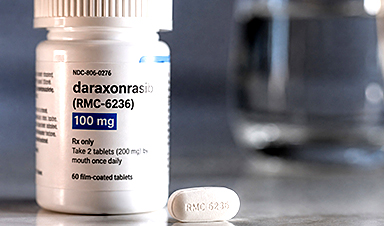
A groundbreaking treatment for one of the most common forms of pancreatic cancer has been approved in pill form by the FDA. Revolution Medicines’ oral tablet daraxonrasib, branded as Rasonque, reduced the risk of [...]
Researchers Have Discovered a New Way To Reduce Chronic Nerve Pain
A cancer-linked protein called BRAF may help drive chronic nerve pain, and existing cancer drugs targeting it reduced pain sensitivity in preclinical models. Chronic nerve pain can persist long after an injury and often [...]
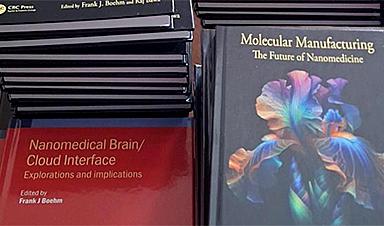
Our books now available worldwide!
Online Sellers other than Amazon, Routledge, and IOPP Indigo Global Health Care Equivalency in the Age of Nanotechnology, Nanomedicine and Artifcial Intelligence Global Health Care Equivalency In The Age Of Nanotechnology, Nanomedicine And Artificial [...]

Quantum-Enabled Regenerative Health: Reimagining Wellness, Precision Health and Longevity Medicine
Introduction Healthcare is approaching a frontier where the quantum portfolio could influence not only how disease is diagnosed and treated, but how health itself is measured, modeled, predicted and preserved. Quantum computing, quantum simulation, [...]

FDA Clears First-of-Its-Kind Nonmedication Treatment for PTSD
The FDA has cleared a system that uses brain activity data to personalize magnetic stimulation for PTSD, adding a new nonmedication treatment option. Every day in the United States, approximately 17.5 veterans die by suicide, [...]

FDA approves breakthrough drug to treat advanced pancreatic cancer
The Food and Drug Administration (FDA) approved on Wednesday a drug that could extend the survival of those with metastatic pancreatic cancer. The drug, called daraxonrasib, will be sold under the brand name Rasonque [...]

AI Decodes a Hidden DNA Signal Linked to Disease-Causing Mutations
Machine learning identifies the likely “initiator” and enables new predictions about DNA mutations that can cause disease. Every human cell depends on tens of thousands of genes being switched on at the right time [...]

Pope Leo Urges Global Response to Congo’s Deadliest Ebola Outbreak
Pope Leo called for international action to address the Ebola outbreak in the Democratic Republic of Congo. The epidemic has claimed over 2,500 lives and is the nation's largest recorded outbreak. The Pope emphasized [...]