A family of healthy bacteria may help 'soak up' toxic forever chemicals in the body, warding off their cancerous effects.
Forever chemicals, also known as PFAS (per- and polyfluoroalkyl substances), are toxic chemicals that have been linked cancer, infertility and birth defects.
They're named because they don't naturally break down in the environment or the body.
Instead, they leech from plastic containers and nonstick cookware into food and build up in vital organs, increasing the risk of organ failure, infertility and some forms of cancer.
Researchers at the University of Cambridge took samples of 38 strains of healthy bacteria living in the human gut and put them into lab mice.
They found mice carrying human gut bacteria had up to 74 percent more 'forever' chemicals in their stool compared to mice without the bacteria within minutes of exposure.
This suggests the toxins latched on to the bacteria as they moved through the digestive tract, leaving the body through the stool.
While mountains of research have demonstrated deadly effects of forever chemicals, the new study is one of the first to show they can be taken out of the body instead of accumulating in there forever.
And it builds on recent research showing a link between PFAS and the digestive tract. A study published last month, for example, found PFAS latches on to bile acids in the gut and eating fiber can help filter that excess bile out.
Dr Kiran Patil, senior study author and toxicologist at the University of Cambridge, said: 'Given the scale of the problem of PFAS "forever chemicals," particularly their effects on human health, it's concerning that so little is being done about removing these from our bodies.
'We found that certain species of human gut bacteria have a remarkably high capacity to soak up PFAS from their environment at a range of concentrations, and store these in clumps inside their cells.
'Due to aggregation of PFAS in these clumps, the bacteria themselves seem protected from the toxic effects.'
PFAS are thought to be endocrine-disrupting chemicals, meaning they imitate the body's hormones and interfere with the production of – and response to – natural hormones like estrogen and testosterone.
This increases the risk of developing hormone-sensitive cancers like breast and ovarian cancer.
The study, published Tuesday in the journal Nature Microbiology, looked at samples of 38 healthy bacteria in the gut.
The researchers measured the effect of bacteria on levels of the forever chemicals perfluorononanoic acid (PFNA) and perfluorooctanoate acid (PFOA).
PFOA is considered a Group 1 carcinogen by the International Agency for Research on Cancer (IARC), meaning it causes cancer in animals. PFNA, meanwhile, is a Group 2 carcinogen, suggesting it may cause cancer in animals.
Over the course of 24 hours, nine of the tested bacteria reduced exposure to PFNA by 25 to 74 percent and PFOA levels by 23 to 58 percent.
For both types of PFAS, Odoribacter splanchnicus lead to the greatest reductions. It's thought to produce the short-chain fatty acid butyrate, which boosts metabolism and immune function.
The team believes PFAS latch onto the bacteria and are excreted out of the body through the stool.
The researchers are now working on developing probiotic supplements to increase levels of these healthy bacteria in the gut.
Dr Indra Roux, study co-author and researcher at the University of Cambridge's MRC Toxicology Unit, said: 'The reality is that PFAS are already in the environment and in our bodies, and we need to try and mitigate their impact on our health now.
'We haven't found a way to destroy PFAS, but our findings open the possibility of developing ways to get them out of our bodies where they do the most harm.'

News

Largest-Ever Physics Survey Raises New Doubts About Our Model of the Universe
Physicists around the world remain deeply divided on key mysteries of the universe, from dark matter to quantum gravity. The standard cosmological model failed to gain majority support, and no leading theory dominated the [...]
Scientists Just Overturned a 100-Year-Old Belief About Bacteria in the Lungs
New findings raise questions about the role of microbes living in the lungs. More than 35 trillion bacteria live throughout the human body, forming microbiomes in the gut, mouth, lungs, skin, and urogenital tract. [...]

GHCE Concept
From the preface of the book Global Health Care Equivalency in the Age of Nanotechnology, Nanomedicine and Artificial Intelligence, Edited by Frank Boehm: Since the publication of my first book (Nanomedical Device and Systems [...]

Novartis, Ionis drug failure spurs questions
Pelacarsen didn’t protect heart health despite lowering levels of a protein particle, “Lp(a),” in a large clinical trial — a result with important implications for cardiovascular drug research. Dive Brief: An RNA drug from [...]

New injectable treatment helps the brain rebuild after stroke
Biomedical engineers at Duke University have created an injectable biomaterial that may help the brain recover from damage left behind by an ischemic stroke. In experiments with mice, the material transformed the cavity created [...]

Scientists Discover a Hidden “Immune Organ” Inside the Skull
Researchers discovered lymph node-like immune hubs inside skull bone marrow that appear to act as rapid-response centers for the brain. For decades, the brain was thought to operate largely apart from the immune system. [...]
Engineered tRNAs and lipid nanoparticles target nonsense mutation cystic fibrosis
Researchers have developed a potential new approach for treating a form of cystic fibrosis caused by so-called nonsense mutations, combining chemically modified transfer RNAs with lipid nanoparticles designed to deliver the therapy directly to [...]
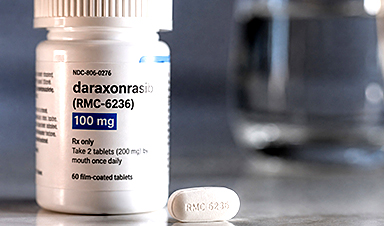
New pancreatic cancer drug carries a $39,800 monthly list price
A groundbreaking treatment for one of the most common forms of pancreatic cancer has been approved in pill form by the FDA. Revolution Medicines’ oral tablet daraxonrasib, branded as Rasonque, reduced the risk of [...]
Researchers Have Discovered a New Way To Reduce Chronic Nerve Pain
A cancer-linked protein called BRAF may help drive chronic nerve pain, and existing cancer drugs targeting it reduced pain sensitivity in preclinical models. Chronic nerve pain can persist long after an injury and often [...]

Our books now available worldwide!
Online Sellers other than Amazon, Routledge, and IOPP Indigo Global Health Care Equivalency in the Age of Nanotechnology, Nanomedicine and Artifcial Intelligence Global Health Care Equivalency In The Age Of Nanotechnology, Nanomedicine And Artificial [...]

Quantum-Enabled Regenerative Health: Reimagining Wellness, Precision Health and Longevity Medicine
Introduction Healthcare is approaching a frontier where the quantum portfolio could influence not only how disease is diagnosed and treated, but how health itself is measured, modeled, predicted and preserved. Quantum computing, quantum simulation, [...]

FDA Clears First-of-Its-Kind Nonmedication Treatment for PTSD
The FDA has cleared a system that uses brain activity data to personalize magnetic stimulation for PTSD, adding a new nonmedication treatment option. Every day in the United States, approximately 17.5 veterans die by suicide, [...]
FDA approves breakthrough drug to treat advanced pancreatic cancer
The Food and Drug Administration (FDA) approved on Wednesday a drug that could extend the survival of those with metastatic pancreatic cancer. The drug, called daraxonrasib, will be sold under the brand name Rasonque [...]

AI Decodes a Hidden DNA Signal Linked to Disease-Causing Mutations
Machine learning identifies the likely “initiator” and enables new predictions about DNA mutations that can cause disease. Every human cell depends on tens of thousands of genes being switched on at the right time [...]

Pope Leo Urges Global Response to Congo’s Deadliest Ebola Outbreak
Pope Leo called for international action to address the Ebola outbreak in the Democratic Republic of Congo. The epidemic has claimed over 2,500 lives and is the nation's largest recorded outbreak. The Pope emphasized [...]

Is there a summer COVID-19 surge this year? Yep, it’s ramping up again
Hantavirus. Ebola. West Nile. Measles. And, of course, cyclospora — that stomach parasite making people miserable across the country. Americans have plenty to worry about this summer. But remember COVID-19? It may not be [...]