A research team at RCSI University of Medicine and Health Sciences has developed a 3-D printed implant to deliver electrical stimulation to injured areas of the spinal cord, offering a potential new route to repair nerve damage.
Details of the 3-D printed implant and how it performs in lab experiments have been published in the journal Advanced Science.
Spinal cord injury is a life-altering condition that can lead to paralysis, loss of sensation and chronic pain. In Ireland, more than 2,300 individuals and families are living with spinal cord injury, but no treatment currently exists to effectively repair the damage. However, therapeutic electrical stimulation at the injury site has shown potential in encouraging nerve cells (neurons) to regrow.
Promoting the regrowth of neurons after spinal cord injury has been historically difficult however our group is developing electrically conductive biomaterials that could channel electrical stimulation across the injury, helping the body to repair the damaged tissue. The unique environment provided by the AMBER Centre which sees biomedical engineers, biologists and material scientists working together to solve grand societal challenges provides a major opportunity for disruptive innovation such as this”.
Professor Fergal O’Brien, Deputy Vice Chancellor for Research and Innovation and Professor of Bioengineering and Regenerative Medicine at RCSI and Head of RCSI’s Tissue Engineering Research Group (TERG)
The study was led by researchers at RCSI’s TERG and the Research Ireland Centre Advanced Materials and Bioengineering Research (AMBER). The team used ultra-thin nanomaterials from Professor Valeria Nicolosi’s laboratory in the School of Chemistry and AMBER at Trinity College Dublin which are normally used for applications like battery design and integrated them into a soft gel-like structure using 3-D printing techniques.
The resulting implant mimics the structure of the human spinal cord and features a fine mesh of tiny fibres that can conduct electricity to our cells. When tested in the lab, the implant was shown to effectively deliver electrical signals to neurons and stem cells, enhancing their ability to grow.
Modifying the fibre layout within the implant was also found to further improve its effectiveness.
“These 3D-printed materials allow us to tune the delivery of electrical stimulation to control regrowth and may enable a new generation of medical devices for traumatic spinal cord injuries” said Dr Ian Woods, Research Fellow at TERG and first author of the study. “Beyond spinal repair, this technology also has potential for applications in cardiac, orthopaedic and neurological treatments where electrical signalling can drive healing.”
The RCSI and AMBER researchers teamed up with the Irish Rugby Football Union Charitable Trust (IRFU-CT) on the project and brought together an advisory panel to oversee and guide the research. The group included seriously injured rugby players, clinicians, neuroscientists and researchers.
“Through their expertise, the advisory panel helped deepen our understanding of the lived experiences of individuals with spinal cord injuries, their treatment priorities and emerging treatment approaches” said Dr Woods. “Our regular meetings allowed for a consistent exchange of input, ideas and results.”
The study was supported by the Irish Rugby Football Union Charitable Trust, AMBER the Research Ireland Centre for Advanced Materials and BioEngineering Research and an Irish Research Council Government of Ireland Postdoctoral Fellowship.
Woods, I., et al. (2025). 3D‐Printing of Electroconductive MXene‐Based Micro‐Meshes in a Biomimetic Hyaluronic Acid‐Based Scaffold Directs and Enhances Electrical Stimulation for Neural Repair Applications. Advanced Science. doi.org/10.1002/advs.202503454.

News
Scientists Just Overturned a 100-Year-Old Belief About Bacteria in the Lungs
New findings raise questions about the role of microbes living in the lungs. More than 35 trillion bacteria live throughout the human body, forming microbiomes in the gut, mouth, lungs, skin, and urogenital tract. [...]

GHCE Concept
From the preface of the book Global Health Care Equivalency in the Age of Nanotechnology, Nanomedicine and Artificial Intelligence, Edited by Frank Boehm: Since the publication of my first book (Nanomedical Device and Systems [...]

Novartis, Ionis drug failure spurs questions
Pelacarsen didn’t protect heart health despite lowering levels of a protein particle, “Lp(a),” in a large clinical trial — a result with important implications for cardiovascular drug research. Dive Brief: An RNA drug from [...]
New injectable treatment helps the brain rebuild after stroke
Biomedical engineers at Duke University have created an injectable biomaterial that may help the brain recover from damage left behind by an ischemic stroke. In experiments with mice, the material transformed the cavity created [...]
Scientists Discover a Hidden “Immune Organ” Inside the Skull
Researchers discovered lymph node-like immune hubs inside skull bone marrow that appear to act as rapid-response centers for the brain. For decades, the brain was thought to operate largely apart from the immune system. [...]
Engineered tRNAs and lipid nanoparticles target nonsense mutation cystic fibrosis
Researchers have developed a potential new approach for treating a form of cystic fibrosis caused by so-called nonsense mutations, combining chemically modified transfer RNAs with lipid nanoparticles designed to deliver the therapy directly to [...]
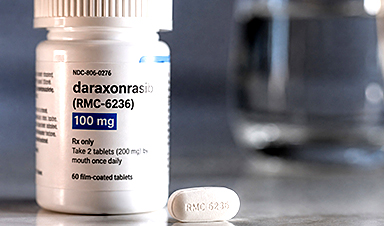
New pancreatic cancer drug carries a $39,800 monthly list price
A groundbreaking treatment for one of the most common forms of pancreatic cancer has been approved in pill form by the FDA. Revolution Medicines’ oral tablet daraxonrasib, branded as Rasonque, reduced the risk of [...]
Researchers Have Discovered a New Way To Reduce Chronic Nerve Pain
A cancer-linked protein called BRAF may help drive chronic nerve pain, and existing cancer drugs targeting it reduced pain sensitivity in preclinical models. Chronic nerve pain can persist long after an injury and often [...]
Our books now available worldwide!
Online Sellers other than Amazon, Routledge, and IOPP Indigo Global Health Care Equivalency in the Age of Nanotechnology, Nanomedicine and Artifcial Intelligence Global Health Care Equivalency In The Age Of Nanotechnology, Nanomedicine And Artificial [...]

Quantum-Enabled Regenerative Health: Reimagining Wellness, Precision Health and Longevity Medicine
Introduction Healthcare is approaching a frontier where the quantum portfolio could influence not only how disease is diagnosed and treated, but how health itself is measured, modeled, predicted and preserved. Quantum computing, quantum simulation, [...]

FDA Clears First-of-Its-Kind Nonmedication Treatment for PTSD
The FDA has cleared a system that uses brain activity data to personalize magnetic stimulation for PTSD, adding a new nonmedication treatment option. Every day in the United States, approximately 17.5 veterans die by suicide, [...]

FDA approves breakthrough drug to treat advanced pancreatic cancer
The Food and Drug Administration (FDA) approved on Wednesday a drug that could extend the survival of those with metastatic pancreatic cancer. The drug, called daraxonrasib, will be sold under the brand name Rasonque [...]

AI Decodes a Hidden DNA Signal Linked to Disease-Causing Mutations
Machine learning identifies the likely “initiator” and enables new predictions about DNA mutations that can cause disease. Every human cell depends on tens of thousands of genes being switched on at the right time [...]

Pope Leo Urges Global Response to Congo’s Deadliest Ebola Outbreak
Pope Leo called for international action to address the Ebola outbreak in the Democratic Republic of Congo. The epidemic has claimed over 2,500 lives and is the nation's largest recorded outbreak. The Pope emphasized [...]

Is there a summer COVID-19 surge this year? Yep, it’s ramping up again
Hantavirus. Ebola. West Nile. Measles. And, of course, cyclospora — that stomach parasite making people miserable across the country. Americans have plenty to worry about this summer. But remember COVID-19? It may not be [...]

Natural Compound in Broccoli Could Help Treat a Rare, Incurable Neurological Disease
Swinburne researchers have discovered how broccoli could help treat an extremely rare and incurable disease that affects only about 200 Australians. A naturally occurring compound in broccoli is being investigated as a possible treatment [...]