An insidious illness is taking hold among a growing proportion of young people. Little known to the general public, peniaphobia—the fear of becoming poor—is gaining ground among teens and young adults. Discover the causes and implications of this phenomenon.
A generation under constant pressure
Behind this still little-publicized term lies a very real, often paralyzing, anxiety that affects a generation already weakened by economic, social, and psychological uncertainties. Peniaphobia, once a marginal issue, is now being discussed by specialists and relayed in the media, as its effects become more visible. It can lead to chronic stress, eating disorders, insomnia, and even a worrying withdrawal.
The rise of peniaphobia cannot be understood without considering the context in which it occurs. Since the Covid-19 pandemic, many young people have been brutally confronted with precariousness: student jobs lost, difficulties paying rent, and recourse to food banks. These experiences have left lasting scars, notably a feeling of economic vulnerability that some are no longer able to assuage.
The pressure is also psychological and cultural, fueled by dominant discourses on success, failure, and performance. "It's this race for success that conditions everything. As if not being able to be first calls their entire life into question," child psychiatrist Marie-Rose Moro recently explained in La Croix.
The anxiety-inducing role of social networks
Social media platforms also play a major role in spreading this anxiety. On Instagram, TikTok, and Snapchat, the most popular content depicts idealized lives: dream vacations, luxury outfits, immaculate apartments, dazzling professional success… A lifestyle that seems out of reach for many, fueling feelings of failure or inferiority.
For some young people, this translates into a constant fear of "failing in life" if they don't quickly achieve a certain level of material comfort. The constant comparison, combined with fear of the economic future, makes peniaphobia a breeding ground for mental distress.
Varied and disabling symptoms
Peniaphobia doesn't always manifest itself in visible crises. It can be insidious, rooted in daily habits. Some young people avoid spending a single cent, live extremely frugally, and refuse to go out or take on projects for fear of "mortgaging" their future. Others develop behavioral problems, ranging from generalized anxiety to eating disorders and even depression.
In the most severe cases, this fear takes the form of a true obsession, accompanied by intrusive thoughts or somatic disorders: headaches, chronic fatigue, palpitations. The feeling of constant urgency prevents any calm projection into the future.
How can we allay this fear of being downgraded?
There is no single solution, but several avenues can help reduce the impact of peniaphobia on daily life.
- Regain control over your breathing and thoughts. Breathing exercises or meditation can help manage anxiety spikes. At the same time, cognitive reconstruction work, such as learning to replace catastrophic thoughts with positive alternatives, can be beneficial.
- Disconnect from social injunctions. Remembering that social media doesn't reflect reality is an essential exercise. Every journey is different, and the apparent success of others is often the result of carefully calibrated staging.
- Respect your personal pace. Success doesn't follow a single timetable. It's important to restore the value of slowness, progress, and development. This also helps reduce the unnecessary pressure many young people place on themselves.
- Seek professional help. In the most severe cases, consulting a psychologist or psychiatrist can help you put your anxiety into words, understand its origins, and develop appropriate support.
The emergence of peniaphobia among young people must therefore be considered a warning signal. It reveals a deep unease about a future perceived as uncertain, unstable, and threatening. It also testifies to the psychological impact of the models of success conveyed by our societies.

News

Engineered tRNAs and lipid nanoparticles target nonsense mutation cystic fibrosis
Researchers have developed a potential new approach for treating a form of cystic fibrosis caused by so-called nonsense mutations, combining chemically modified transfer RNAs with lipid nanoparticles designed to deliver the therapy directly to [...]
New pancreatic cancer drug carries a $39,800 monthly list price
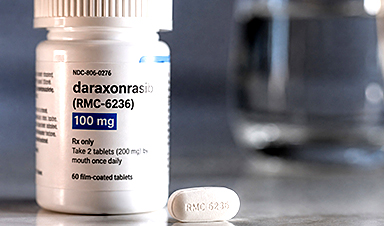
A groundbreaking treatment for one of the most common forms of pancreatic cancer has been approved in pill form by the FDA. Revolution Medicines’ oral tablet daraxonrasib, branded as Rasonque, reduced the risk of [...]

Researchers Have Discovered a New Way To Reduce Chronic Nerve Pain
A cancer-linked protein called BRAF may help drive chronic nerve pain, and existing cancer drugs targeting it reduced pain sensitivity in preclinical models. Chronic nerve pain can persist long after an injury and often [...]

Our books now available worldwide!
Online Sellers other than Amazon, Routledge, and IOPP Indigo Global Health Care Equivalency in the Age of Nanotechnology, Nanomedicine and Artifcial Intelligence Global Health Care Equivalency In The Age Of Nanotechnology, Nanomedicine And Artificial [...]

Quantum-Enabled Regenerative Health: Reimagining Wellness, Precision Health and Longevity Medicine
Introduction Healthcare is approaching a frontier where the quantum portfolio could influence not only how disease is diagnosed and treated, but how health itself is measured, modeled, predicted and preserved. Quantum computing, quantum simulation, [...]

FDA Clears First-of-Its-Kind Nonmedication Treatment for PTSD
The FDA has cleared a system that uses brain activity data to personalize magnetic stimulation for PTSD, adding a new nonmedication treatment option. Every day in the United States, approximately 17.5 veterans die by suicide, [...]

FDA approves breakthrough drug to treat advanced pancreatic cancer
The Food and Drug Administration (FDA) approved on Wednesday a drug that could extend the survival of those with metastatic pancreatic cancer. The drug, called daraxonrasib, will be sold under the brand name Rasonque [...]

AI Decodes a Hidden DNA Signal Linked to Disease-Causing Mutations
Machine learning identifies the likely “initiator” and enables new predictions about DNA mutations that can cause disease. Every human cell depends on tens of thousands of genes being switched on at the right time [...]

Pope Leo Urges Global Response to Congo’s Deadliest Ebola Outbreak
Pope Leo called for international action to address the Ebola outbreak in the Democratic Republic of Congo. The epidemic has claimed over 2,500 lives and is the nation's largest recorded outbreak. The Pope emphasized [...]

Is there a summer COVID-19 surge this year? Yep, it’s ramping up again
Hantavirus. Ebola. West Nile. Measles. And, of course, cyclospora — that stomach parasite making people miserable across the country. Americans have plenty to worry about this summer. But remember COVID-19? It may not be [...]

Natural Compound in Broccoli Could Help Treat a Rare, Incurable Neurological Disease
Swinburne researchers have discovered how broccoli could help treat an extremely rare and incurable disease that affects only about 200 Australians. A naturally occurring compound in broccoli is being investigated as a possible treatment [...]

Antibody recycling, FcRn and the next generation of biologics
FcRn plays a central role in regulating the half-life of IgG antibodies and albumin, making it a critical target in both antibody engineering and autoimmune disease therapy. This article explores the biology of FcRn, [...]

Ebola kills 2,300 in three months with no vaccine available for Congo’s deadliest ever outbreak
It’s Congo’s 17th outbreak, with a toll that has eclipsed that of the country’s 2018-2020 outbreak when 2,299 deaths out of 3,481 cases were recorded. The latest data shows 101 new cases and 33 [...]
Beyond an Agency: How AI, Creativity and Commercialization Are Converging Into a New Growth Model
At a moment when AI is forcing a fundamental rethink of how work gets done, the life sciences industry is grappling with a deeper question: what role should human creativity play in an increasingly [...]

New $60 Blood Test Detects Lung Cancer Without Costly DNA Sequencing
A simple blood test that detects chemical changes in DNA identified more than 90% of stage 2-4 lung cancers in an early study, without relying on costly DNA sequencing. Researchers at Tel Aviv University and collaborating [...]

Reducing drug development failures with human-relevant models and AI
Professor Joseph C. Wu of Stanford University explains how stem cells, human-relevant models and AI are helping researchers predict which drug candidates are most likely to succeed before clinical trials. Researchers now have access [...]