Researchers at Karolinska Institutet in Sweden have developed a novel strategy for identifying potent miniature antibodies, so-called nanobodies, against emerging SARS-CoV-2 variants. The approach led to the discovery of multiple nanobodies that in cell cultures and mice effectively blocked infection with different SARS-CoV-2 variants. The findings, which are described in the journals Nature Communications and Science Advances, could pave the way for new treatments against COVID-19.
Despite the roll-out of vaccines and antivirals, the need for effective therapeutics against severe COVID-19 infection remains high. Nanobodies—which are fragments of antibodies that occur naturally in camelids and can be adapted for humans—are promising therapeutic candidates as they offer several advantages over conventional antibodies. For example, they have favorable biochemical properties and are easy to produce cost-effectively at scale.
In the now published studies, the labs of Gerald McInerney and Ben Murrell, also at MTC, identify several potent nanobodies derived from an alpaca immunized with SARS-CoV-2 antigens.
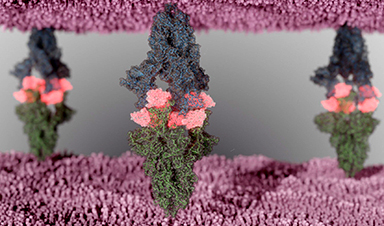
The first report in Nature Communications describes a single nanobody, Fu2 (named after the alpaca Funny), that significantly reduced the viral load of SARS-CoV-2 in cell cultures and mice. Using electron cryo-microscopy, the researchers found that Fu2 naturally binds to two separate sites on the viral spike, thus inhibiting the virus’ ability to enter the host cell. This part of the study was conducted in collaboration with Hrishikesh Das and Martin Hällberg at the Department of Cell and Molecular Biology at Karolinska Institutet.
The researchers next delved deeper into the alpaca’s nanobody repertoire by combining a range of advanced laboratory techniques and computational methods, resulting in a library of nanobodies described in detail.
The results, presented in Science Advances, revealed additional nanobodies that in cell cultures and mice effectively cross-neutralized both the founder and beta variant of SARS-CoV-2 and even neutralized the more distantly related SARS-CoV-1.
“These nanobodies represent promising therapeutic candidates against several SARS-CoV-2 variants,” says first author Leo Hanke, a postdoctoral researcher who established the nanobody technology in the McInerney group.
The researchers are currently applying the same techniques to identify which nanobodies from this set are best able to neutralize omicron, the now dominating SARS-CoV-2 variant.
“Once established, these libraries can be expanded and mined for nanobodies that neutralize new emerging variants,” says Assistant Professor Ben Murrell, also joint senior author of both studies.

News

Electrostatic Discharge Boosts Triboelectric Nanogenerator Current and Enables DC Output
Controlled electrical discharges could enable triboelectric nanogenerators to achieve higher peak currents, extending nano-enabled energy harvesting into chemical processing and self-powered sensing. Paper: Electrostatic discharge as a breakthrough strategy for triboelectric nanogenerators. A new review [...]
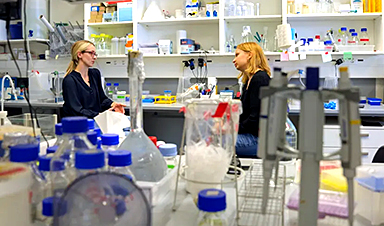
Swiss laboratory uses old drugs against rare diseases
Researchers at the University of Geneva are combing through collections of approved drugs to find new therapies for rare diseases – with some success. This approach is gaining traction around the world, while pharmaceutical [...]

Nanozyme Aptasensors Show Promise for Faster Food, Health, and Environmental Testing
By pairing robust artificial enzymes with highly selective aptamers, nanozyme aptasensors could help detect disease biomarkers, pathogens, and contaminants faster, but the review shows that real-world deployment still depends on overcoming matrix interference, biofouling, [...]

Paralyzed Man Feels Sensation Again With Brain Stimulation Device
Aneuroprosthetic system has allowed a man with paralysis to grasp and lift objects and feel touch again. The device helped 42-year-old Keith Thomas of Massapequa, New York, who was paralyzed from the chest down [...]
Global Cancer Cases Could Surge 67% by 2050, New Report Warns
New data reveal major geographic disparities and highlight the urgent need for global action on prevention, early detection, and equitable access to treatment. For roughly one in five people worldwide, cancer will become part [...]
A Deadly Ebola-Like Virus Is Spreading. Are We Ready?
BU virologist Nancy Sullivan says the Bundibugyo outbreak in the Democratic Republic of the Congo underscores the need for broader outbreak preparedness. The death of a nurse marked the moment health officials recognized that [...]
Why Most Animal Viruses Never Become Human Pandemics
From receptor mismatch to risky human-animal interfaces, this article explains why spillover is common but true pandemic emergence remains rare. Introduction Humans are constantly exposed to animal viruses through farming, wildlife contact, and the [...]

Stem cell organoids repair heart microvessels in coronary artery disease models
A Stanford University team has shown that vascular organoids derived from human stem cells can repair the heart’s microvessel network in pigs with ischaemic heart disease – a proof-of-concept advancement that could open new therapeutic [...]

Goodbye GP waiting rooms, hello prevention at home
Prevention is suddenly everywhere in NHS reform. The recent £340m community pharmacy deal is moving more services onto the high street. Community Diagnostic Centres are being expanded, and the Neighbourhood Health Framework sets out [...]
Ebola control is weakened by mistrust and cultural insensitivity
Effective response depends on cooperation with communities and frontline workers, writes Zaeem ul Haq The current Bundibugyo Ebola outbreak in the Democratic Republic of the Congo (DRC) and Uganda is exposing dangerous gaps in [...]

Building the Brain Requires Millions of Dangerous DNA Breaks
Scientists discovered that building a healthy brain involves an unexpected step: young neurons routinely break and rapidly repair their own DNA. As the brain develops, newly formed nerve cells must travel through tightly packed tissue [...]

One Tiny Change May Explain How Viruses Jump From Bats to Humans
Scientists found that one tiny genetic change may determine whether a bat virus stays in bats or becomes a human threat. Most infectious disease outbreaks begin when a virus or other pathogen crosses from animals into [...]

Scientists Discover 250+ Genes That Could Lead to New Ways To Prevent Melanoma
The world’s largest study of mole genetics identified hundreds of genes tied to melanoma risk, uncovering potential new drug targets and paving the way for more accurate melanoma screening and prevention. Researchers at QIMR [...]
Breakthrough Diabetes Treatment Reprograms the Immune System
An engineered stem cell therapy reversed new-onset Type 1 diabetes in mice by shifting the immune system away from attacking insulin-producing cells. For more than a century, people with Type 1 diabetes have relied [...]
Taking the world’s temperature: WHO chief spotlights global health emergencies
Taking the world’s temperature on pressing health matters, WHO Director-General Tedros Adhanom Ghebreyesus provided the latest on current global challenges - and successes when it comes to international cooperation. “The outbreaks of hantavirus, Ebola and Marburg all show [...]
Scientists Create Tiny “Mini Livers” That Could One Day Replace Liver Transplants
Engineered tissue grafts could help perform key liver functions and benefit thousands of people living with liver failure. The liver is one of the body’s hardest-working organs, carrying out hundreds of vital jobs, from [...]