Artificial intelligence is dominating headlines, telehealth has settled into a new normal, and digital health continues to promise transformation. However, much of what is being discussed in healthcare today reflects potential rather than reality.
The gap between what is possible and what is actually happening in clinical practice remains wide. This article focuses on separating signal from noise and highlights the trends clinicians should pay attention to now.
Key Takeaways
- AI is advancing quickly, but real clinical adoption and validation remain limited.
- Mental health demand continues to outpace how primary care is structured to deliver it
- Patient digital readiness is still being overlooked, despite its impact on outcomes.
- Remote patient monitoring is entering a phase of scrutiny after years of expansion
- Cost pressures remain one of the most consistent drivers of patient behavior.
AI in Healthcare: What Is Actually Changing Clinical Practice?
Why AI Adoption in Healthcare Still Lags Behind the Hype
Research from Anthropic suggests that AI could perform a large share of tasks across multiple industries. In practice, however, adoption remains far below that level.
This gap is often framed as an untapped opportunity. It is more accurately understood as a reflection of how difficult it is to integrate AI into real clinical workflows. Healthcare is not a controlled environment, and tools that perform well in theory often struggle in practice.
Vendor-driven narratives tend to emphasize future potential. The more relevant question for clinicians is whether these tools improve care today.
Most Healthcare AI Tools Lack Real-World Clinical Validation
A meta-analysis in Nature Medicine found that fewer than 1% of studies on large language models were conducted in live clinical settings. Most evidence still comes from simulated or synthetic settings.
This is a critical limitation. Healthcare does not operate in controlled conditions, and results from simulated environments often overstate real-world performance.
There is a growing volume of research on AI, but relatively little of it answers the question that matters most: Does it improve patient care in practice?
How AI Improves Efficiency but Can Weaken Clinical Judgment
Research in Computers in Human Behavior shows that AI can improve performance when used alongside humans. At the same time, it increases overconfidence.
AI tools tend to reinforce existing assumptions rather than challenge them. This creates a risk that clinicians may feel more confident without being more accurate.
Implication for clinicians: AI is most useful when it is treated as something to challenge, not something to trust by default. The risk is not that AI replaces clinicians, but that it subtly alters decision-making in ways that are harder to detect.
Mental Health Demand Is Reshaping Primary Care Delivery
Data from Medscape shows that more than half of primary care clinicians frequently encounter patients with mental health needs.
This is no longer a secondary issue. Mental health has effectively become a core component of primary care, yet most systems are not structured to support it.
Clinicians face predictable constraints:
- Limited time.
- Limited training.
- Unclear reimbursement pathways.
These are not new problems, but they are becoming more consequential as demand increases.
Implication for clinicians: The current model of referring out or addressing mental health within a limited visit time is increasingly insufficient. Structural changes, not incremental adjustments, will likely be required.
Patients Are Using AI for Health Information and Symptom Support
Data from Microsoft and the Kaiser Family Foundation shows that patients are already integrating AI into their health management.
This is not a future trend. It is already happening, often outside the visibility of clinicians.
Patients use these tools for symptom checking, education, and emotional support, particularly during hours when access to care is limited. Accuracy is not always the primary concern. Immediacy is.
Implication for clinicians: The question is no longer whether patients will use these tools. The question is whether clinicians acknowledge and incorporate that reality into care delivery.
Why Patient Digital Readiness Matters in Digital Health Adoption
Despite ongoing investment in digital health, many organizations still do not assess whether patients can effectively use these tools. Research from UCSF highlights that digital readiness is often assumed rather than measured.
This assumption creates a disconnect. Healthcare systems continue to deploy digital solutions, while some patients cannot meaningfully engage with them.
Implication for clinicians: Digital access is not the same as digital readiness. Without addressing this gap, additional technology may widen disparities rather than reduce them.
Telehealth Utilization Trends: From Pandemic Surge to Long-Term Normalization
Data from FAIR Health shows that telehealth has reached a steady baseline after its pandemic-driven surge.
This stabilization is often interpreted as a plateau. It is more accurately viewed as a normalization phase, where telehealth is finding its appropriate role within care delivery.
Mental health remains the dominant use case, reinforcing where virtual care provides the most value.
Telehealth Adoption Remains Lower in Rural Communities
Research in JAMA Network Open shows that telehealth adoption is significantly lower in rural areas, despite being positioned as a solution for access challenges.
This suggests that access issues are more complex than availability alone. Infrastructure, literacy, and trust all play a role.
Implication for clinicians: Expanding telehealth access requires more than offering virtual visits. It requires addressing the underlying barriers that prevent adoption.
Remote Patient Monitoring Faces Growing Pressure to Prove Value
Remote patient monitoring expanded rapidly, supported by favorable reimbursement and strong expectations. That phase is ending.
Analysis from Trilliant Health indicates that payers are increasingly questioning its value.
This shift was predictable. Technologies that scale quickly without consistent outcome data eventually face scrutiny.
Implication for clinicians: The focus is shifting from adoption to justification. Programs that demonstrate clear clinical value will persist, while others may not.
Healthcare Costs Continue to Influence Patient Care Decisions
Data from the Kaiser Family Foundation Health System Tracker shows that cost remains a consistent barrier to care.
Patients are delaying or avoiding care, and many are concerned about their ability to pay. Price transparency efforts have improved visibility but have not meaningfully changed behavior or outcomes.
This reflects a broader issue. Information alone does not change decisions when underlying costs remain high.
Implication for clinicians: Cost is not a secondary concern for patients. It is often a primary factor influencing whether care is pursued at all.
Healthcare Technology Is Entering an Era of Accountability
Healthcare is moving out of a phase defined by rapid innovation and into one defined by accountability. The focus is shifting from what technology can do to what it actually delivers.
AI, telehealth, and digital tools will continue to evolve. The differentiator will not be access to technology, but the ability to implement it in ways that improve real outcomes.
Clinicians and healthcare organizations that focus on practical integration, patient readiness, and measurable value will be better positioned to navigate this shift.
Disclosures:
- The author serves as Head of Strategy at Doxy.me, the telehealth technology company that owns telehealth.org.
- The views expressed in this commentary are those of the author and do not necessarily reflect the views of Telehealth.org.
- AI tools may have assisted in drafting or editing; the author or editorial team reviewed and approved all content.
- This article is not legal or medical advice.

News – Curated by Amanda Scott, Alias Group Creative
Follow her on Bluesky
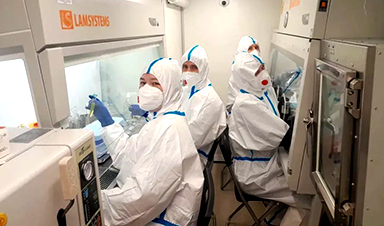
Researcher at Russian plague laboratory dies of ‘unknown’ infection
Russian authorities have imposed "anti-epidemic measures" after a laboratory worker at an institute in Siberia dedicated to studying the plague and other infectious diseases died of a mysterious illness. The researcher, a 28-year-old female [...]

GHCE Concept
From the preface of the book Global Health Care Equivalency in the Age of Nanotechnology, Nanomedicine and Artificial Intelligence, Edited by Frank Boehm: Since the publication of my first book (Nanomedical Device and Systems [...]
A Surprising Brain Signal Could Explain Why Eating Less Protein Extends Lifespan
A new paper suggests that limiting protein intake triggers a coordinated response throughout the body that may help explain how protein restriction affects healthy aging. Animals respond to protein restriction, or reduced protein in [...]

Back and shoulder surgery is often worse than useless
Millions of operations should be scrapped SIX IN TEN Britons have surgery at some point. So do lots of Americans, at a cost of perhaps $500bn a year, a third of all spending on [...]
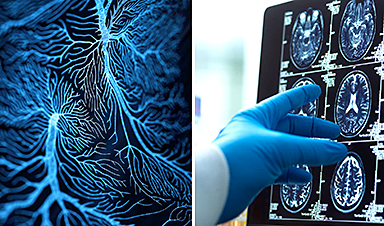
Cocaine plays with mind, hijacks brain circuit, drives increasingly rigid and repetitive behavior
Researchers have found that cocaine hijacks brain circuit, which to drive increasingly rigid and repetitive behavior. The brain circuit that normally participates in selecting natural mouth and face movements, but which becomes disproportionately engaged [...]
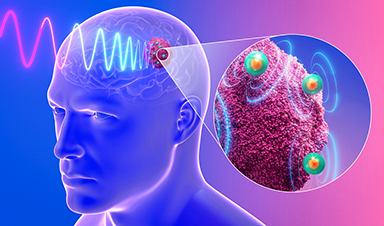
Injectable nanodevices could provide effective treatment for drug-resistant glioblastoma
The brain cancer glioblastoma is one of the most aggressive and treatment-resistant cancers known to medicine, carrying a median survival of just 12-15 months, even with the best available care. Now, researchers at the [...]
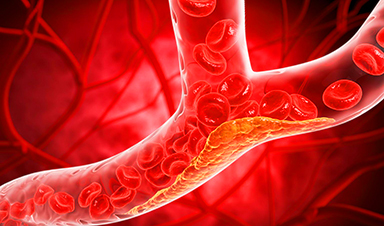
New Treatment Cuts “Bad” Cholesterol in Half for a Full Year
A single infusion of an experimental CRISPR-Cas9 therapy was reported to safely lower LDL cholesterol by 52.5% and triglycerides by 47.8%, as measured 12 months after treatment. What if one infusion could keep cholesterol [...]
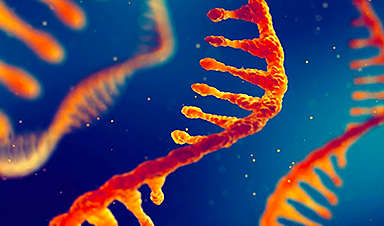
Too Much RNA Can Drain a Cell’s Energy, Scientists Discover
A virus may cripple a cell’s power supply simply by producing too much of a molecule the cell needs to survive. New research from the Texas A&M College of Veterinary Medicine and Biomedical Sciences [...]
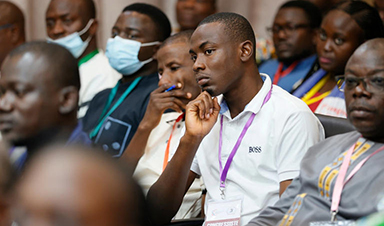
West African scientists warn of weakening health systems and urge stronger outbreak detection
LOME, Togo (AP) — West African laboratory scientists called on governments Friday to strengthen capacity to detect disease outbreaks to avoid another major outbreak, saying health systems across the region are becoming weaker. Participants [...]

A Little-Known Protein Could Point to a New Way To Treat Alzheimer’s
A study suggests that increasing SORLA protein levels could help treat Alzheimer’s disease and other disorders involving tau protein. Increasing SORLA, a protein with a protective role in the brain, helped mice withstand damage [...]
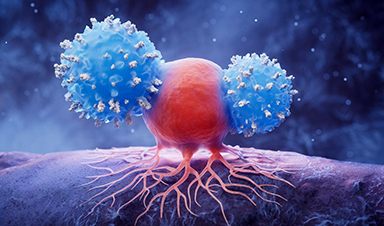
Cancer’s Hidden Antioxidant Shield Helps It Escape the Immune System
Blocking an antioxidant protein that tumors use to suppress immune attacks improved cancer immunotherapy responses in mice. Cancer cells can release antioxidants that interfere with the immune cells trying to kill them. Researchers have [...]

Scientists Find a Berry Compound That Helps Muscle Cells Burn Fat
Pterostilbene, a compound found naturally in some foods, affects how skeletal muscles process fats by stabilizing a protein called PPARδ and increasing its signaling activity. Pterostilbene, a natural compound found in blueberries, grapes, and [...]
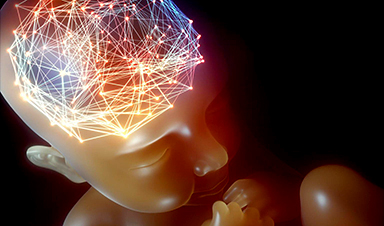
Two Hidden Forces Help Build the Human Brain Before Birth
Scientists have uncovered two surprising forces that help guide how the human brain forms before birth. Before birth, the human brain is shaped in large part by an unusual class of stem cells known [...]
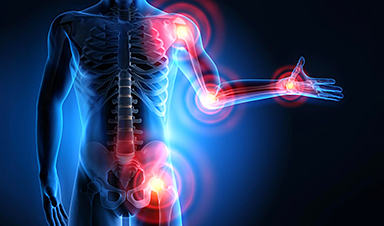
Researchers Uncover a Hidden Trigger Behind Chronic Inflammation
The findings offer new insights that could help guide the development of future therapies. A protein called human resistin may help flip on one of the immune system’s most powerful inflammatory switches. Researchers at [...]

Scientists Have Uncovered Previously Hidden Microbial Activity on Human Skin
The most abundant microbes on your skin may not be the ones doing most of the work. Human skin supports vast communities of bacteria, fungi, and viruses that can influence its protective barrier, immune [...]
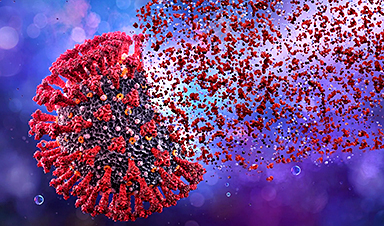
Brazilian Tree Compounds Fight COVID-19 on Multiple Fronts
Scientists found compounds in a Brazilian tree that hit SARS-CoV-2 on multiple fronts, revealing a promising new lead in the search for COVID-19 treatments. Researchers have found that galloylquinic acids extracted from the leaves [...]